The Fighting Goats and the Jackal
The Fighting Goats and the Jackal: One day while a sage was going through a jungle, he saw two golden rams (billy goats) fighting each other. Even though both

The Fighting Goats and the Jackal
Canonical Attribution and Manuscript Tradition
This tale belongs to Pancatantra Book I, Mitra-bheda, and is one of the collection’s most compact and structurally efficient demonstrations of self-destructive greed. The story is preserved in all major Sanskrit recensions including the Tantrakhyayika (c. 200 BCE, Kashmir) and paralleled in the Hitopadesha. In European tradition a close structural relative appears in Aesop, and the tale entered Arabic literary culture through the Pahlavi translation of the Pancatantra (c. 570 CE) and Kalila wa Dimna (c. 750 CE). The tale’s ATU structural type belongs to the widespread category of the creature whose appetite destroys it by overriding judgment. Its particular contribution within the Pancatantra is the precision with which it identifies the mechanism: it is not simply that the jackal is greedy, but that greed produces a specific cognitive failure — the inability to assess the danger of a situation because attention is entirely consumed by the anticipated reward. This cognitive failure, Vishnu Sharma implies, is not a character flaw exclusive to jackals.
Beat I — The Fight and the Observation
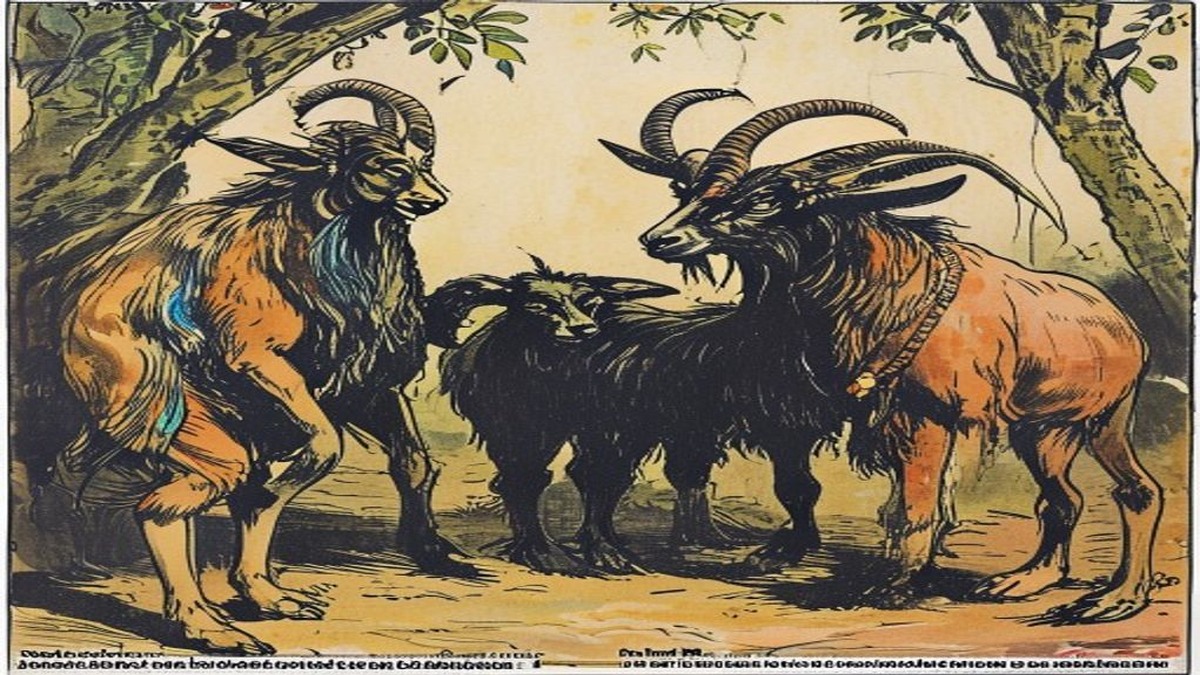
Two powerful rams met on a road and began to fight. They charged each other repeatedly, lowering their heads and striking with their horns. Both were wounded; blood flowed from the cuts on their heads and shoulders. A jackal, passing by, saw the blood and stopped. The smell of blood activated his appetite completely. His attention narrowed to a single point: the blood on the ground between the two fighting rams.
The jackal knew, in the general sense that any creature knows things its survival depends on, that the rams were large and powerful and were currently in a state of heightened aggression. This knowledge was present in him but was not active. What was active was appetite. The Pancatantra is precise about this sequence: the jackal did not decide that the risk was worth taking; he did not weigh the danger against the reward and make a calculation. His appetite simply occupied the cognitive space where assessment would otherwise have occurred. He moved toward the blood.
Beat II — The Attempt and Its Consequence
The jackal approached the space between the two rams and began to lick the blood from the ground. The rams, in the middle of their charge, did not see a jackal interposing himself between them; they saw only each other. They did not pause their fight to accommodate the jackal’s appetite. They completed their charge. The jackal was caught between two large animals moving at full speed in opposite directions and was killed immediately.
The Pancatantra’s account of the jackal’s death is given without sentiment. The tale’s brevity is itself a kind of moral comment: the outcome was predictable from the moment the jackal’s appetite overrode his assessment capacity. The story does not pause over the jackal’s suffering or the rams’ indifference. The rams were not responsible for the jackal’s presence between them; the jackal placed himself there. The rams did not change their behaviour to accommodate him; why would they? The situation was dangerous; it was obviously dangerous; and the jackal entered it anyway because he wanted what was between the rams more than he assessed what was around it.
Beat III — The Pancatantra’s Analysis of the Mechanism
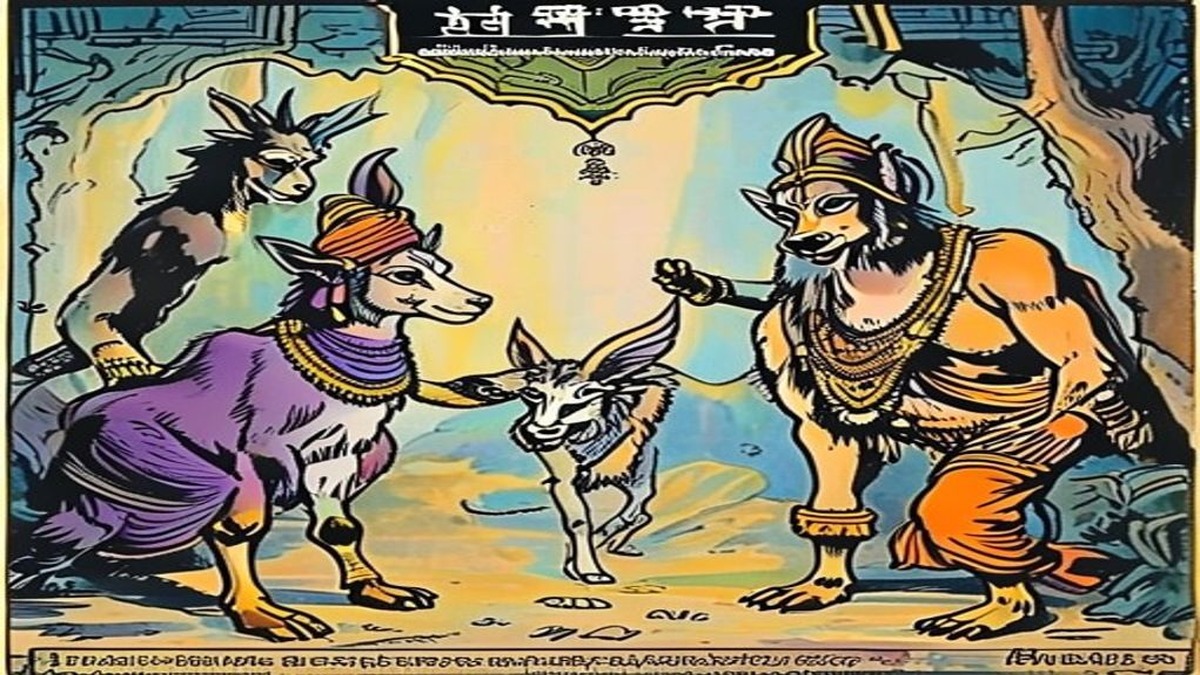
Vishnu Sharma does not leave the lesson implicit. The tale is followed by an explicit statement of the principle: one who approaches a situation of obvious danger because of appetite, without correctly assessing the danger, will be destroyed by it. The statement is terse in the Sanskrit but its referent is clear: this is not a lesson about jackals and rams. It is a lesson about advisors who recommend actions whose rewards are visible but whose risks are not assessed; about merchants who enter markets because the profit is evident without evaluating the structural dangers; about princes who take actions under the influence of desire without measuring the costs.
The Pancatantra’s choice to illustrate this principle with a jackal rather than a human character is deliberate. The jackal’s appetite is visually immediate — we see the blood, we understand what activates him, we understand why he approaches. The mechanism of cognitive override is fully transparent in the animal register precisely because it operates so cleanly there. Vishnu Sharma’s pupils were intended to recognise the same mechanism in the human register: the minister whose recommendation is shaped by anticipated reward rather than accurate assessment; the king whose decision is driven by desire for a particular outcome rather than evaluation of the actual situation. The jackal is a mirror.
Beat IV — What the Jackal Teaches About Judgment Under Appetite
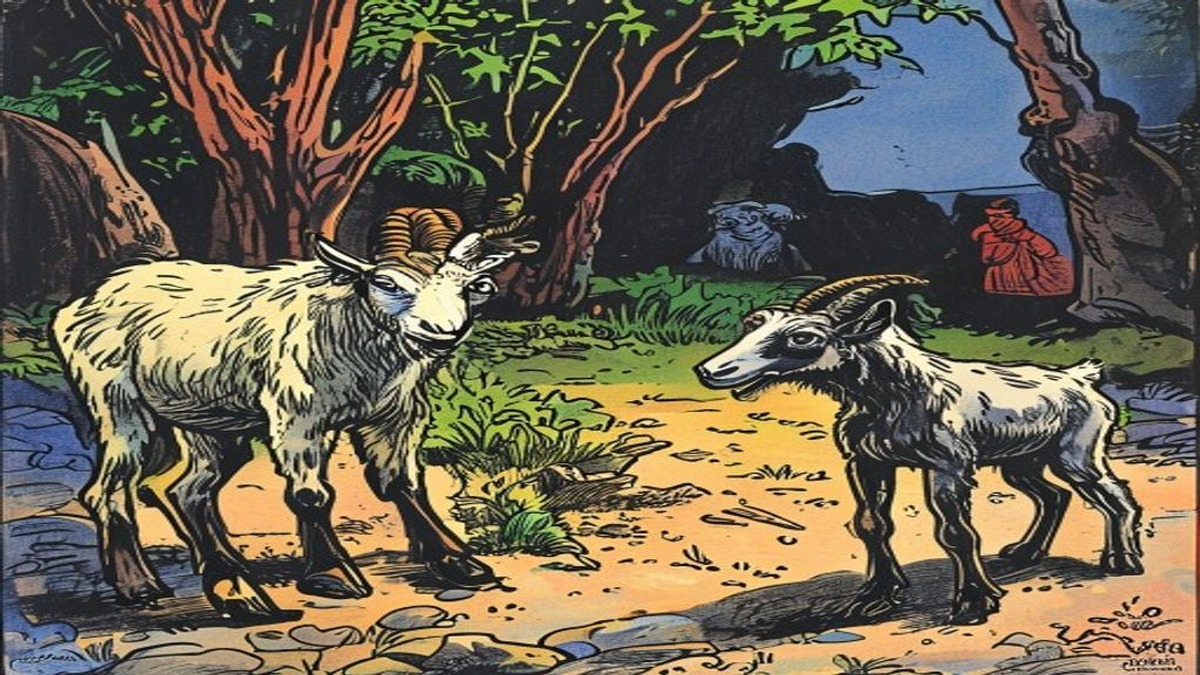
The Pancatantra’s model of sound judgment operates in two phases: assessment of the situation (including its dangers) must precede and constrain the pursuit of any reward available within it. The jackal’s failure is a failure of sequencing: he moved to the reward before completing the assessment. Or more precisely, he did not complete the assessment at all; the appetite replaced it.
For Vishnu Sharma’s royal pupils the lesson has specific political application. Decisions made under the influence of strong appetite — for wealth, territory, alliance, or advantage — are decisions where the cognitive mechanism the jackal demonstrates is most likely to operate. The reward is vivid; the danger is present but unattended. The Arthashastra of Kautilya makes the parallel argument in its treatment of vyasana (addiction or compulsive behaviour): a ruler in the grip of any strong appetite is predictably exploitable by adversaries who understand what that appetite activates and can arrange the right situation around it. The jackal between the rams is Vishnu Sharma’s most compact image of this vulnerability: the danger was not hidden; it was simply not seen, because the blood was.
Moral and Sanskrit Wisdom Tradition
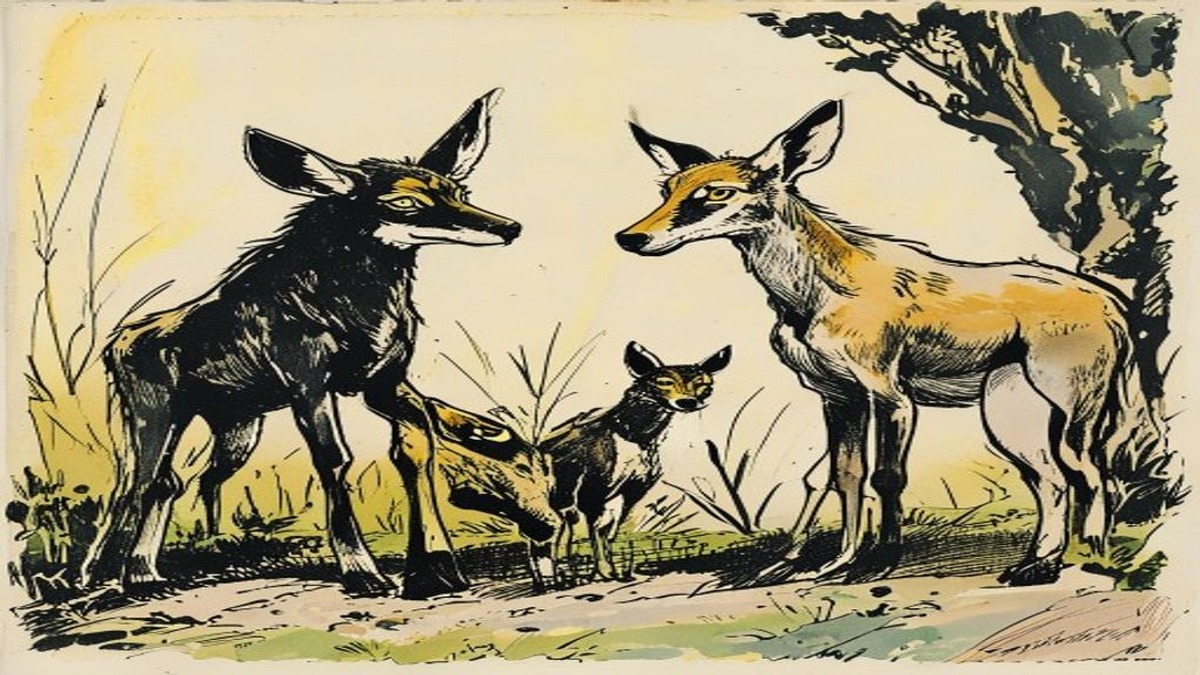
“One who enters a dangerous situation for the sake of appetite, without assessing the danger, is destroyed by it.”
— Moral of The Fighting Goats and the Jackal, Pancatantra Book I (Mitra-bheda)
This moral belongs to the Pancatantra’s sustained teaching on the proper relationship between desire and judgment. Desire — for wealth, advantage, security, pleasure — is not condemned; the Pancatantra is not an ascetic text. What is condemned is the subordination of judgment to desire: allowing appetite to occupy the cognitive space where risk assessment should operate. This is precisely the failure the jackal demonstrates. The Arthashastra addresses the same problem through its categorisation of vyasanas (dangerous compulsions) in rulers; the Mahabharata’s Shanti Parva makes the same argument in extended didactic passages on kama (desire) and krodha (anger) as destroyers of judgment. The jackal’s death is the Sanskrit wisdom tradition’s most economical illustration of the principle.
Why This Story Has Lasted 2,300 Years
The Fighting Goats and the Jackal endures because the cognitive mechanism it illustrates — appetite replacing assessment — is genuinely universal. Every generation produces advisors who recommend what they want to be true, merchants who enter situations whose rewards are visible and whose dangers are not assessed, and individuals who place themselves between forces that will destroy them because what is between those forces is what they want. The tale’s brevity is its strength: it delivers the lesson in the smallest possible space, with no surplus of narrative. The jackal’s death follows inevitably from his decision; the decision follows inevitably from the appetite; and the appetite is entirely legible from the opening scene. Vishnu Sharma needs no moral commentary beyond the compressed observation that follows the story, because the story itself is the argument.
Sanskrit Tradition: Tantrakhyayika (c. 200 BCE, Kashmir); Hitopadesha; structural parallel in Aesopic tradition; Kalila wa Dimna (Arabic, c. 750 CE)
Core Failure: Appetite replacing assessment — the inability to evaluate danger when reward is visible
Author: Vishnu Sharma (attributed, c. 3rd century BCE)
Arthashastra Parallel: Kautilya’s vyasana doctrine: compulsive appetite makes rulers predictably exploitable
You May Also Like
 Panchatantra Stories
Ages 9-12
Panchatantra Stories
Ages 9-12
A Three-in-One Story
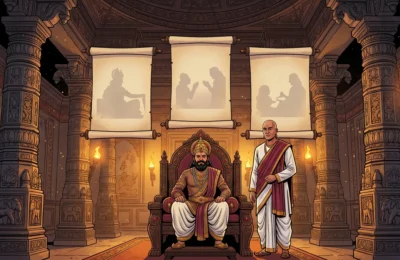
Some Panchatantra tales are simple. A Three-in-One Story is not. It is a tale that hides three little stories inside one bigger story — and each of the three teaches the same surprising lesson: even the wisest grown-ups become foolish when love asks them to be. King Nanda neighs like a horse for his queen, his prime minister Vararuchi shaves his head for his wife, and a third nested tale shows how this folly travels far beyond the palace walls.
 Panchatantra Stories
Ages 6-8
Panchatantra Stories
Ages 6-8
The Brahmin, the Thief, and the Demon
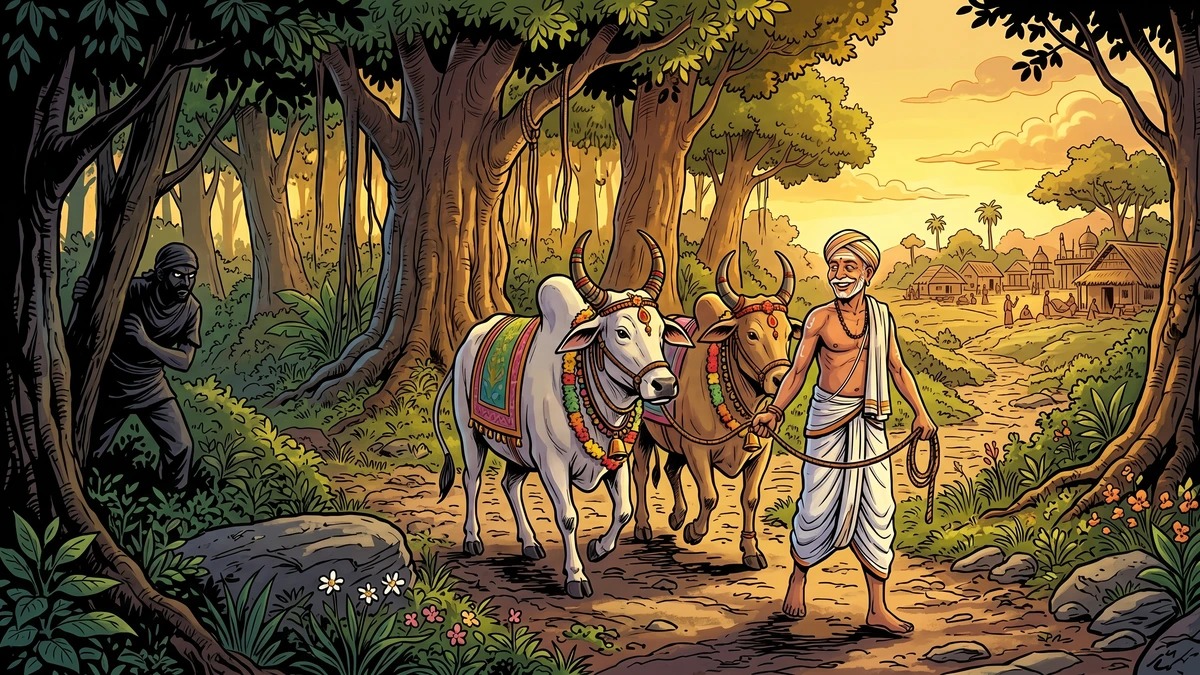
The Brahmin, the Thief, and the Demon. A scholar meets a demon that was once cruel. This tale teaches us about forgiveness, understanding, and seeing good.
 Panchatantra Stories
Ages 3-5
Panchatantra Stories
Ages 3-5
The Story of the Lion, the Jackal and the Cave
The Story of the Lion, the Jackal and the Cave: In a certain part of the jungle, there lived a lion, by the name of Kharanakhara. One day, he felt hungryand