The Crow-Rat Discourse
The Crow-Rat Discourse: After he saw how Hiranyaka had helped Chitragriva, Lagupatanaka came down from his tree perch and called out the rat in a voice
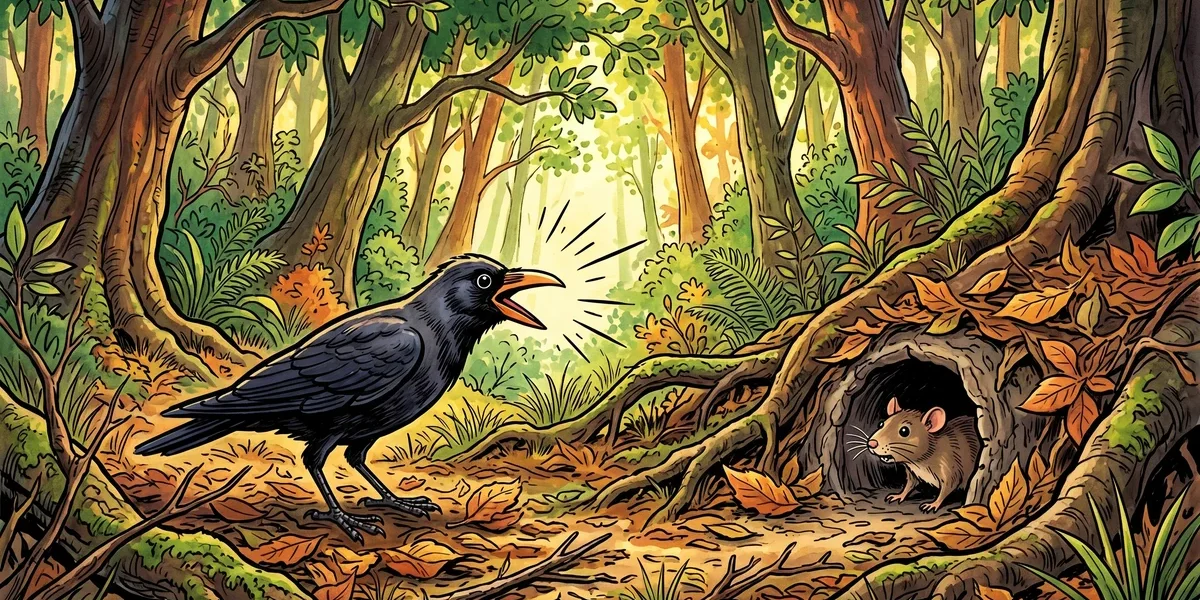
The Crow-Rat Discourse
Canonical Attribution and Manuscript Tradition
The Crow-Rat Discourse is among the most philosophically elaborate of the Pancatantra’s friendship tales. A crow and a rat — natural predator and natural prey — encounter each other under circumstances that make alliance possible, and the tale becomes a sustained meditation on how trust is established between parties with incompatible natural interests, whether such trust can be genuine or is always ultimately strategic, and what reasoning process a wise being should apply before entering into an alliance with a natural enemy. The tale is preserved in all major Sanskrit recensions of the Pancatantra including the Tantrakhyayika (c. 200 BCE, Kashmir) and is developed at length in the Hitopadesha. The crow-rat pair has become a canonical example in Sanskrit didactic literature of the friendship that transcends natural hierarchy.
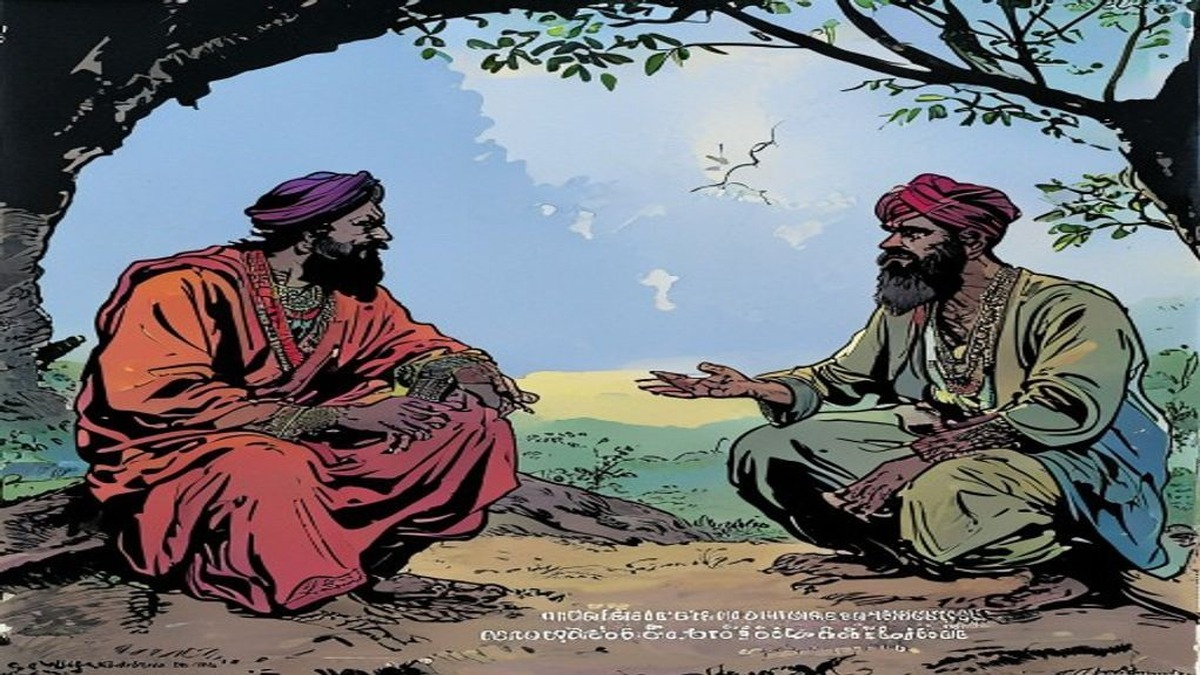
Beat I — The Encounter and the Caution
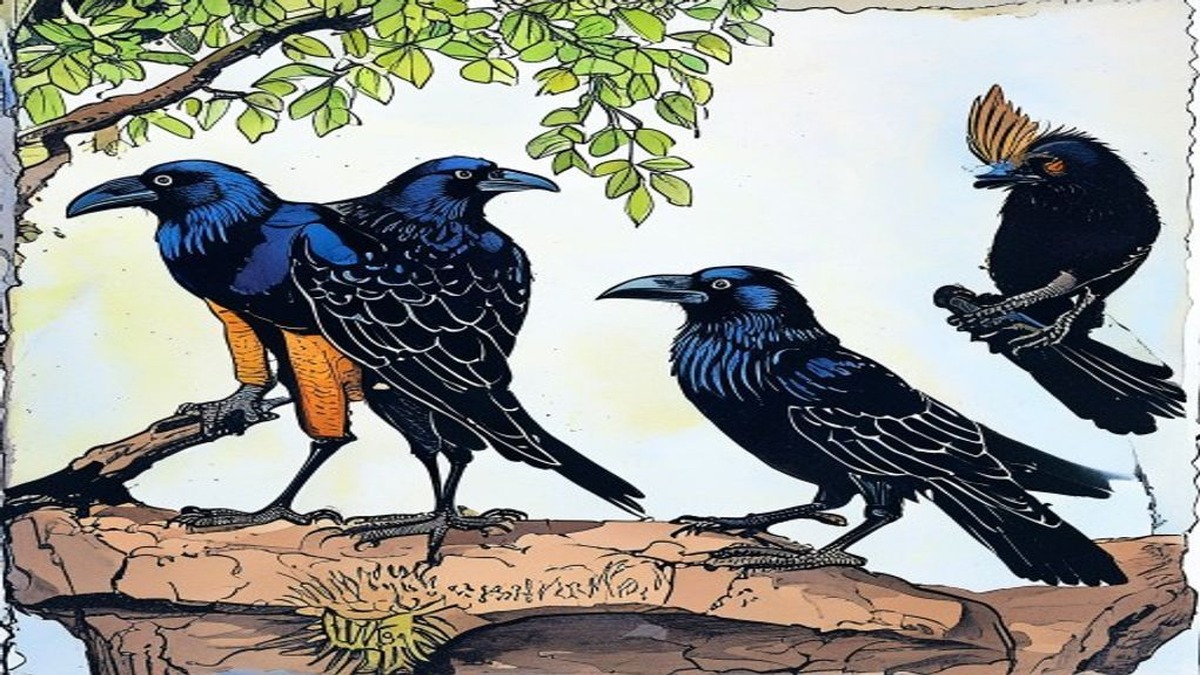
A crow observed a rat and, rather than attacking — which would have been the natural response — approached with expressions of friendly intent. The rat, understandably wary, responded with extensive and careful questioning. Why should a crow seek friendship with a rat? What interest does the crow actually have? Is the expressed desire for friendship genuine, or is it a strategy for obtaining something the crow wants? The rat’s questioning is presented by the Pancatantra not as excessive suspicion but as the appropriate epistemic caution that any being should apply before trusting a natural enemy.
The Pancatantra is establishing an important principle in this opening sequence. Friendship with a natural enemy is not automatically impossible — the tale will demonstrate that it can be genuine and durable — but the burden of proof is higher. The natural enemy must explain themselves; they must provide reasons; their expressed motives must survive scrutiny. The rat’s caution is wisdom, not cowardice.
Beat II — The Discourse on Alliance
The crow’s response to the rat’s questioning constitutes the philosophical core of the tale: an extended argument for why alliance between natural enemies can be rational and genuine. The crow argued that enemies made into friends are more durable allies than natural friends, because the friendship has been tested against the strongest possible obstacle — natural incompatibility — and survived. The natural friend offers alliance without cost; the natural enemy who becomes a friend has overcome something real to do so, and this overcoming is evidence of commitment that the natural friend cannot provide.
The rat engaged seriously with this argument. The discourse that followed — preserved at length in the Sanskrit recensions — covers the conditions under which alliance is rational, the tests that must be applied before extending trust, the difference between strategic partnership and genuine friendship, and the question of what either party gains that they could not gain through other means. The Pancatantra presents the discourse as a model of correct reasoning about alliance: neither credulity nor excessive suspicion, but the careful application of argument and evidence to a decision with significant consequences.
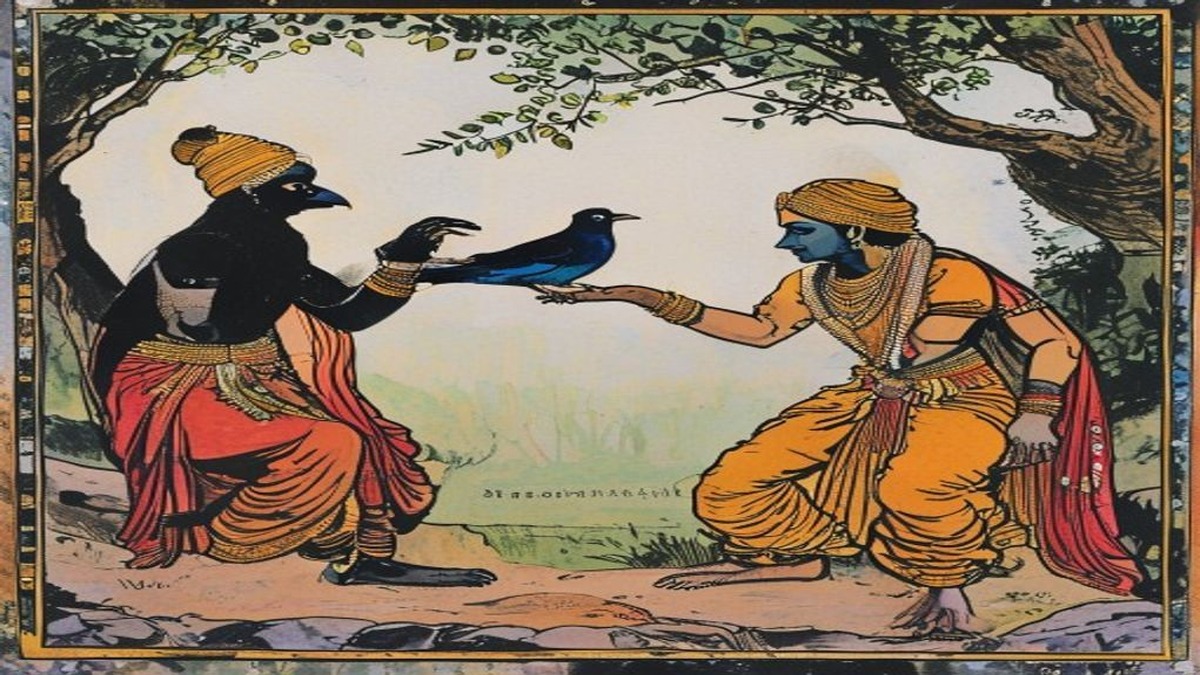
Beat III — The Alliance Formed and Tested
The rat, satisfied by the crow’s reasoning and by the evidence of the crow’s character that the discourse had provided, extended trust and the two formed an alliance. The Pancatantra is careful to show that the trust was not merely declared but earned through the process of reasoning itself: the crow’s willingness to engage seriously with the rat’s questions, to provide arguments rather than simply asserting good intentions, and to submit those arguments to scrutiny was itself evidence of the kind of character that warranted the trust the rat eventually extended.
The alliance was subsequently tested by the circumstances the two encountered together, and the crow demonstrated in action what it had argued in discourse: that the alliance was genuine, that the rat’s interests mattered to it, and that the natural hierarchy of predator and prey had been genuinely transcended rather than merely suspended for strategic purposes. The rat’s initial caution was vindicated not by being wrong but by producing the quality of trust it was designed to produce: carefully examined, thoroughly tested, and therefore genuinely durable.
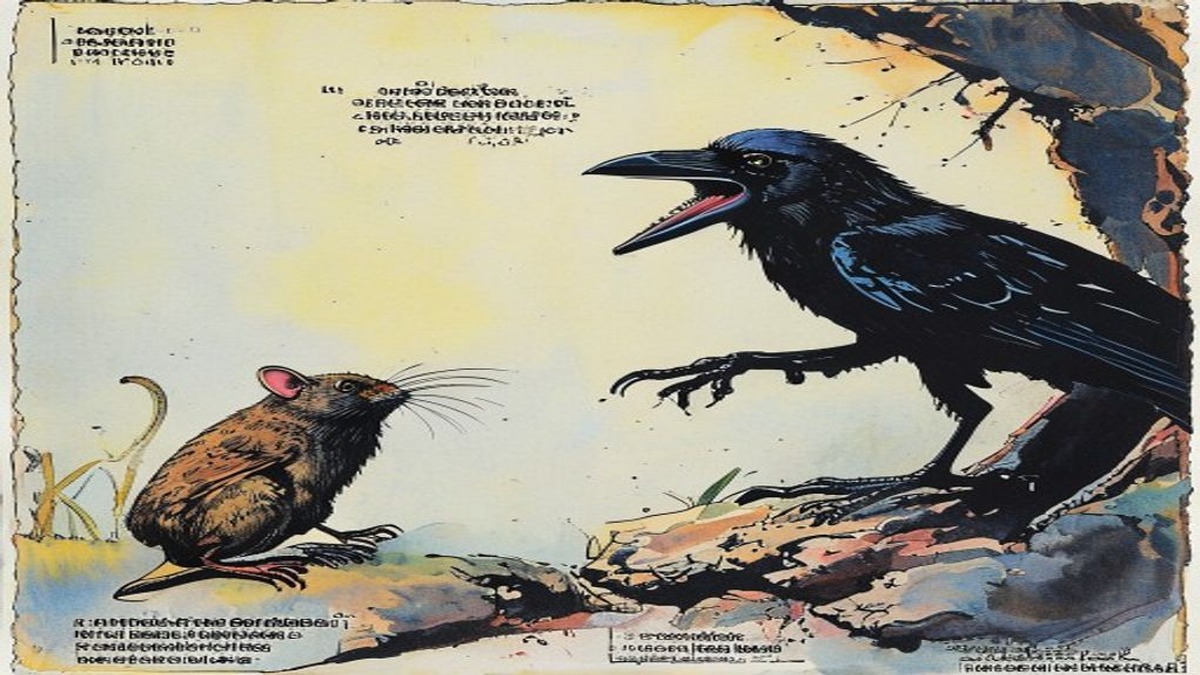
Beat IV — What the Crow-Rat Discourse Teaches About Alliance and Trust
Vishnu Sharma’s argument in this tale addresses what the Pancatantra treats as one of the most important practical questions in political life: how should a ruler or minister reason about potential alliances with parties whose interests are not naturally aligned? The Pancatantra’s answer is structured and specific. First, the burden of proof is proportional to the degree of natural incompatibility: the greater the natural opposition, the more argument and evidence the potential ally must provide. Second, the process of reasoning through the alliance — the discourse itself — is evidence about character. An ally who can articulate good reasons, engage seriously with objections, and submit their arguments to scrutiny is demonstrating the kind of epistemic seriousness that good allies have. Third, alliance formed through this process is more durable than alliance assumed through natural affinity, because it has been tested at its weakest point and survived.
The Arthashastra’s extensive treatment of the mandala theory of states — in which neighbours are natural enemies and neighbours’ neighbours are natural allies — rests on similar reasoning: alliance is a matter of interest and argument, not of natural affinity or inherited relationship. The Pancatantra’s crow-rat pair illustrates the same logic at the level of individual beings.
Moral and Sanskrit Wisdom Tradition
“The enemy who becomes a friend has overcome the strongest obstacle; his friendship, having survived that test, is more durable than the friendship of those who were never opposed.”
— Moral of The Crow-Rat Discourse, Pancatantra Book I (Mitra-bheda)
This moral engages the Sanskrit political tradition’s sophisticated treatment of alliance. The Arthashastra’s mandala theory classifies states by their structural relationship to the ruler’s kingdom and prescribes alliance strategies accordingly: the natural enemy (ari) can become a useful partner when circumstances align their interests against a common threat. The Pancatantra’s crow-rat discourse provides the philosophical underpinning for this practical doctrine: if natural enemies can form genuine alliances through careful reasoning, then the natural enemy is not a permanently closed category. What matters is the quality of the reasoning and the evidence of character that the potential ally provides.
Why This Story Has Lasted 2,300 Years
The Crow-Rat Discourse endures because the problem it addresses — how to reason about trust with parties whose interests are not naturally aligned — is permanent and universal. Every institution, every diplomatic encounter, every business partnership involves some version of this problem. The Pancatantra’s contribution is methodological: not a formula for deciding whom to trust, but a model of the reasoning process through which trust decisions should be made. Scrutinise the arguments, examine the evidence of character that the process of argumentation provides, and calibrate the burden of proof to the degree of risk. The crow-rat pair is canonical because this method is correct.
Sanskrit Tradition: Tantrakhyayika (c. 200 BCE, Kashmir); Hitopadesha
Key Concept: Alliance between natural enemies; reasoning under conditions of natural incompatibility; the discourse process as evidence of character
Author: Vishnu Sharma (attributed, c. 3rd century BCE)
Arthashastra Parallel: Mandala theory of states; the natural enemy as potential ally when interests align; argument over inherited relationship
Frequently Asked Questions
What is the moral of the Crow-Rat Discourse in the Panchatantra?
The moral is that the enemy who becomes a friend has overcome the strongest possible obstacle; his friendship, having survived that test, is more durable than the friendship of those who were never opposed. The Pancatantra argues that alliance between natural enemies, when formed through careful reasoning and genuine scrutiny, is stronger than alliance between natural friends, because it has been tested at its weakest point and survived.
What happens in the Crow-Rat Discourse in the Panchatantra?
A crow approaches a rat — natural predator and natural prey — with expressions of friendly intent. The rat responds with careful questioning: why should a crow seek friendship with a rat? The crow provides an extended argument for why alliance between natural enemies can be rational and genuine. The rat engages seriously with the discourse, is satisfied by the crow's reasoning and demonstrated character, and forms an alliance that proves genuinely durable when tested by subsequent circumstances.
Why does the rat question the crow so carefully before agreeing to an alliance?
The rat's questioning is presented by the Pancatantra not as excessive suspicion but as appropriate epistemic caution. When considering alliance with a natural enemy, the burden of proof is higher than with natural friends. The natural enemy must explain themselves, provide reasons, and submit their arguments to scrutiny. Moreover, the process of reasoning through the alliance is itself evidence about character: an ally who engages seriously with objections is demonstrating the kind of intellectual seriousness that good allies have.
What does the Crow-Rat Discourse teach about how to reason about trust?
The Pancatantra's method is specific: calibrate the burden of proof to the degree of natural incompatibility; examine the arguments the potential ally provides; observe the quality of their reasoning as evidence of character; and recognise that alliance formed through this scrutiny is more durable than alliance assumed through natural affinity. The discourse process itself — the crow's willingness to engage with the rat's questions seriously — is evidence about the kind of being the crow is.
How does the Crow-Rat Discourse relate to Kautilya's Arthashastra and the mandala theory?
The Arthashastra's mandala theory classifies states by structural relationship to the ruler's kingdom, with neighbours as natural enemies and neighbours' neighbours as natural allies. Alliance strategies are prescribed accordingly: the natural enemy is not a permanently closed category when circumstances align interests. The Pancatantra's crow-rat discourse provides the philosophical foundation for this practical doctrine, demonstrating through narrative that natural enemies can form genuine alliances when the reasoning process is applied correctly.
You May Also Like
 Panchatantra Stories
Ages 6-8
Panchatantra Stories
Ages 6-8
The Story of King Chandra
The Story of King Chandra: In a certain city, there lived a king, by the nameof Chandra. His sons kept a troop of monkeys. Theyal ways fed them on a variety of
 Panchatantra Stories
Ages 3-5
Panchatantra Stories
Ages 3-5
The Conquest Of Fate
The Conquest Of Fate: In the Dakshinadêśa there lived a Brâhmiṇ boy who from his childhood was given a very liberal education in Sanskṛit. He had read so much
 Panchatantra Stories
Ages 9-12
Panchatantra Stories
Ages 9-12
The Story of the Female Mouse
The Story of the Female Mouse: On the bank of the river Ganga, there was a beautifulashrama. The water from the river gushed down onrocks, making a tremendous