The Crane and the Mongoose
The Crane and the Mongoose: The solution of the problem should not be worse than the problem itself. That is, while trying to solve the problem, you should not

The Crane and the Mongoose
Canonical Attribution and Manuscript Tradition
This tale belongs to Pancatantra Book I, Mitra-bheda, and is one of the collection’s most sophisticated treatments of the danger of seeking counsel from a party whose interests conflict with your own. The tale’s structure is unusual within Mitra-bheda: the deceiver is not a predator pretending to be a protector but an ostensible ally who provides technically accurate advice designed to produce an outcome that destroys the advice-seeker entirely. The crab tells the crane no lies; every element of its plan is true; the mongoose will follow the trail of food, will find the snake, and will kill it. What the crab does not mention is that having killed the snake, the mongoose will continue, eating every crane in the tree. The advice solves the crane’s stated problem and annihilates the crane simultaneously — a form of weaponised counsel that Vishnu Sharma treats as one of the most dangerous categories of deception precisely because it cannot be detected by evaluating the factual accuracy of what the counsellor says. The tale survives in all major Sanskrit recensions including the Tantrakhyayika (c. 200 BCE, Kashmir) and is paralleled in the Hitopadesha. It does not carry a specific ATU number.
Beat I — The Problem and the Hidden Agenda of the Counsellor
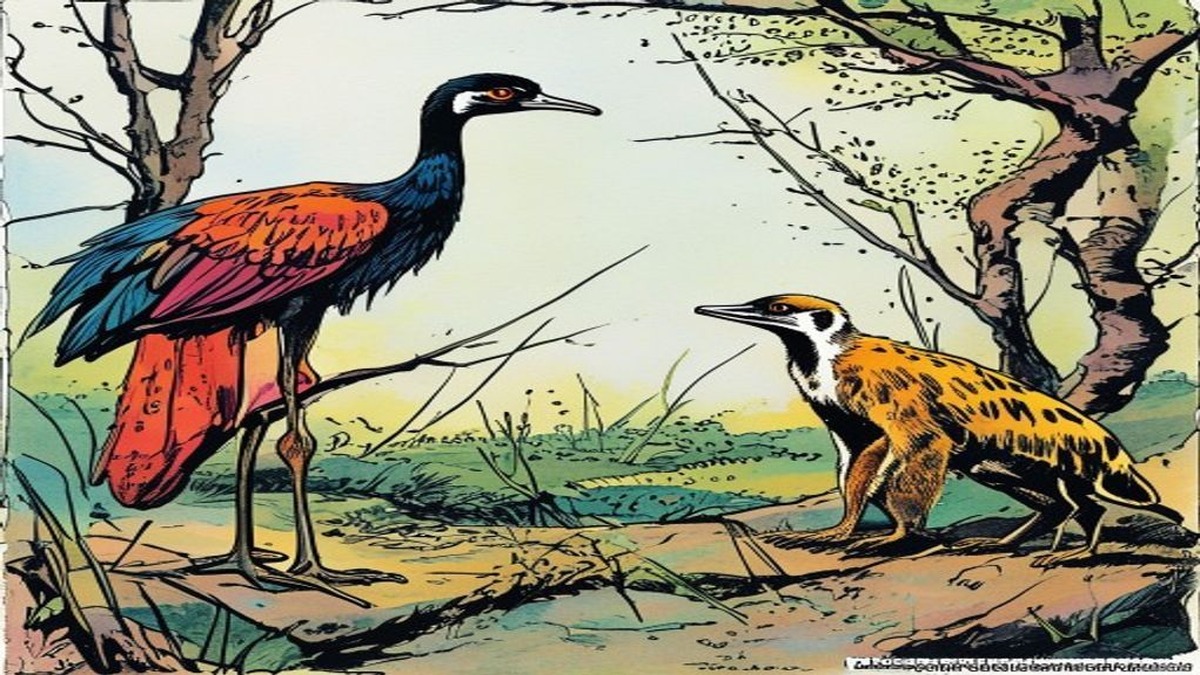
A colony of cranes nested in a large banyan tree beside a lake. In the hollow at the tree’s base lived a black snake that climbed up at each hatching and ate the chicks. One crane who had repeatedly lost her young began weeping on the lake’s bank. A crab heard her and asked what was wrong. The crane explained: the black snake was eating her children and she could not stop it.
The Pancatantra at this point reveals what the crane cannot see: the crab’s internal reasoning. The crab thinks, “I must devise a plan to have the black snake killed and the cranes destroyed at the same time. Cranes are our natural enemy. I will tell the crane half truth and half lies, to my advantage.” This internal monologue is not hidden from the reader; Vishnu Sharma presents it openly. The lesson is not a mystery: the reader is shown that the counsellor has a dual objective from the moment counsel is offered. The crane, who cannot see this, accepts what follows at face value.
The crab’s advice is structurally elegant: scatter fish and flesh in a trail from the mongoose’s burrow to the snake’s hollow. The mongoose will follow the food, find the snake, and kill it. Every element of this advice is accurate. The mongoose will indeed kill the snake. What the crab does not say — and is not asked — is what the mongoose will do after the snake is dead, with a full trail of food leading to a tree full of cranes.
Beat II — The Technically Accurate Destruction
The crane did exactly as instructed. The mongoose followed the trail of food, found and killed the black snake, then continued up the tree and ate every crane in the colony. The snake that had been killing the crane’s chicks was dead. The crane’s stated problem was solved. The crane and its entire community were also dead. The crab had achieved both objectives simultaneously using advice that was, in every particular, factually accurate.
The Pancatantra does not describe the crane’s final understanding of what had happened. This omission is deliberate: there was no opportunity for the crane to understand anything, because the crane died. The story ends with the crab’s complete success and the crane’s complete destruction. There is no partial outcome, no near-miss, no recovery. The tale is designed to demonstrate not the possibility but the certainty of annihilation when counsel is accepted from a party with undisclosed conflicting interests.
Beat III — The Anatomy of Weaponised Counsel
Vishnu Sharma is careful to distinguish this form of deception from the more common forms treated elsewhere in Mitra-bheda. The crane in the companion tales accepted false prophecies and false promises; those deceptions could have been detected by demanding verification of the facts. The crane in this tale accepted accurate advice; no amount of factual verification would have revealed the problem. The crab’s advice was true. The trap was not in the facts but in the selection of which facts to share and which to withhold.
The crab shared the causal sequence leading to the snake’s death and withheld its continuation leading to the cranes’ death. Any party who had asked “and then what will the mongoose do?” would have received either a revealing lie or a revealing silence. The crane did not ask. In distress and offered a solution, it accepted without tracing the full causal consequences — without extending the chain forward past the point where its stated problem was solved. This is the structural error the tale trains its reader to avoid.
Beat IV — The Rule Against Seeking Counsel from Natural Enemies
The Pancatantra’s frame narrative is explicit: the crane went to a natural enemy for counsel about a problem. This is the primary error, from which all others follow. The crab was not a friend who happened to have conflicting interests in this particular matter; the crab was a structural enemy whose interests were opposed to the crane’s in every situation. A structural enemy who offers counsel is not offering counsel; it is offering an instrument of destruction in the form of counsel. Evaluating the accuracy of the advice is irrelevant; the relevant evaluation is whether the advice-giver has interests served by your destruction.
Vishnu Sharma teaches his royal pupils that before accepting counsel they must answer two questions, in this order: First, does this counsellor have interests that are served by my harm? If yes, the counsel cannot be trusted regardless of its apparent accuracy. Second, does the advice, if followed to its full causal consequences and not merely to the point where my stated problem is resolved, produce outcomes I cannot accept? The crane failed on both counts: it did not evaluate the crab’s interests, and it did not trace the causal chain beyond the snake’s death. Either failure alone would have been survivable; both together were fatal.
Moral and Sanskrit Wisdom Tradition
“The solution of the problem should not be worse than the problem itself. While trying to solve a problem, do not complicate the situation further.”
— Moral of The Crane and the Mongoose, Pancatantra Book I (Mitra-bheda)
The Kautilya Arthashastra addresses the same problem under the heading of amatya-pariksha — the examination of ministers and counsellors. Kautilya’s central principle is that a counsellor’s advice must be evaluated not only for its factual accuracy but for the alignment of the counsellor’s interests with the advice-seeker’s welfare. A counsellor whose interests diverge from the advice-seeker’s interests will, when given the opportunity, shape advice to serve their own interests rather than those of the person they are advising. This shaping may take the form of omission rather than fabrication — sharing the facts that lead toward the desired outcome while withholding the facts that would reveal the full consequences. Vishnu Sharma’s tale dramatises exactly this form of weaponised counsel, and positions it as the most dangerous precisely because it is the least detectable.
Why This Story Has Lasted 2,300 Years
The Crane and the Mongoose endures because it describes a form of betrayal that is common and unusually difficult to recognise: the structural enemy who offers technically accurate advice that solves your stated problem while producing your total destruction. The advice is accurate as far as it goes; the damage is in what it does not say and where the causal chain leads after the stated problem is resolved. Vishnu Sharma identified this pattern 2,300 years ago, dressed it in cranes and crabs and a mongoose, and handed it to generations of students as a tool for recognising it in the courts of the ancient world. They encounter it still.
Sanskrit Tradition: Tantrakhyayika recension (c. 200 BCE, Kashmir); Hitopadesha parallel
Key Concept: Weaponised counsel — technically accurate advice structured to destroy the advice-seeker
Author: Vishnu Sharma (attributed, c. 3rd century BCE)
Core Rule: Before accepting counsel, evaluate the counsellor’s interests; then trace the full causal chain, not only to the solution of the stated problem
You May Also Like
 Panchatantra Stories
Ages 3-5
Panchatantra Stories
Ages 3-5
The Brahmin’s Dream of Pots of Rice
A hungry Brahmin dreams of turning one pot of rice into a kingdom — and loses it all with a single careless kick.
 Panchatantra Stories
Ages 9-12
Panchatantra Stories
Ages 9-12
The Story of the Jackal, the Lion, the Leopard and the Tiger
The Story of the Jackal, the Lion, the Leopard and the Tiger: In a certain part of the 9jungle, there lived a jackal, by the name of Mahachaturaka. One day, he
 Panchatantra Stories
Ages 9-12
Panchatantra Stories
Ages 9-12
Elephants and Hares — A Panchatantra Story of Wit Over Might
When a drought drives a herd of elephants to a faraway lake, hundreds of hares lose their burrows under the elephants' feet. A small, calm hare named Vijaya proposes a trick involving the moon's reflection — and convinces the elephant king to bow and march his herd away. A Panchatantra Book III tale on cunning over brute strength.