The Ant and the Grasshopper
The Ant and the Grasshopper: One summer day, a grasshopper was hopping about, playing his fiddle, chirping and singing to his heart’s content. An ant passed by
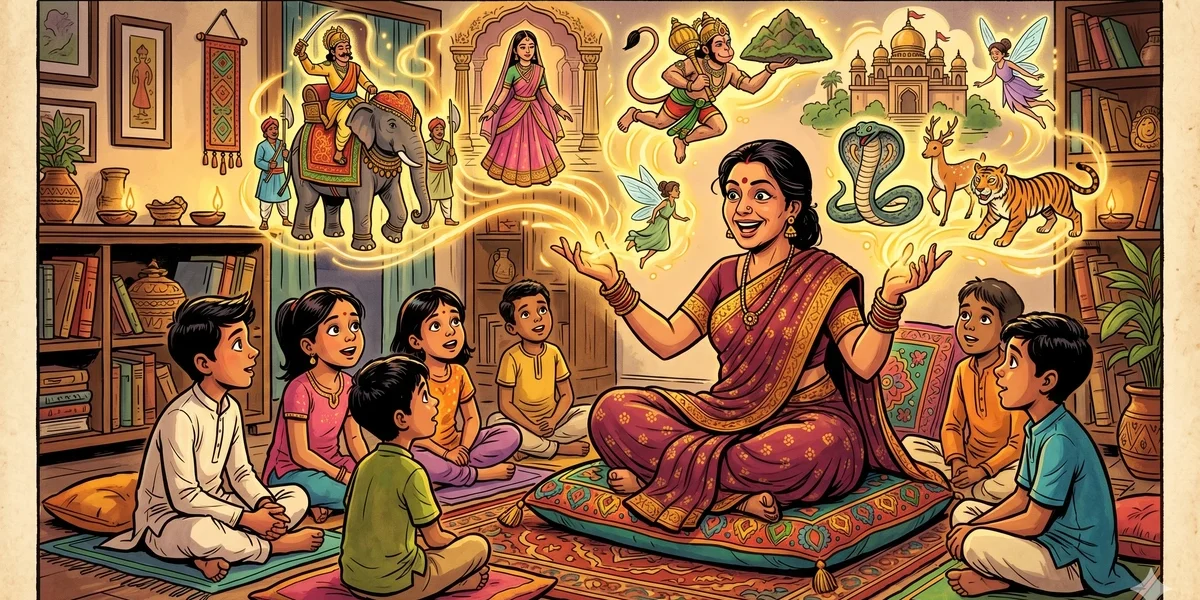
The Ant and the Grasshopper: India’s Reading of Aesop’s Most Contested Fable
Few fables have generated more interpretive controversy than the Ant and the Grasshopper (Aesop’s Fable 373, Perry Index). In its most austere versions, the grasshopper perishes in winter because it sang through summer while the ant stored grain — and the ant’s refusal to help is presented as just. In more compassionate versions, the ant relents, extends charity, and the grasshopper’s music brightens the ant colony’s winter. In Indian retellings, the fable acquires a distinctive third reading: neither the ant’s rigid prudence nor the grasshopper’s improvident joy is fully right — what is called for is a life that integrates the artha (material prudence) of the ant with the kama (joyful vitality) of the grasshopper, because a life fully devoted to accumulation at the expense of beauty is as incomplete as one devoted to beauty at the expense of sustenance.
This third reading reflects the classical Indian four-aim (chaturvarga) framework: dharma (righteous duty), artha (material welfare), kama (pleasure and beauty), and moksha (liberation). A fully human life navigates all four, and the fable presents two characters who each embody only one: the ant embodies artha to the exclusion of kama; the grasshopper embodies kama to the exclusion of artha. Neither achieves dharmic balance. The Indian retelling asks: what would a creature look like who had both?
Artha and Kama: The Inseparable Pair in Indian Ethics
The Arthashastra of Kautilya devotes considerable attention to the relationship between artha (material welfare) and kama (pleasure), insisting that they must be pursued in balance: artha without kama produces a grim, joyless accumulation that serves no human purpose; kama without artha produces beautiful experiences that cannot be sustained when resources run out. Kautilya’s famous metaphor — the man who plans for hunger will eat; the man who eats only when hungry will eventually starve — applies precisely to the grasshopper’s situation. Yet Kautilya equally criticizes the king who accumulates treasure obsessively at the expense of the pleasures that make sovereignty worth having.
The medieval Sanskrit text Panchatantra contains a version of this same insight in the frame story, where the wise Vishnu Sharma tells his students that mastery of artha and kama — as well as dharma and moksha — requires understanding their interdependence rather than treating them as competitors. The ant who refuses the grasshopper charity in winter has, by Kautilya’s standard, violated dana-dharma (the duty of sharing from surplus) — and has therefore sacrificed dharmic completeness for arithmetic sufficiency. The ant has artha but lacks the dharmic generosity that artha is supposed to enable.
The Grasshopper as Artist: Kama and the Value of Beauty
Indian aesthetic philosophy (rasa-shastra) offers a reading of the grasshopper that is unavailable to Greek or Western interpretive traditions: the grasshopper’s singing is not mere play but the production of beauty — a genuine contribution to the ecosystem’s wellbeing that the ant’s grain-carrying does not produce. Bharata’s Natyashastra articulates the philosophical position that the arts — music, dance, drama — are not luxury add-ons to human life but essential components of civilizational health. A village without music, even well-stocked with grain, is impoverished in a dimension the grain cannot address.
The grasshopper’s summer singing may therefore be understood not as irresponsibility but as specialized contribution — the grasshopper produces beauty while the ant produces sustenance, and a fully functioning ecosystem requires both. The fable’s tragedy, in this reading, is not the grasshopper’s improvidence but the community’s failure to establish an exchange relationship in which the grasshopper’s artistic output is recognized as socially valuable and compensated with a winter share of the community’s material abundance. The fable thus becomes a critique of communities that value only instrumentally productive labor and cannot recognize the productive value of beauty.
Dharmic Balance and the Integrated Life
The Indian retelling’s resolution — often more nuanced than simple refusal or simple charity — tends toward a teaching about integration: the ant who has learned from the grasshopper’s joy, and the grasshopper who has learned from the ant’s foresight, together constitute something closer to a complete human being than either was separately. This integrated figure — prudent enough to prepare for winter, alive enough to sing through summer — embodies the Sanskrit concept of yuktahara (right proportion) that the Bhagavad Gita applies to eating, sleeping, and activity: neither too much nor too little of any essential dimension of life.
Gita 6.17 states: “For one who is temperate in eating, recreation, work, and sleep, yoga destroys all sorrow.” The ant and grasshopper together embody the two failure modes on either side of this balance — excess of work-and-preparation (ant) and excess of recreation (grasshopper). The integrated being the fable implicitly calls into being is the one who has internalized both lessons and found the proportion between them that makes a full life possible.
“The ant stored grain and the grasshopper stored songs — and in the end, the colony needed both to survive the winter, because bread alone cannot warm a heart that has forgotten how to feel summer.”
Why This Story Lasted
The Ant and the Grasshopper endures because the tension it embodies — between productive preparation and joyful presence, between artha and kama, between prudence and aliveness — is a permanent feature of human experience. Every person and every culture must find its own working balance between these poles, and no formula can substitute for the ongoing negotiation that balance requires. The fable’s genius is its refusal of a simple answer: the ant is right about grain; the grasshopper is right about song; and what is needed is a community generous enough to recognize the value of both. This is not a comfortable answer, but it is the true one, which is why the fable keeps being told.
Frequently Asked Questions
How does the Indian retelling differ from Aesop’s original?
Aesop’s fable typically vindicates the ant’s prudence and condemns the grasshopper’s improvidence. Indian retellings apply the chaturvarga (four aims) framework — dharma, artha, kama, moksha — to reveal that the ant’s artha without kama is as incomplete as the grasshopper’s kama without artha. Neither achieves dharmic balance; the Indian reading asks what an integrated creature embodying both would look like.
What does Kautilya’s Arthashastra say about artha and kama?
Kautilya insists artha and kama must be balanced: artha without kama produces grim, purposeless accumulation; kama without artha produces beautiful experiences that cannot be sustained. He also frames the ant’s refusal of charity as a violation of dana-dharma (the duty of sharing from surplus) — meaning the ant has sacrificed dharmic completeness for arithmetic sufficiency.
Is the grasshopper’s singing productive in the Indian philosophical frame?
Yes — Bharata’s Natyashastra articulates that music and arts are essential components of civilizational health, not luxury add-ons. The grasshopper produces beauty while the ant produces sustenance; a fully functioning community requires both. The fable’s tragedy may be the community’s failure to recognize artistic production as socially valuable and compensate it with material support.
What does the Bhagavad Gita’s yuktahara concept contribute to this tale?
Gita 6.17 teaches yuktahara — right proportion in eating, recreation, work, and sleep. The ant embodies excess work-and-preparation; the grasshopper embodies excess recreation. The integrated being the fable calls into being is the one who has found the balance between them — prudent enough to prepare for winter, alive enough to sing through summer — which is what the Gita identifies as the foundation of yoga.
Does the Indian retelling have the ant help the grasshopper?
Indian retellings tend toward a more nuanced resolution than either simple refusal or simple charity — often toward mutual learning: the ant who has absorbed something of the grasshopper’s joy and the grasshopper who has learned something of the ant’s foresight. The dana-dharma obligation (sharing from surplus) suggests the ant should help; but the deeper teaching is integration rather than just charity.
You May Also Like
 Aesop's Fables
Ages 9-12
Aesop's Fables
Ages 9-12
The Death And Burial Of Poor Sparrow
The Death And Burial Of Poor Sparrow: Once upon a time there lived a cock-sparrow and his wife, who were both growing old. But despite his years the All living
 Aesop's Fables
Ages 3-5
Aesop's Fables
Ages 3-5
Re-uniting old friends through social media
Re-uniting old friends through social media: The air was very clear and the long morning shadows distinct through the windows. Rays of sun shining through them
 Aesop's Fables
Ages 3-5
Aesop's Fables
Ages 3-5
The Poisoned Food
The Poisoned Food: When Manuniti had concluded his story of the wonderful mango-fruit, king Alakesa ordered his four ministers to approach the throne, and