The Poisoned Food
The Poisoned Food: When Manuniti had concluded his story of the wonderful mango-fruit, king Alakesa ordered his four ministers to approach the throne, and
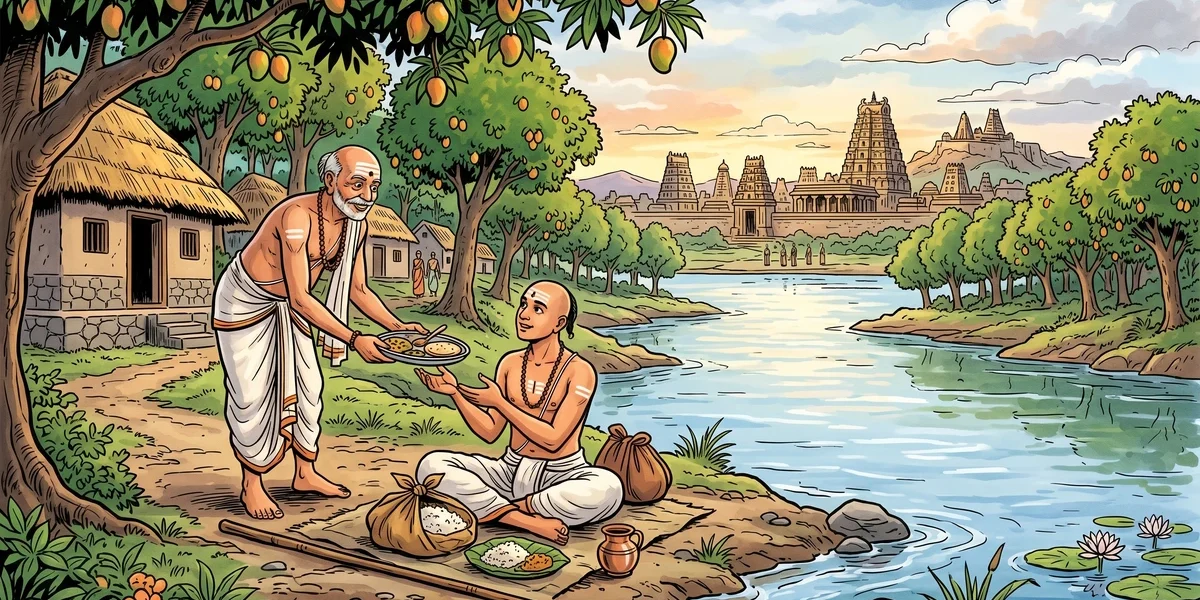
The food looks perfect. The host is gracious. The guest lifts the bowl. And somewhere in the preparation, a decision was made that transforms hospitality into its opposite: the nourishing gift into a lethal weapon. Poisoned food is among the darkest acts in the Indian folk moral imagination — not because poison is the most violent method of harm (it is not), but because it violates the most sacred of all human institutions: the gift of food. Annam Brahma — food is Brahman, the ultimate reality — declares the Taittiriya Upanishad. To poison food is to desecrate the sacred, to turn the very substance of life into an instrument of death. The folk tale that confronts this act is among the tradition’s most morally serious.
I. Annam Brahma: The Sacred Status of Food in Indian Thought
Few philosophical traditions have elevated food to the metaphysical status that Indian thought gives it. The Taittiriya Upanishad’s declaration — annam Brahma, food is Brahman — is not merely poetry; it is a claim about the nature of reality. Food is what sustains life; life is the manifestation of Brahman in the world; therefore food is among the most direct material expressions of the divine. This ontological elevation of food has consequences for how the tradition thinks about every act involving food: cooking is a sacred act, sharing is a religious obligation, and the violation of food’s sacred character is a metaphysical crime as well as a practical one.
The hospitality bond (atithi-devo-bhava — the guest is God) operates within this framework. When a host offers food to a guest, the act participates in the sacred economy of divine generosity: the divine gives life through food; the host imitates the divine by giving food to those who need it. To poison food given to a guest is to simultaneously violate the divine nature of food, the sacred obligation of hospitality, and the basic human covenant that the sharing of food creates. It is among the worst acts in the Indian folk moral taxonomy — worse, in some ways, than open violence, because it uses the sacred as a weapon and corrupts the most fundamental of trusting relationships.
The folk tales that deal with poisoned food take this moral weight seriously. They are not primarily about cleverness in detecting the poison or avoiding its effects; they are about the confrontation between the sacred order (which food represents) and the act that has violated it. The detection and punishment of the poisoner is not merely practical justice; it is cosmic restoration — the re-establishment of the sacred order that the poisoning disrupted.
II. The Epistemology of Poison: Detecting the Invisible
Poison presents a specific epistemological challenge that makes the poisoned food tale a natural vehicle for demonstrating analytical intelligence. Unlike most crimes, which leave visible evidence — blood, broken objects, missing items — poison leaves no visible trace. The food looks perfect; the host appears gracious; the act of malice is entirely hidden within the substance of the gift. To detect the poison before it is consumed — or to prove that a death was caused by poison rather than natural causes — requires indirect reasoning: reading the symptoms, recognising anomalies in the presentation, noticing what is missing from the usual sequence of events.
The Indian tradition of toxicology (visha-shastra) was sophisticated and ancient. Kautilya’s Arthashastra devotes substantial attention to the detection of poisoned food at the royal court, prescribing elaborate protocols: food tasters, observation of the food’s reaction to flame and water, signs in the behaviour of birds and animals that have been exposed to it. These protocols assume that poison can be detected — that it leaves traces in the food or produces observable effects in test organisms — and they frame the detection of poison as a technical skill as much as a moral one.
Folk tales about poisoned food typically feature a figure who possesses this detecting skill — a wise woman, a clever child, an animal companion, a deity in disguise — and who intervenes to prevent the poisoning’s success. The intervention is the tale’s pivot: from the moment of detection onward, the poisoner’s plan unravels, the intended victim is saved, and the machinery of justice begins its work. The detective of the poison tale needs the combined skills of the doctor (recognising symptoms), the chemist (understanding the substance), and the analyst (reading the social situation to identify motive and opportunity) — and the folk tradition celebrates this combination as wisdom of the highest practical order.
III. The Unmasking and Its Consequences
The poisoned food tale’s resolution requires not merely the detection of the poison but the identification of the poisoner — the unmasking of the person whose outward graciousness concealed an act of ultimate betrayal. This unmasking is the tale’s most charged moment: the moment when the false host is revealed, when the sacred hospitality bond is shown to have been corrupted from within, when the guest who trusted sees clearly what was being offered under the cover of trust.
The Indian folk tradition’s punishment for this crime reflects its moral weight. The poisoner in these tales does not merely face legal consequence; they face a comprehensive social, spiritual, and often cosmic reckoning. The violation of hospitality — of food’s sacred nature — attracts the attention of the divine order that food represents, and the consequences are proportionate to the crime. The folk tale ensures that the desecration of annam Brahma does not pass without the cosmic order noticing and responding.
The tale also explores the psychology of the poisoner: typically a person consumed by jealousy, greed, or fear who has convinced themselves that the violation of sacred norms is justified by the urgency of their need. The folk tradition is rarely interested in this self-justification; it is more interested in the clarity with which the poisoner’s act is recognised and named. The act of poisoning food is so unambiguous a violation of the moral order that the tradition does not need to complicate it with psychological nuance — the crime speaks clearly, and the tale’s work is to ensure it is heard.
“The poison hidden in the gift reveals more about the giver than any honest theft could.”
— Saying from the Indian hospitality-ethics tradition
Why This Story Lasted
The Poisoned Food lasted because the betrayal of trust through hospitality is among the most universally recognised of moral transgressions — the act that turns the most intimate and sacred of human bonds into a weapon. Every culture that has a strong hospitality ethic has folk tales about its violation, because the hospitality bond is only as strong as the faith that it will not be abused, and that faith must be reinforced by stories that make the consequences of its violation vivid and real.
The tale also lasted because it presents a specific kind of moral challenge that audiences find compelling: the crime that is invisible until detected, the innocence that cannot protect itself without assistance, and the intelligence that sees through the surface to the hidden act. The detection of the poison is the detection of a lie that wears the face of generosity — and the pleasure of seeing that lie unmasked is among the deepest satisfactions that narrative can provide.
What is the meaning of annam Brahma in Indian philosophy?
Annam Brahma (“food is Brahman/God”) is a declaration from the Taittiriya Upanishad stating that food is among the most direct material expressions of the divine. Since food sustains life and life is the manifestation of Brahman in the world, food participates in the divine nature. This elevates every act involving food to sacred status: cooking becomes a sacred act, sharing a religious obligation, and the violation of food — particularly the poisoning of food offered to a guest — becomes a metaphysical crime against the divine order, not merely a practical harm against an individual.
Why is poisoning food considered a particularly serious crime in Indian folk ethics?
Poisoning food violates multiple sacred bonds simultaneously: the divine nature of food itself (annam Brahma), the hospitality covenant (atithi-devo-bhava — the guest is God), and the basic human trust that the sharing of food creates. It uses the sacred as a weapon, corrupts the most fundamental of trusting relationships, and harms through the very act of apparent generosity. The folk tradition regards it as worse in some respects than open violence, because it conceals malice within the sacred form of giving rather than committing it openly.
What is visha-shastra in Indian tradition?
Visha-shastra is the traditional Indian science of toxicology — the systematic knowledge of poisons, their properties, their effects, and their detection. Kautilya’s Arthashastra devotes substantial attention to poison detection at the royal court: food tasters, observation of food’s reaction to flame and water, and the behaviour of birds and animals exposed to suspect food. This sophisticated tradition frames poison detection as a technical skill requiring the combined knowledge of medicine, chemistry, and social analysis — exactly the skills folk tale detectors of poisoned food are shown to possess.
How is the poison typically detected in folk tales of this type?
In poisoned food folk tales, detection typically comes from a figure who possesses the combined skills of doctor (reading symptoms), analyst (reading the social situation to identify motive and opportunity), and sometimes chemist (understanding the substance). Common detection mechanisms include animal companions that refuse the food (birds that sicken, animals that avoid it), wise figures who notice anomalies in presentation or sequence, children or innocents whose unclouded perception sees what adults’ social assumptions obscure, or supernatural intervention when the sacred order of food has been violated beyond human capacity to detect.
What consequences does the poisoner face in Indian folk tradition?
The poisoner in Indian folk tales faces consequences proportionate to the crime’s metaphysical weight: not merely legal punishment but comprehensive social, spiritual, and often cosmic reckoning. The violation of food’s sacred nature attracts the attention of the divine order, and the folk tale ensures the cosmic consequences are as complete as the crime. The poisoner is typically exposed publicly, losing the social standing they sought to preserve or advance through the act, and the sacred order of hospitality is restored through a resolution that makes clear the divine economy’s response to its violation.
Frequently Asked Questions
**Q: Why is this story important?**
You May Also Like
 Aesop's Fables
Ages 3-5
Aesop's Fables
Ages 3-5
Bholu’s Freedom | What Does Freedom Mean?
Bholu’s Freedom | What Does Freedom Mean?: The construction site looked like a huge maze, filled with the various sounds emanating from men and machinery. True
 Aesop's Fables
Ages 9-12
Aesop's Fables
Ages 9-12
The North Wind and the Sun
The North Wind and the Sun: In the time when the gods still walked among mortals and the forces of nature were personified as powerful beings with their own
 Aesop's Fables
Ages 3-5
Aesop's Fables
Ages 3-5
The Story Of The King Who Would Be Stronger Than Fate
The Story Of The King Who Would Be Stronger Than Fate: Once upon a time, far away in the east country, there lived a king who loved hunting so much that, when