Story of The Merchant’s Son
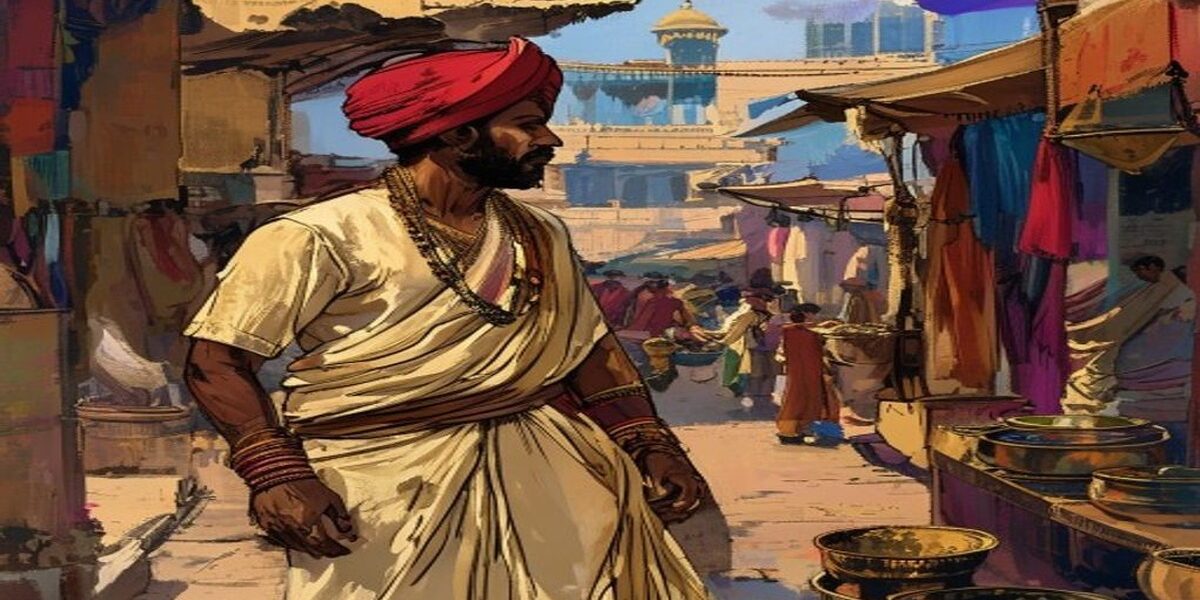
Story of The Merchant's Son: Sagargupta was a merchant living in one of the country’s big cities. He had a son, who, one day purchased a book whose only
Story of the Merchant’s Son
Canonical Attribution and Manuscript Tradition
This tale belongs to Pancatantra Book I, Mitra-bheda, and belongs to the Pancatantra’s substantial body of tales about the formation of character through experience rather than through inheritance. The story is preserved in all major Sanskrit recensions including the Tantrakhyayika (c. 200 BCE, Kashmir) and appears in the Hitopadesha. The merchant’s son story type is widespread in Sanskrit didactic literature: a young man from a prosperous family is sent to study or to trade in a distant place, loses the support of his family’s resources and reputation, is forced to navigate the world on his own capabilities, and either succeeds or fails based on what his character actually is rather than on what his family’s position provided. The Pancatantra’s version argues that adversity, encountered and survived, is itself the education that no formal training provides: the merchant’s son knows, at the end of the tale, what he could not have known at the beginning.
Beat I — The Departure and the Loss of Position
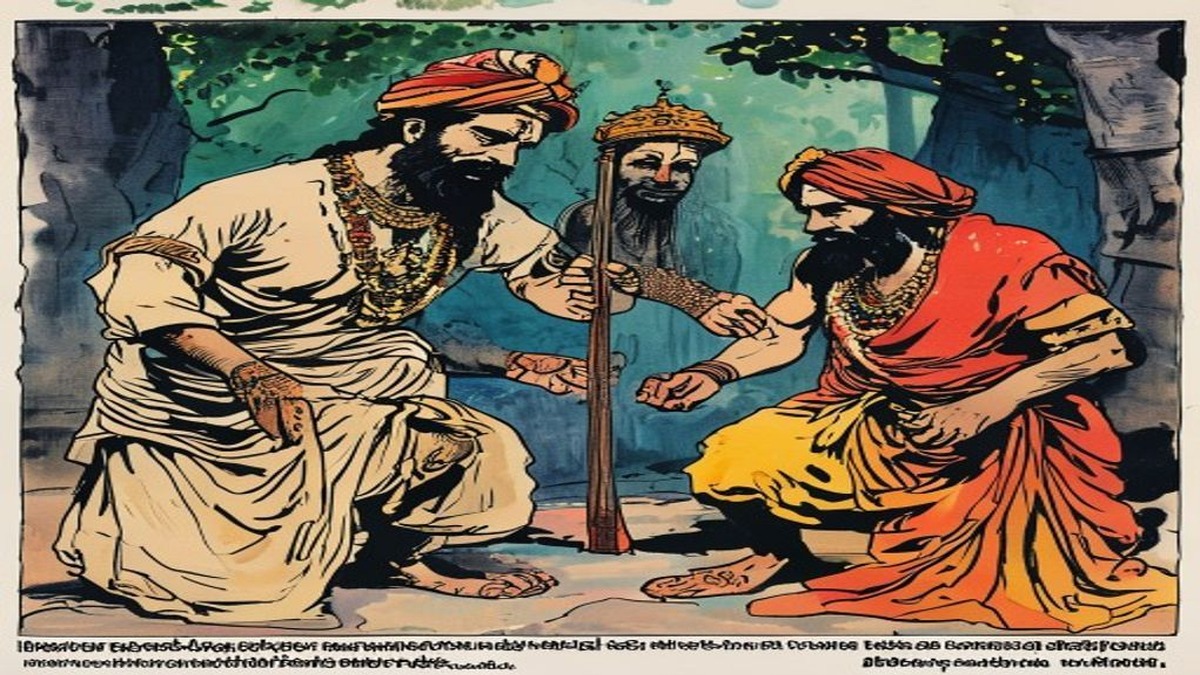
A prosperous merchant sent his son away to study or to trade in a distant city. The son arrived without the network of relationships, the established credit, and the social reputation that had supported him at home. In his home city, he was the merchant’s son: a known quantity, someone whose family’s track record provided a foundation of trust before he had demonstrated anything himself. In the distant city he was nobody: an unknown young man with claims about his background that no one could verify and that were therefore worth little in practical terms.
This reduction to actual individual capacity — stripped of the family’s reputation, the network’s support, the home city’s prior knowledge — is the Pancatantra’s first and most important observation about the merchant’s son’s situation. Most of what passes for individual ability in a position of inherited social support is actually the support itself. The merchant’s son did not know, when he left home, how much of his functional capacity was his own and how much was the family name. The distant city would answer that question in a way the home city never could.
Beat II — The Adversity and the Response
The merchant’s son encountered adversity in the distant city: losses in trade, possibly through inexperience or bad judgment; social isolation in an unfamiliar environment; and the specific humiliation of coming from a position of comfort and being reduced to modest or difficult circumstances without the social support that would have cushioned such a reduction at home. The adversity was real, sustained, and uncomfortable. The question the tale turns on is how the son responded to it.
The Pancatantra’s account, consistent with its broader pedagogical aim, emphasises that the son responded correctly: not with self-pity, not with the complaint that his difficulties were unworthy of someone of his background, but with the practical engagement with his actual situation that the situation required. He identified what he actually knew how to do, what resources he actually had available, and what relationships he could genuinely form in his new environment. He did not attempt to substitute the reputation he had left behind for the demonstrated competence that the new environment required; he worked to develop demonstrated competence on the terms the new environment set.
Beat III — The Gradual Recovery
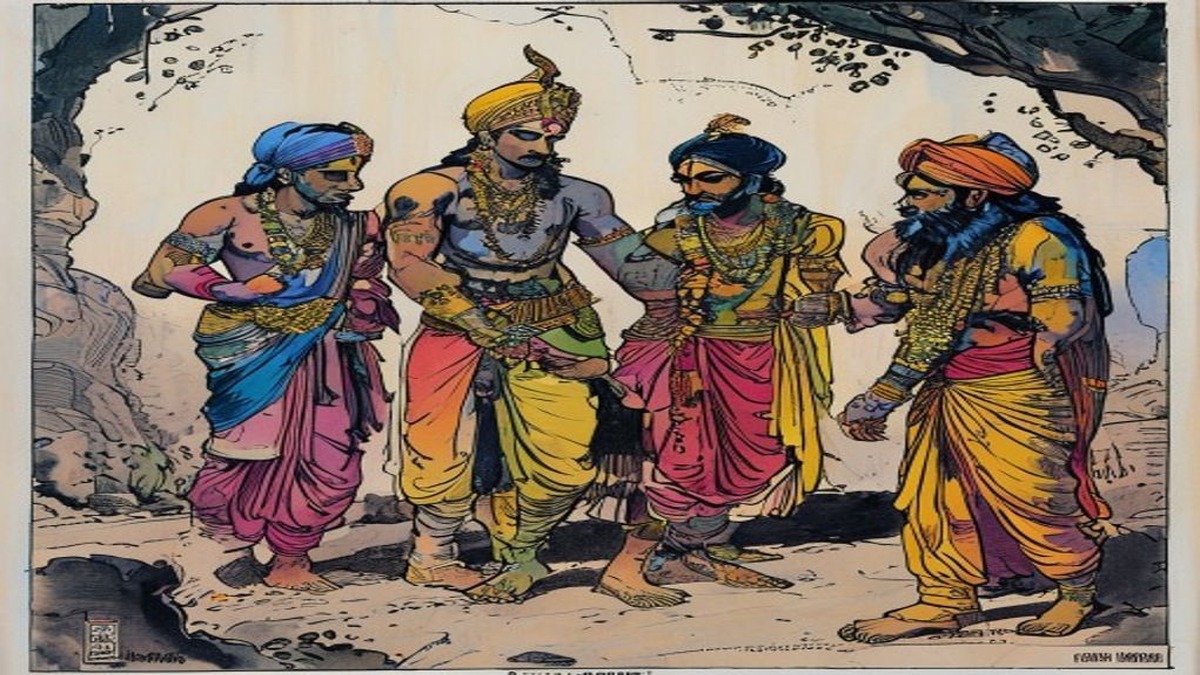
The merchant’s son built his position in the distant city through the quality of his actual conduct: his reliability in the commitments he made, his honesty in his dealings, his care in the relationships he formed. The recovery was gradual — not the sudden reversal that dramatic narrative favours but the slow accumulation of actual credit in an environment where credit could only be earned by demonstrated behaviour over time. What the son was building was not the replica of his father’s position but something more durable: a position based on what he himself had done rather than on what his family had done before him.
The Pancatantra notes, without excessive emphasis, that the position eventually built on this foundation was solid in a way that the inherited position had not been. The inherited position could be displaced by leaving its environment; the earned position travelled with its holder because it was constituted by the holder’s own character and track record. The merchant’s son, having built this position, returned home transformed: not merely older but equipped with knowledge about his own actual capabilities that the inheritance had never disclosed.

Beat IV — What the Merchant’s Son Teaches About Character and Adversity
Vishnu Sharma’s argument in this tale is directed at a specific question that recurs throughout the Pancatantra: what is character, and how is it known? The Pancatantra’s answer is consistent across its tales: character is what a person does when the external supports have been removed — when the family name, the established network, the familiar environment, and the cushion of prior credit are not available. The merchant’s son’s character was not formed by the adversity; it existed before the adversity. What the adversity did was reveal it, to the son himself and to anyone who observed him through the period of difficulty.
For Vishnu Sharma’s royal pupils the application is direct. Courts support individuals with titles, family connections, and prior credit that make assessment of actual character difficult. The merchant’s son story demonstrates the value of situations where these supports are absent — where the individual performs on their own terms. This is consistent with the Arthashastra’s methods for assessing ministerial character: tests designed to reveal actual dispositions in conditions where official position confers no protection. Adversity is not merely misfortune but an information-producing situation.
Moral and Sanskrit Wisdom Tradition
“Adversity does not form character; it reveals it — to the world and to the person themselves.”
— Moral of Story of the Merchant’s Son, Pancatantra Book I (Mitra-bheda)
This moral engages the Sanskrit tradition’s extensive treatment of svabhava (inherent nature or character) and the conditions under which it becomes knowable. The Mahabharata’s Shanti Parva addresses the same question: inherited position can conceal character; adversity reveals it. The Arthashastra’s methods for testing ministerial character before appointment — including situations designed to expose actual dispositions rather than performed loyalty — rest on the same premise. Vishnu Sharma’s contribution is the narrative demonstration: the merchant’s son, in the distant city without his father’s support, becomes legible to himself and to others as the character he actually is, not the character his position had allowed him to assume.
Why This Story Has Lasted 2,300 Years
The Story of the Merchant’s Son endures because the question it addresses — what am I actually capable of, absent the supports that normally cushion and conceal? — is among the most consequential a person can face, and because the experience of having it answered by adversity is both universal and formative. The Pancatantra’s insistence that this is information rather than merely misfortune — that what adversity reveals is worth knowing, and that the person who has passed through it knows something essential about themselves that could not have been known otherwise — is the tale’s most durable contribution. The merchant’s son returns home not diminished but better informed about what he is, which the Pancatantra treats as a form of wealth that the inheritance never provided.
Sanskrit Tradition: Tantrakhyayika (c. 200 BCE, Kashmir); Hitopadesha
Key Concept: Svabhava (inherent character) made legible through adversity; adversity as information-producing situation
Author: Vishnu Sharma (attributed, c. 3rd century BCE)
Arthashastra Parallel: Kautilya’s methods for testing ministerial character: situations designed to reveal actual dispositions rather than performed loyalty
You May Also Like
 Panchatantra Stories
Ages 3-5
Panchatantra Stories
Ages 3-5
The Three Fish – Moral Story for Kids
The Three Fish – Moral Story for Kids: Once upon a time, there lived three big fish in a lake. They were close friends, but characteristically very different.
 Panchatantra Stories
Ages 9-12
Panchatantra Stories
Ages 9-12
The Story of the Farmer’s Wife
The Story of the Farmer’s Wife: In a certain town, there lived a farmer and his wife. As her husband was old, the woman was always thinkingof other men and
 Panchatantra Stories
Ages 6-8
Panchatantra Stories
Ages 6-8
The Tale of Two Snakes
A Panchatantra fable about a prince cursed by a serpent, whose wife discovers the secret to his cure by listening.