First Story
First Story: The Beginning of All Tales. Why do we tell stories? Discover how stories came to be and why they matter to human hearts throughout history.
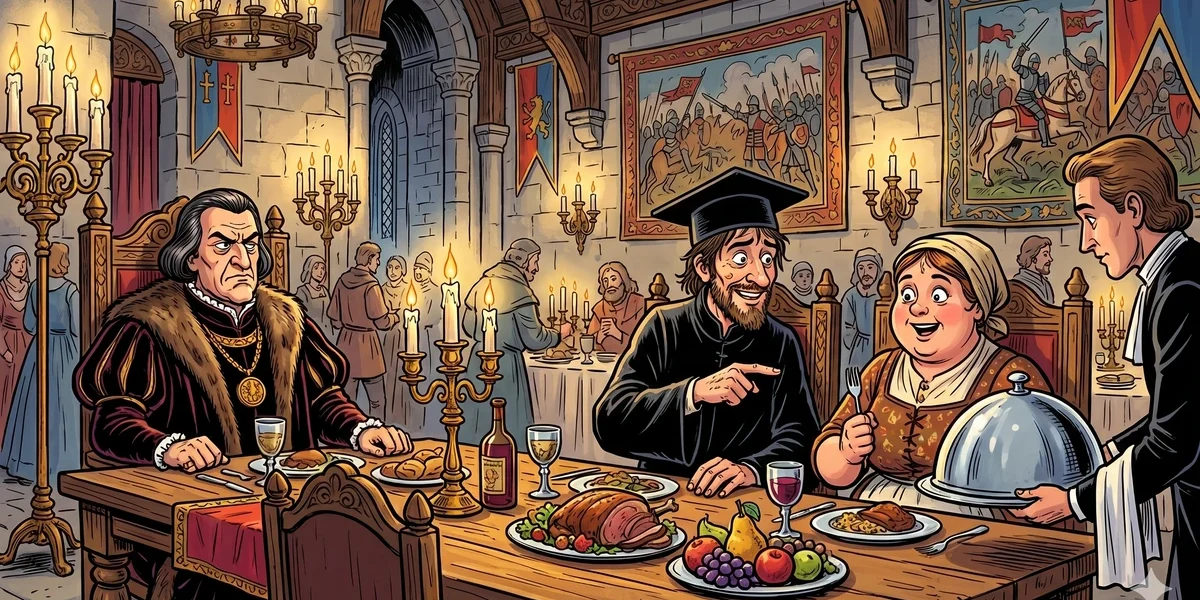
The First Story: Before All Other Tales
Every tradition of storytelling contains within it, implicitly or explicitly, a story about how storytelling began — a meta-narrative that attempts to account for the astonishing fact that human beings tell stories at all, and that stories, once told, persist and transform across generations, cultures, and languages. “First Story” in the Brothers Grimm tradition gestures toward this origin: the moment before all other moments in narrative time, when the first tale was told and the entire human project of making meaning through fiction was initiated. This is not merely a charming conceit; it is a profound philosophical inquiry into the nature of narrative consciousness itself.
Indian tradition is exceptionally rich in accounts of narrative origin. The Ramayana begins with Valmiki’s grief at witnessing the hunter’s arrow kill the male krauncha bird — that grief spontaneously crystallizing into the first shloka (verse) and initiating the entire Sanskrit poetic tradition. The Mahabharata’s frame story involves a sage telling the tale at a snake sacrifice, embedded within other frame stories, suggesting that narrative is recursive: every story contains within it the conditions that produce more stories. The Panchatantra’s frame story presents Vishnu Sharma as the teacher who uses animal fables to educate three princes — proposing that story is the most efficient vehicle for transmitting wisdom across the gap between the knowing and the not-yet-knowing mind.
Adi-Katha: The Sanskrit Concept of the Original Story
Sanskrit narrative theory has a concept for the tale that stands before all others: adi-katha (primordial story, first tale). The Ramayana identifies itself as the adi-kavya (first poem) — the primordial literary work from which all subsequent Sanskrit poetry flows. But the concept extends beyond any specific text to the recognition that human meaning-making through narrative is itself primordial: it precedes writing, precedes systematic philosophy, precedes recorded history. The first story was told before any of the structures that would eventually preserve it existed; yet it survives in the cultural memory that all subsequent stories have carried forward.
The Rigveda’s creation hymns (Nasadiya Sukta, 10.129) pose the question of what existed before existence: “Darkness was hidden by darkness in the beginning; all this was undifferentiated flux.” This pre-narrative state — before differentiation, before subject-object distinction, before the sequence of events that constitutes a story — is the cosmic analog of the moment before the first story. The first story emerges from this undifferentiated flux by imposing sequence, character, and causality on experience: this happened, then that happened, because of this. Story-structure is the cognitive structure of causality applied to time, and its emergence is therefore as fundamental as the emergence of consciousness itself.
Why Stories Begin: The Necessity of Narrative in Human Cognition
Cognitive scientists and evolutionary psychologists who study narrative have converged on a striking finding: human beings are constitutively narrative creatures. We do not merely tell stories as an optional cultural activity; we think in stories, remember in stories, plan in stories, and understand ourselves through stories. This finding — that narrative is not a cultural luxury but a cognitive necessity — is one that Indian philosophical tradition anticipated through the concept of itihasa (thus it happened: the word used for epic narrative). The Mahabharata and Ramayana are not merely stories; they are the primary vehicles through which a civilization understands its values, its history, and its cosmic place.
The “First Story” therefore stands not merely at the chronological beginning of all other stories but at the cognitive origin of human meaning-making: it is the moment when a human being first imposed narrative structure on raw experience and discovered that the structure made the experience comprehensible, shareable, and transmissible. Every subsequent story is an extension of that first act — the continuation of the first story’s project of making sense of a world that, without story, would be pure undifferentiated event.
The Recursive Structure of All Storytelling
Every story about the first story is itself a story — which means the first story contains within it the seeds of the story about the first story, which contains within it the seeds of the story about the story about the first story, and so on in an infinite regress that is simultaneously comic (in its philosophical absurdity) and profound (in what it reveals about narrative’s self-referential nature). The Mahabharata makes this recursion explicit: it is a story within a story within a story, with frame narratives embedded in frame narratives, until the question of which story is “first” becomes genuinely unanswerable.
Indian philosophical tradition embraces this recursion through the concept of anadi (beginningless): some things are without beginning, and narrative may be one of them. If consciousness is beginningless (as Advaita Vedanta holds), and narrative is the structure of consciousness, then the “first story” may be a conceptual limit-point rather than an actual historical event — the story we approach asymptotically as we trace all stories backward through time, always finding earlier stories behind them, never reaching the absolute origin that the concept of “first story” implies.
“Before there was a first story, there was the silence before it — and the silence was so complete that the first word, when it came, was heard by everything that existed. That is why stories are still being told.”
Why This Story Lasted
A “First Story” endures because every culture needs to honor the origin of the activity that constitutes its most fundamental form of self-understanding. To acknowledge the first story is to acknowledge that narrative is not merely entertainment but the cognitive and cultural infrastructure through which human communities know themselves, transmit their values, and maintain continuity across generations. Every story told after the first is a contribution to this infrastructure — a further extension of the project that the first story initiated. The first story is therefore not just a beginning; it is an ongoing invitation to add another story to the one that has never truly ended.
Frequently Asked Questions
What is adi-katha in Sanskrit narrative theory?
Adi-katha (primordial story, first tale) is the Sanskrit concept for the narrative that stands before all others. The Ramayana identifies itself as the adi-kavya (first poem) — the primordial literary work from which all subsequent Sanskrit poetry flows. But the concept extends beyond any specific text to the recognition that human meaning-making through narrative is itself primordial, preceding writing, systematic philosophy, and recorded history.
How does Valmiki’s grief produce the first Sanskrit poem?
Valmiki witnesses a hunter’s arrow kill the male of a pair of mating krauncha birds; the female’s lament is so heart-rending that Valmiki’s shoka (grief) spontaneously crystallizes into the first shloka (Sanskrit verse): “You will find no rest, you hunter, for eternity — since you killed one of the pair of krauncha birds while they made love.” This involuntary creative act initiates the entire Sanskrit poetic tradition, making grief the origin of narrative art.
Why do cognitive scientists say humans are “constitutively narrative”?
Research in cognitive science and evolutionary psychology has found that humans think, remember, plan, and understand themselves through stories — not as an optional cultural activity but as a cognitive necessity. This finding that narrative is cognitive infrastructure, anticipated in Indian tradition through itihasa (epic as civilizational self-understanding), means that the “first story” stands at the origin of human meaning-making itself, not merely at the beginning of entertainment.
What is the concept of anadi and how does it apply to storytelling?
Anadi (beginningless) is the Advaita Vedantic recognition that some things — consciousness, Brahman — have no temporal origin. If narrative is the structure of consciousness, it may also be anadi: the “first story” may be a conceptual limit-point rather than an actual historical event, approached asymptotically as we trace all stories backward through time but never actually reached — always finding earlier stories behind the earliest we know.
How does the Mahabharata’s recursive frame story structure relate to this tale?
The Mahabharata is a story within a story within a story — a sage tells the tale at a snake sacrifice, embedded within other frame stories. This recursive structure makes the question of which story is “first” genuinely unanswerable. Every story contains within it the conditions that produce more stories (itihasa as civilizational mirror), and the recursion suggests that narrative’s self-referential nature is as profound as it is comic: you cannot reach the first story without producing another story about reaching it.
You May Also Like
 Grimm's Fairy Tales
Ages 9-12
Grimm's Fairy Tales
Ages 9-12
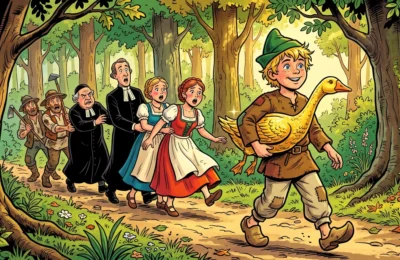
The Golden Goose
The Golden Goose: There was a man who had three sons, the youngest of whom was called Dummling,[*] and was despised, mocked, and sneered at on every occasion.
 Grimm's Fairy Tales
Ages 9-12
Grimm's Fairy Tales
Ages 9-12
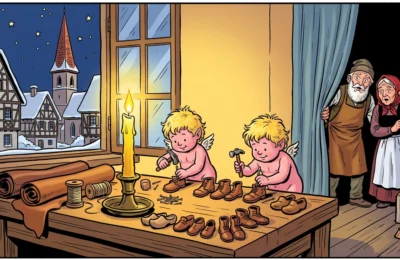
The Elves And The Shoemaker
The Elves And The Shoemaker: There was once a shoemaker, who worked very hard and was very honest: but still he could not earn enough to live upon; and at last
 Grimm's Fairy Tales
Ages 9-12
Grimm's Fairy Tales
Ages 9-12
Clever Hans
Clever Hans: The mother of Hans said: ‘Whither away, Hans?’ Hans answered: ‘To Gretel.’ ‘Behave well, Hans.’ ‘Oh, I’ll behave well. Goodbye, mother.’ ‘Goodbye