Change is showing concern in actions and not just words
Change is showing concern in actions and not just words: Get out of the building. The garbage disposal pipe of building has caught fire. Get out!!” screamed
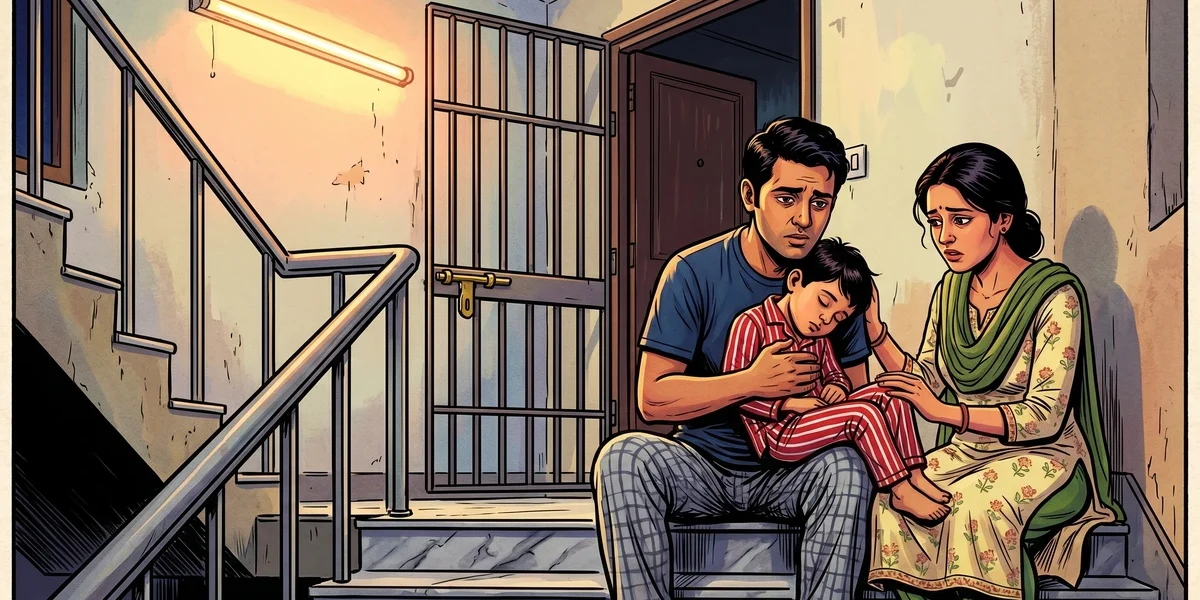
Change is Showing Concern in Actions and Not Just Words is a modern Indian household parable, a piece of urban kahani that belongs to the great living tradition of niti-katha — the “policy-tale” or “ethics-tale” that Sanskrit, Pali, Tamil and the Indian vernaculars have been telling for at least two and a half thousand years. The version retold here is not signed to any one author; it has circulated for the last two decades among Indian schoolteachers, society-newsletters, Sunday-supplement columns and family WhatsApp groups, often under the simple title kriya bina shabd vyarth hain (“words without deed are empty”), and it sits inside the same moral conversation that the Mahabharata‘s Vidura-niti, Tiruvalluvar’s Tirukkural, the Hitopadesha and the Pancatantra all carry on across centuries: that compassion is not a feeling but a verb, and that a kindness which never reaches the hand has not yet truly been thought. The frame the modern teller uses — a fire scare in a Maharashtrian apartment building, a grill gate latched from inside, a young couple sitting on the staircase with their five-year-old son while every neighbour quietly disappears — is the new urban skin on a very old Indian skeleton, and it is precisely the smallness and the everyday-ness of the setting that has made this tale travel.
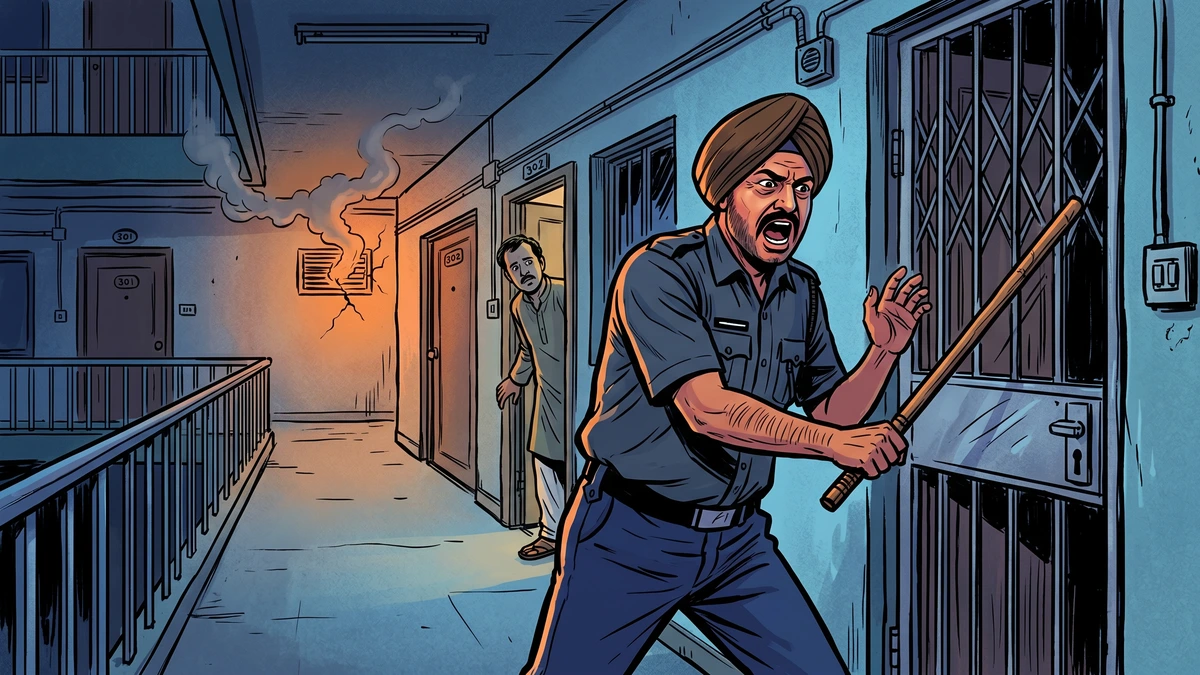
The Watchman’s Cry at Eleven-Thirty
The story opens in the late hour that every Indian apartment-dweller has at some time imagined and feared. It is a Tuesday night in the Royal Platinum Co-operative Housing Society on the outskirts of Pune. The lights in most flats have been off for an hour. In the small two-bedroom flat on the third floor a young couple — Amit, an information-technology consultant who has been in the city only two months, and his wife Arti, a primary-school teacher who has not yet found work in the new town — are asleep with their five-year-old son Adi between them, his small hand curled around the thumb of his mother. At eleven-thirty the watchman Ramdas, a man from a small village near Satara who has been minding the building’s main gate for nearly nine years, smells smoke. By the time he reaches the rear of the compound the garbage-disposal pipe — the long vertical chute that runs from the eighth floor down to the basement bins — has caught fire. He runs into the building shouting in his loud village voice, banging his cane on every metal grill door he can find. “Sahab! Madam! Jaldi nikliye! Building ki kachra-paipline mein aag lag gayi hai. Jaldi!” — “Sir! Madam! Hurry, hurry, the building’s garbage pipeline has caught fire, hurry!” Doors open one by one along the corridor. Sleepy children are picked up. Old people are walked down the staircase by their grown sons. By the time the fire-brigade arrives every family is standing in the parking lot, looking up at the third-floor side wall where the smoke is curling out of a cracked grille.
The blaze is small. The brigade kills it in fifteen minutes; the senior fire-officer climbs the staircase with a torch, sniffs along the chute, declares the pipe safe, gives the residents a brief lecture about not throwing burning incense or smouldering cigarettes into the disposal, and departs. One by one the families wander back to their flats. Doors close. Lifts hum. Lights go out again. The night is preparing to reclaim its quiet.
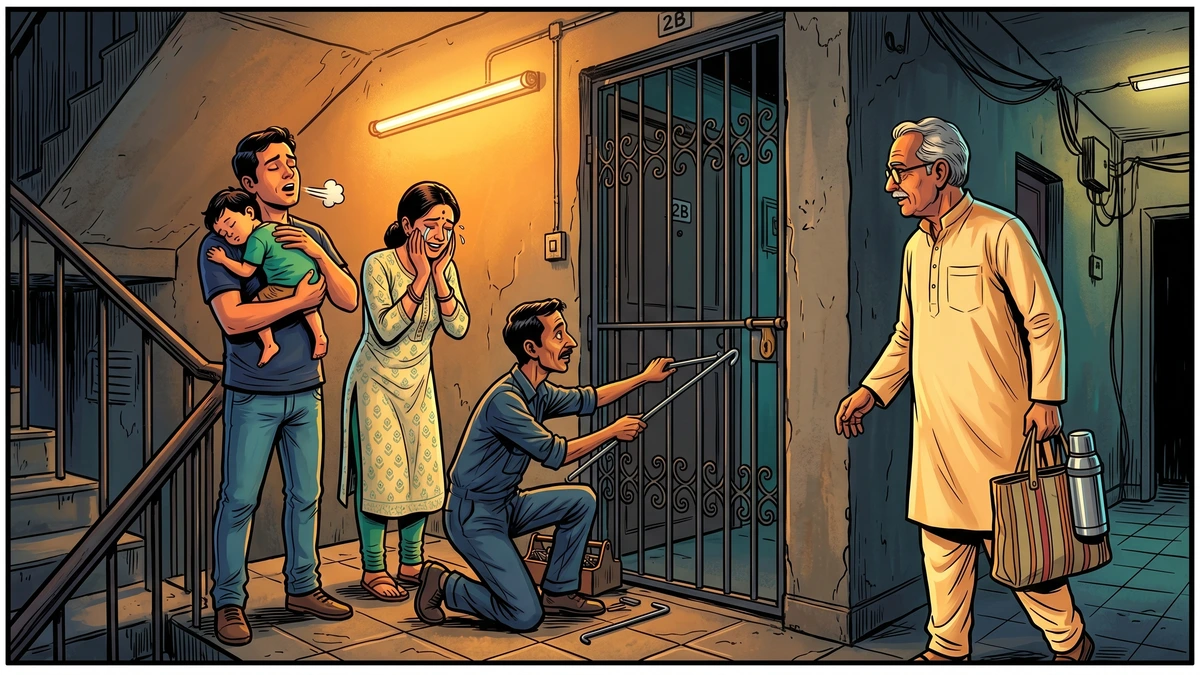
It is at this point that the small private misfortune that this story is really about begins. When Amit, Arti and little Adi reach their own door, Arti tries the grill. The grill will not open. The latch on the inside, low down near the floor — the small sliding catch that Indian wrought-iron grilles often carry as a second line of security — has fallen across. “In the rush,” Arti says, “I must have slammed the door so hard that the latch jumped over.” She tries to slip her hand in through the middle of the grille; the latch is too low. Amit tries; his palm is too broad. Adi, told to push his small fingers in, cannot reach. They stand on the dim third-floor landing, three of them, in their nightclothes, in a building where they have not yet learned a single neighbour’s name.
The Neighbours Who Came to Look and Then Went Home
What follows next is the part of the parable that any reader who has lived in an Indian flat will recognise with a small wince. One by one the neighbours come up the stairs, pretend to look at the latch, offer their advice, and slip back to their own warm beds. The young man from the second floor — the one with the motorcycle who has nodded at Amit twice in the lift — comes up, peers, says “Bhai, this is a tricky one,” and goes downstairs to bring “something”. He does not return. The retired Mrs. Phadke, in her flowered house-coat, knocks her knuckles against the iron, sighs in the universal sigh of an aunt-figure, and tells Arti that “these things happen”; then she goes back to her television. The young couple from across the corridor stand at their own door, arms folded, watch the proceedings as one watches a small piece of theatre, and quietly close their door. The last to leave is Mr. Sane, a senior accountant from the fifth floor, who looks the latch over with the air of a man who knows tools, and announces that he will go down to his flat and bring a wire of the right thickness. The family hear his slippers fading down the stairs. They never hear him come back.
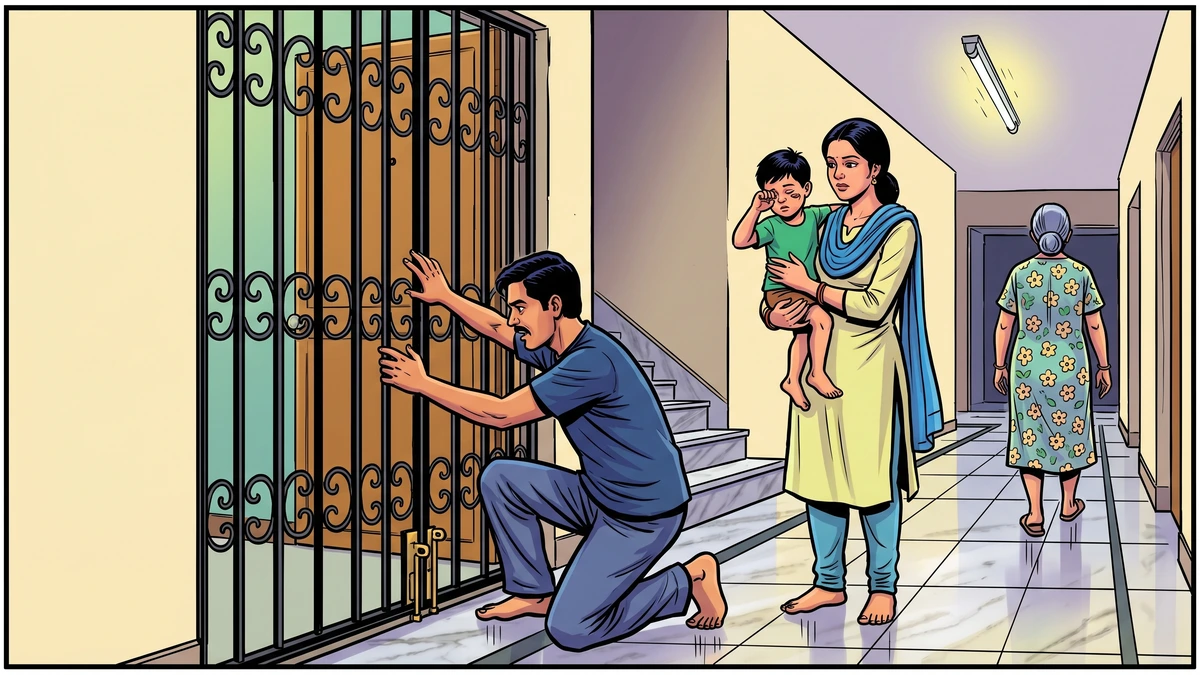
At one in the morning, with little Adi asleep against his father’s shoulder, a particular and very modern kind of loneliness has settled on the staircase. Amit is the kind of newly-arrived urban professional who, two days earlier at the office, would have used the words “warm community” about this very building. Arti is a mother who has been raised in a joint-family home where two dozen relatives shared a single courtyard and where a child crying at midnight would have brought aunts running with milk and a hot-water bottle. The contrast between what she remembers and what is happening to her now, on this concrete landing under a fluorescent tube-light, is the engine of the whole story. Amit, tired and cold and ashamed, finally turns to his wife and says — sharply, in the tone every old wife knows — “Could you not have been a little careful?” And Arti, holding the sleeping child, replies — quietly, in the tone every old wife also knows — “It was an honest mistake. I did not do it on purpose.” Adi stirs and asks, in the small voice of a child who has been awake too long, “Mamma, kab andar jaayenge?” — “Mother, when shall we go inside?”
This is the moment in the story at which the modern teller pauses and slips, with the easy confidence of an Indian grandmother, into a tale-within-a-tale.
The Master, the Servant, and the Hot Bowl of Khichdi
“Listen, Adi,” Arti says, smoothing the boy’s hair, “let me tell you a story that my mother told me on a night very like this one.” And she begins.
Long ago in a village on the banks of the Krishna river there lived a wealthy merchant named Dhanapati. He owned three rice-mills, a row of grain-stores along the river-bank, and a great tiled house with a courtyard so wide that twenty servants could sit inside it and not touch elbows. Dhanapati was famous across four districts for the eloquence of his concern for the poor. At every village meeting he stood up in his white dhoti and spoke movingly of seva — of service, of compassion, of the duty of the rich to the suffering. He quoted the Tirukkural: “iyalpaakum nonpirkonru inmai udaimai mayalaakum mattratan kakam” — “the natural austerity of giving what one has is destroyed only by the love of holding on.” He quoted Vidura’s couplet from the Udyoga Parva of the Mahabharata about the rich man who hoards while his neighbour starves. He spoke of his late mother’s piety. He wept easily. The villagers listened, nodded, and went home hungry.
One winter, after a poor harvest, a famine settled on the district. The villagers pooled their last grain. Dhanapati stood up at the village panchayat and gave one of his most moving speeches — about “our shared sorrow”, about “the brotherhood of the soil”, about “the tears of the helpless mother”. Then he went home, locked his store-houses with three brass padlocks each, and ate his evening rice as he had always eaten it, with two kinds of vegetable and a bowl of curd.
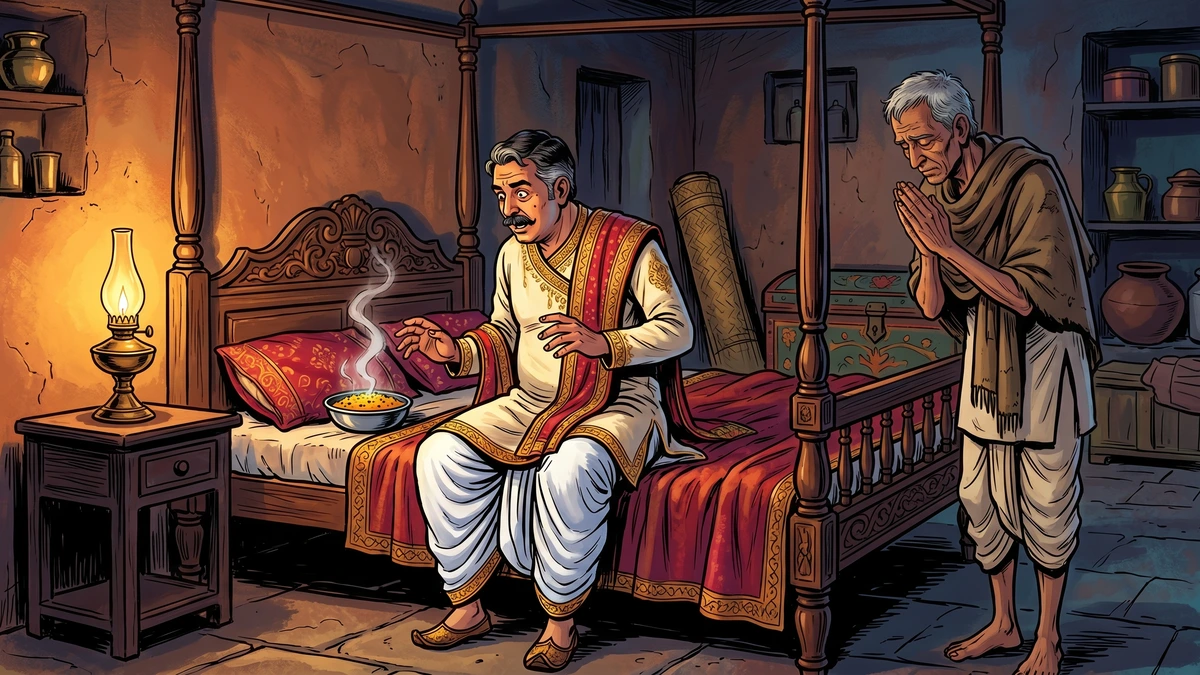
His old servant, a man named Hari who had carried him on his shoulders when he was a child, watched all this without speaking, in the manner of old servants in Indian households, who often see more than the master imagines. One night, when Dhanapati had finished his fine dinner and was preparing for bed, Hari came in carrying a small steel bowl of hot khichdi — the simple rice-and-lentil porridge that the poor of the district were now eating once a day if they were lucky — and set it down on the master’s pillow. Dhanapati was startled; the bowl was hot and the bedclothes were fine. “What is this nonsense, Hari?” he said. “This will burn the cloth.” Hari folded his hands and bowed his head. “Master,” he said, in a voice that was steady but very low, “in the village two children of the potter’s wife died of hunger this morning. I thought you would want to feel, even for one moment, the heat of the small meal that they did not have. I thought it would be an honest thing — even if it spoils your sheet.”
Dhanapati sat down on the edge of his great bed and stared at the bowl. He did not speak for a long time. The servant did not move. The wick of the small oil-lamp by the window flickered once and steadied. At last the merchant lifted the bowl, very gently, and carried it himself across the courtyard, through the door of the first store-house, and into the quiet room where the brass padlocks hung. He opened the locks. He carried the first sack of grain himself onto his own bullock-cart. He woke up the cartman. He went out, in his nightclothes, and drove the grain to the panchayat-yard. By the time the village woke at dawn the merchant was still there, his fine dhoti smudged with grain-dust, distributing rice to women whose names he had used in his speeches but whose faces he had never bothered to learn.
Mr. Sane Comes Back, and Something Else Returns With Him
Arti finishes the inner story and sits quietly. Amit, who had been listening without realising it, does not say anything; his anger has gone somewhere. Adi has fallen asleep again. They sit in the long fluorescent silence of the staircase, and the building around them sleeps on. Then, at perhaps one-forty-five in the morning, they hear footsteps coming up the stairs. It is Mr. Sane. He has on a different kurta now — he has changed, as if to come on a serious errand — and he is carrying a small canvas bag and a thermos. Behind him comes a thin man in overalls whom the family does not recognise; he turns out to be the building’s plumber, who Mr. Sane has woken up at his quarter behind the colony.
Mr. Sane does not apologise for the delay. He does not, in fact, say very much at all. He sets down the thermos beside Arti — it is hot tea — opens the canvas bag, and takes out a long thin steel rod with a small bend at one end. The plumber kneels at the grille, slides the rod through the iron-work, finds the latch and lifts it on the third try. The grille swings open. Amit lets out a long breath he had been holding for two hours. Arti begins to cry, very quietly, into her son’s hair. Mr. Sane stands up, brushes the dust off his knees, and says only — in the soft Marathi-inflected English of an older Maharashtrian gentleman — “I am sorry it took so long. The right wire was in my old toolbox at the back of the loft. I had to go up on a chair to find it.” Then he picks up his bag, helps the plumber down the stairs, and goes home. He does not stop for thanks. He does not, the family later realise, ever mention the night again — not on the next morning when they meet him near the lift, not at the next society meeting, not at his own daughter’s wedding the following winter, to which the family is invited.
It is from that night, very quietly, that Amit and Arti begin to behave differently in the building. The next time a neighbour’s child is locked out, they sit with him for an hour till his parents return from work and feed him his dinner from their own kitchen. The next time the watchman Ramdas has fever, Arti carries down a steel tiffin of hot khichdi to his small room near the gate. They do not speak about any of it. They have understood, in the way that the merchant Dhanapati understood, that the bowl of khichdi must be carried by the hand, and that the speech that does not become a step is not yet a kindness — it is only a sentiment performing itself in front of a mirror.
Moral
“क्रिया बिना शब्द व्यर्थ हैं — काम के बिना दया केवल शोर है।”
kriya bina shabd vyarth hain — kaam ke bina daya keval shor hai.
“Words without deeds are empty — kindness without action is only noise.”
The teaching of this modern parable is the teaching that runs through every layer of Indian moral literature: that compassion is measured not by what is felt but by what is moved. Vidura tells the king Dhritarashtra, in the Udyoga Parva, that a wealthy man’s tears for the poor are worth nothing if he does not unlock his granary. Tiruvalluvar, writing in Tamil twenty centuries ago, devoted an entire section of the Tirukkural — the chapter oppuravarital, “the practice of social good” — to the argument that wealth has no purpose except to be turned into the relief of the suffering. The Buddha told the Jataka of the hare who, having no rice to offer the hungry traveller, threw himself into the fire so that his own roasted body might be the meal. Across all of this the Indian moral imagination has insisted on the same thing: that seva — service — is a verb. The neighbour who looks at the latch, sighs in sympathy, and goes back to bed has not yet performed seva; the neighbour who climbs into a loft at one in the morning to find a piece of bent wire has. Mr. Sane, in his second kurta and his thermos, is the modern Hari. The watchman Ramdas, who knocked on every grill while the smoke rose, was already Hari in the first scene. The whole story has been a quiet handing-on of the small steel bowl of khichdi from one person to the next.
Why This Story Has Lasted
The reason this small modern parable has travelled — through school assemblies and society newsletters and the WhatsApp groups of working mothers — is that it carries, in the architecture of a single night in an apartment building, the entire ethical inheritance of Indian household wisdom. It uses no gods, no kings, no jungle, no magic. Its monster is the very ordinary modern monster of the closed door, of the neighbour who is too tired to come back, of the city in which the people on either side of one’s wall are strangers. And it answers that monster the way Indian folk literature has always answered its monsters — not with a hero who slays them, but with a small, patient, unglamorous figure who returns at one-forty-five in the morning with a bent wire and a thermos and lets the grille swing open. Kriya bina shabd vyarth hain. Words without action are empty. The story will keep being told, in Pune and Patna and Pittsburgh, for as long as there are families on staircases waiting to be let back into their own homes — which is to say, for as long as there are human beings.
Frequently Asked Questions
Where does the modern Indian parable ‘Change is Showing Concern in Actions and Not Just Words’ originate?
It is an unsigned modern Indian household parable that has circulated for the last two decades in school assemblies, society newsletters, Sunday-supplement columns and family WhatsApp groups under titles such as kriya bina shabd vyarth hain (‘words without deed are empty’). It belongs to the wider living tradition of niti-katha — the Indian ‘ethics-tale’ that descends from Sanskrit sources such as the Pancatantra and Hitopadesha, the Vidura-niti section of the Mahabharata’s Udyoga Parva, and Tamil moral literature such as Tiruvalluvar’s Tirukkural, all of which insist that compassion must be proved in action, not feeling alone.
What does the inner story of the merchant Dhanapati and the servant Hari teach?
The merchant Dhanapati gives moving public speeches about compassion for the poor while keeping his grain locked in store-houses behind three brass padlocks each. His old servant Hari finally places a hot bowl of khichdi — the simple rice-and-lentil porridge of the famine-poor — on the master’s pillow and says, ‘I thought you would want to feel, even for one moment, the heat of the small meal that the children of the potter’s wife did not have.’ The shock makes Dhanapati open his store-houses and drive the grain to the panchayat-yard himself. The lesson — which Indian moral literature has carried since the Vidura-niti — is that articulate sympathy without action is performance, and that real seva (service) is measured by what the hands do, not by what the mouth says.
Why are the neighbours, including Mr. Sane, central to the meaning of the modern frame story?
The neighbours dramatise the contemporary tension between expressed concern and acted concern. The young man with the motorcycle, retired Mrs. Phadke, the couple across the corridor — each performs sympathy briefly and then goes home. Mr. Sane, the senior accountant from the fifth floor, is the moral hinge: he too leaves at first, but at one-forty-five in the morning he returns in a fresh kurta with a thermos of hot tea, a bent steel rod and the building’s woken-up plumber, opens the latch, and goes home without waiting for thanks. He becomes the urban equivalent of the servant Hari — the figure who proves the parable’s title by quietly converting his concern into a step taken, a wire fetched, a door opened.
What canonical Indian moral texts does this story draw upon for its claim that kindness must be acted, not spoken?
The story explicitly invokes three streams of Indian moral literature. First, Vidura-niti in the Udyoga Parva of the Mahabharata, where Vidura tells King Dhritarashtra that a wealthy man’s tears for the poor are worthless without an unlocked granary. Second, Tiruvalluvar’s Tirukkural — particularly the chapter oppuravarital (‘the practice of social good’), composed in Tamil roughly two thousand years ago — which argues that wealth has no purpose except to be converted into the relief of suffering. Third, the Buddhist Sasa Jataka (the Hare Jataka), in which the bodhisattva-hare offers his own roasted body when he has no rice to give the hungry traveller. All three traditions agree that seva is a verb.
Why has this small apartment-building story travelled so widely among modern Indian readers?
Because it translates two-and-a-half millennia of Indian household ethics into the architecture of a single contemporary night. There are no gods, no kings, no jungle, no magic — only a fire scare in a Pune housing society, a grill latched from inside, a five-year-old boy asleep on his father’s shoulder, and a quiet older neighbour who comes back at one-forty-five with a bent wire. That smallness is precisely what has carried the parable through Indian school assemblies, society newsletters and family WhatsApp groups: it offers urban readers, who feel the loneliness of the apartment corridor in their own bones, a recognisable shape for the old teaching that change is not what one says about kindness but what one does with it.
Frequently Asked Questions
**Q: Why is this story important?**
You May Also Like
 Indian Folk Tales
All Ages
Indian Folk Tales
All Ages
The Cat, the Mouse, the Lizard, and the Owl
The Cat, the Mouse, the Lizard, and the Owl: This is the story of four creatures, none of whom loved each other, who lived in the same banyan tree in a forest
 Indian Folk Tales
All Ages
Indian Folk Tales
All Ages
Her Childhood
Her Childhood: Once upon a time in a small, quiet village, there lived a girl. She was obsessed with blue. Her room was blue, every dress she had was blue –
 Indian Folk Tales
Ages 3-5
Indian Folk Tales
Ages 3-5
The Story Behind The Congress Party’s Hand Symbol – Story of Hemambika
Behind the Congress Party's hand symbol lies Hemambika's story of sacrifice and faith. Her virtue became the rallying emblem of a nation's conscience.