Cat-Kin And The Queen Mother
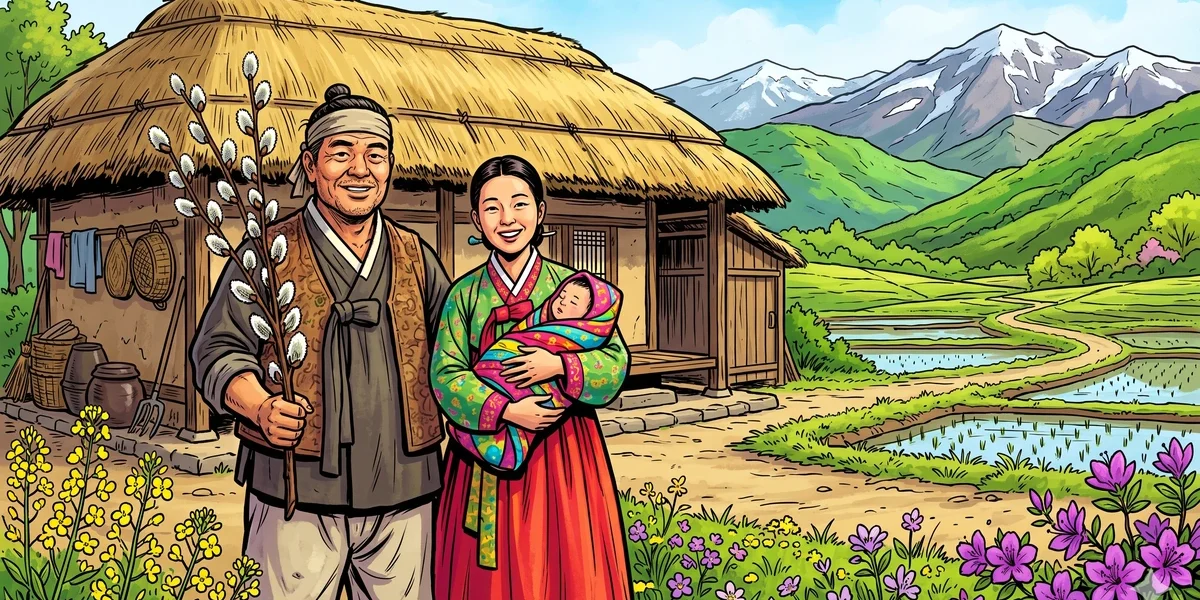
Cat-Kin And The Queen Mother: Korea is called the Land of the Plum Blossom, but in winter the rivers freeze over. Then the men cut through the ice which is
Origin & Tradition
Cat-Kin and the Queen Mother belongs to the strand of Korean folk narrative concerned with the supernatural dimensions of loyal service — and with the question of whether genuine devotion can transcend the social and even species boundaries that ordinarily limit who may serve whom. Cat-kin figures in Korean folk narrative occupy a liminal position between human and feline: sometimes the child of a woman and a cat-spirit, sometimes a person cursed into partial cat-nature, sometimes a cat of extraordinary longevity who has accumulated enough spiritual power to appear in human form. What is consistent across these variants is the cat-kin’s particular qualities: heightened perception, watchful patience, a capacity for sustained devotion that outlasts ordinary human endurance, and a loyalty that persists through circumstances that would break human resolve. These qualities bring the cat-kin into service with the Queen Mother — the powerful female authority figure of Korean royal and mythological narrative — and the encounter between unusual servant and powerful mistress is the story’s organising encounter.
Beat I — Cat-Kin Comes to Court
A young person of unusual appearance presents themselves at the court of the Queen Mother — unusual in the specific ways of the cat-kin: eyes that catch light differently, a quality of stillness in the body that is more feline than human, a habit of watching from corners that servants and guards find disconcerting. The court’s gatekeepers are uncertain: the person has the correct forms of address, the correct posture of supplication, but something in the quality of their presence does not match what a court servant is expected to be.
Cat-Kin asks to serve. The Queen Mother — in some versions a royal queen dowager, in others a divine authority figure connected to the celestial tradition — is informed of the unusual petitioner. She could dismiss the applicant without audience; her advisors recommend it. The petitioner’s origins are obscure, their nature is ambiguous, and the court has no category for what they are. But the Queen Mother is a woman of particular perceptive quality — the Korean narrative tradition assigns to powerful women of mature authority a specific form of wisdom, hyemyeong (혜명, discerning clarity), that cuts through conventional category to see what is actually present. She grants an audience.
Cat-Kin’s petition is simple: let me serve you faithfully, in whatever way my particular nature makes me useful, and judge by the quality of the service whether I deserve to remain. The offer is not a claim to status or rank — it is a proposal of demonstration. This modesty is itself characteristic: the cat-kin tradition in Korean folk narrative positions its figures as earning legitimacy through demonstrated quality rather than claiming it through origin. Cat-Kin knows that their unusual nature makes inherited status unavailable; they offer what they have instead.
Beat II — The Service and Its Particular Excellence
Cat-Kin’s service turns out to be genuinely and specifically excellent in ways that human servants cannot match. The qualities that make their presence unsettling in ordinary court life — the heightened sensory perception, the capacity to remain motionless and alert for hours, the ability to move without sound in darkness — are precisely the qualities required by certain tasks that the Queen Mother’s court needs done.
Threats to the court that slip past human guards — a poisonous creature that enters the sleeping chamber in the night, an infiltrator who moves too quietly for human ears, a deception that relies on the subtle manipulation of objects in a room where a human attendant would not notice the displacement — are detected and dealt with by Cat-Kin with the unobtrusive precision of a creature that was built for exactly this. Each incident is resolved before it becomes a crisis; each resolution goes unremarked by the court because it was invisible. Cat-Kin does not report the successes; they simply ensure the Queen Mother’s safety continues.
The Queen Mother notices. She is a woman of hyemyeong — she sees what others do not see, including the pattern of absences-of-incidents that marks Cat-Kin’s invisible service. She asks her other attendants whether anything unusual has occurred in recent months; they report nothing. She asks Cat-Kin directly. Cat-Kin answers without elaboration: there were several things; they have been handled. The Queen Mother presses for details. Cat-Kin provides them, briefly and precisely.
Beat III — Chung: Loyalty Beyond Origin
The Korean court tradition — both its historical reality in the Joseon Dynasty and its idealised representation in folk narrative — placed enormous value on chung (忠/충, loyalty/devoted service to authority). Chung was one of the five cardinal Confucian relationships, the virtue proper to the subject in relation to the ruler. In practice, court culture distinguished between different qualities of service: the loyal official who gave honest counsel even when unwelcome; the devoted attendant who anticipated needs before they were expressed; the faithful guard who maintained vigilance without requiring instruction.
Cat-Kin’s service exemplifies the highest form of chung as Korean folk culture understood it: service that is genuinely attentive rather than merely obedient, that operates from an internalised understanding of the served person’s wellbeing rather than from explicit instruction, and that persists through indifference and lack of acknowledgment rather than requiring constant affirmation. The court’s other servants are loyal in the ordinary sense — they do what they are told, they report what they observe. Cat-Kin is loyal in the fuller sense — they attend to what has not been told and report only what requires response.
This quality of chung, the folk narrative implies, is not produced by the conventional formation of court servants — by rank, by education, by the socialization of human hierarchy. It is produced by something in Cat-Kin’s particular nature: the feline capacity for watchful patience, for sustained alertness without urgency, for noticing what changes in an environment that the watcher knows intimately. Cat-Kin’s chung is native, not acquired. This is the story’s most interesting proposition: that genuine loyalty can be a property of nature rather than of cultivation, and that it may be found in unexpected beings.
The court’s discomfort with Cat-Kin — the gatekeepers’ resistance, the advisors’ recommendations against the audience — is therefore revealed as a failure of perception. They saw the unusual outer form and inferred an unusual, therefore suspect, inner nature. The Queen Mother’s hyemyeong saw past the outer form to the quality actually present and allowed the demonstration that vindicated her perception. The court’s resistance was not malicious; it was the ordinary operation of social category, which is always better at identifying what is familiar than at perceiving what is present.
Beat IV — The Queen Mother’s Recognition and Its Meaning
When the Queen Mother formally recognises Cat-Kin’s service — gives it a name, a rank, a place within the court’s established hierarchy — she does more than reward a servant. She revises the court’s understanding of what loyalty is and where it can be found. The recognition is not simply personal gratitude; it is an institutional acknowledgment that Cat-Kin’s particular form of service has value that the existing categories did not anticipate or provide for.
This act of recognition is itself a form of wisdom. The Queen Mother who can revise her court’s understanding of what constitutes valid service demonstrates the governing intelligence that the tradition associates with great rulers: not the maintenance of existing hierarchies but the capacity to perceive genuine value wherever it appears and to adjust the institutional structure so that such value can be acknowledged and sustained. Her recognition of Cat-Kin is, in miniature, the act of a ruler who makes their court better — more capable, more honest, more genuinely protected — by expanding its categories of value rather than defending the categories it already has.
Cat-Kin’s story does not end with transformation — there is no revelation that the cat-kin was actually a noble human in disguise, no reversal that restores a conventional hierarchy. Cat-Kin remains what they always were: a person of unusual origins and specific excellent qualities, now formally acknowledged within the court’s structure. This is the story’s most satisfying feature: the recognition does not require Cat-Kin to become something else. It requires the court to expand what it can see.
“The Queen Mother saw what her gatekeepers could not: not what Cat-Kin was, but what Cat-Kin had done in the dark rooms where no one was watching. That is the test of loyal service — what you do when no one is watching.”
— Distilled from the Korean cat-kin folk tradition
Why This Story Has Lasted
Cat-Kin and the Queen Mother endures because it addresses a recognition problem that every institution faces: how to perceive and acknowledge genuine excellence that does not fit existing categories. The cat-kin’s value is invisible to those who evaluate by conventional criteria; the Queen Mother who perceives it must actively revise her court’s understanding rather than simply applying the standards already in place. Every organisation, community, or family that has failed to recognise valuable contribution because it arrived in an unfamiliar form has enacted the court gatekeepers’ error. The story offers the Queen Mother’s hyemyeong — discerning clarity that sees past category to quality — as the corrective.
Frequently Asked Questions
Who is Cat-Kin in this Korean folk story?
Cat-Kin is a figure of liminal nature — part human, part feline — who arrives at the court of the Queen Mother seeking to serve. The cat-kin category in Korean folk narrative encompasses persons born of unusual origins (sometimes from a human and a cat-spirit, sometimes transformed through supernatural circumstances) who carry feline qualities: heightened perception, watchful patience, the ability to remain motionless and alert for extended periods, and a capacity for devoted attention that outlasts ordinary human endurance. These qualities, unsettling in ordinary social contexts, prove specifically excellent in the royal court’s particular needs.
What is chung (충) and why is it important to this story?
Chung (忠, loyalty/devoted service) is one of the five cardinal Confucian virtues in Korean court culture — the virtue proper to the subject in relation to authority. The highest form of chung, as Korean folk culture understood it, is service that is genuinely attentive rather than merely obedient: anticipating needs before they are expressed, maintaining vigilance without requiring instruction, and persisting through lack of acknowledgment rather than requiring constant affirmation. Cat-Kin embodies this highest form of chung — not as a culturally acquired virtue but as an expression of their particular nature. The story proposes that genuine loyalty can be native rather than cultivated.
What is hyemyeong (혜명) and why does the Queen Mother have it?
Hyemyeong (혜명, discerning clarity) is a specific form of perceptual wisdom that Korean folk narrative attributes to powerful women of mature authority — the capacity to see past conventional category to what is actually present. The Queen Mother’s hyemyeong allows her to grant Cat-Kin an audience despite her advisors’ recommendations against it, to notice the pattern of Cat-Kin’s invisible service that her other attendants miss, and to formally recognise that service in a way that revises the court’s understanding of where genuine loyalty can be found. Her wisdom is not general intelligence but specifically the intelligence of seeing what conventional social category obscures.
What does it mean for the Queen Mother to “recognise” Cat-Kin’s service?
The Queen Mother’s formal recognition of Cat-Kin — assigning rank, naming the service, acknowledging it within the court’s established structure — is not simply personal gratitude but an institutional act. She revises the court’s understanding of what constitutes valid service by expanding its categories to include what Cat-Kin’s particular nature makes possible. This is the act of a ruler who improves their institution by perceiving genuine value where existing categories could not, and adjusting the structure to acknowledge and sustain it. The recognition does not require Cat-Kin to become something different; it requires the court to expand what it can see.
How does this story differ from typical animal-transformation tales?
Most animal-transformation folk tales resolve through the transformation revealing a “true” human identity — the frog who becomes a prince, the beast who is revealed as a noble. Cat-Kin and the Queen Mother does not follow this pattern: Cat-Kin remains what they always were, and the recognition at the story’s end does not restore a conventional hierarchy but expands the existing one. The story’s resolution is institutional rather than personal — the court learns to accommodate genuine excellence in an unusual form rather than discovering that the excellence was never really unusual. This makes it a more sophisticated narrative about the perception of value than the standard transformation story.
You May Also Like
 Korean Folk Tales
Ages 6-8
Korean Folk Tales
Ages 6-8
The Sun and the Moon: A Mother’s Love Reaches Heaven Itself
The Sun and the Moon: A Mother's Love Reaches Heaven Itself: The Sun and the Moon: How a Mother’s Devotion Changed the Sky Forever In ancient times, when the
 Korean Folk Tales
Ages 6-8
Korean Folk Tales
Ages 6-8
Cursed By The Snake
A proud magistrate kicks over a sacred snake and learns that nature — and the spirit in it — always remembers.
 Korean Folk Tales
All Ages
Korean Folk Tales
All Ages
Fancha And The Magpie
A thousand years ago, Fancha and a magpie form an unlikely partnership, using wisdom and courage to overcome tyranny and restore justice through clever means.