The Story of the Jackal Who Fell Into a Vat of Indigo Dye
The Story of the Jackal Who Fell Into a Vat of Indigo Dye: In a jungle, there lived a jac; kal by the name of Chandarava. One day he was very hungry, so he
The Story of the Jackal Who Fell Into a Vat of Indigo Dye
Origin and Manuscript Tradition
This is among the most celebrated fables in the entire Panchatantra corpus — a story so vivid and structurally satisfying that it survived virtually unchanged in every manuscript family from the Tantrakhyayika to the Purnabhadra compilation, and passed through Persian, Arabic, and European transmission without losing a single essential element. The dye-vat, the blue jackal’s self-proclaimed divinity, the midnight howl that betrays him, and the vengeful animals are all present in the oldest recoverable versions. Vishnu Sharma placed it in Book III, Kakolukiyam (On Crows and Owls), as a parable about identity, imposture, and the impossibility of sustaining a false nature indefinitely against the pressure of one’s own instincts.
The Accident and the Idea
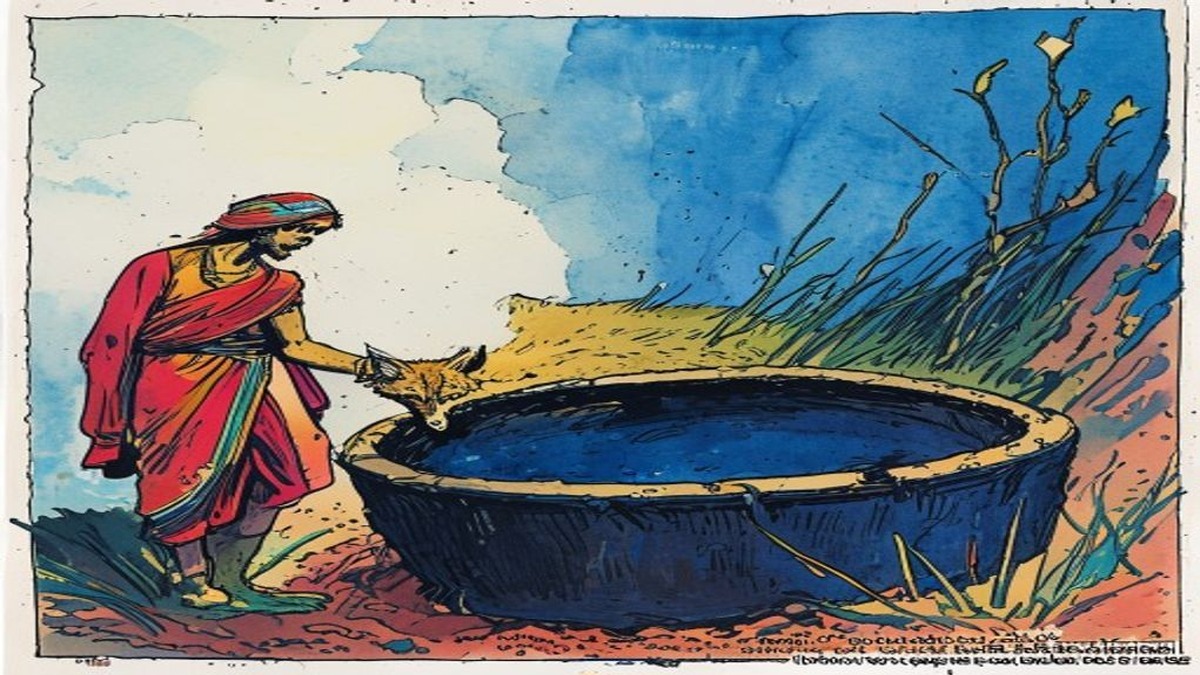
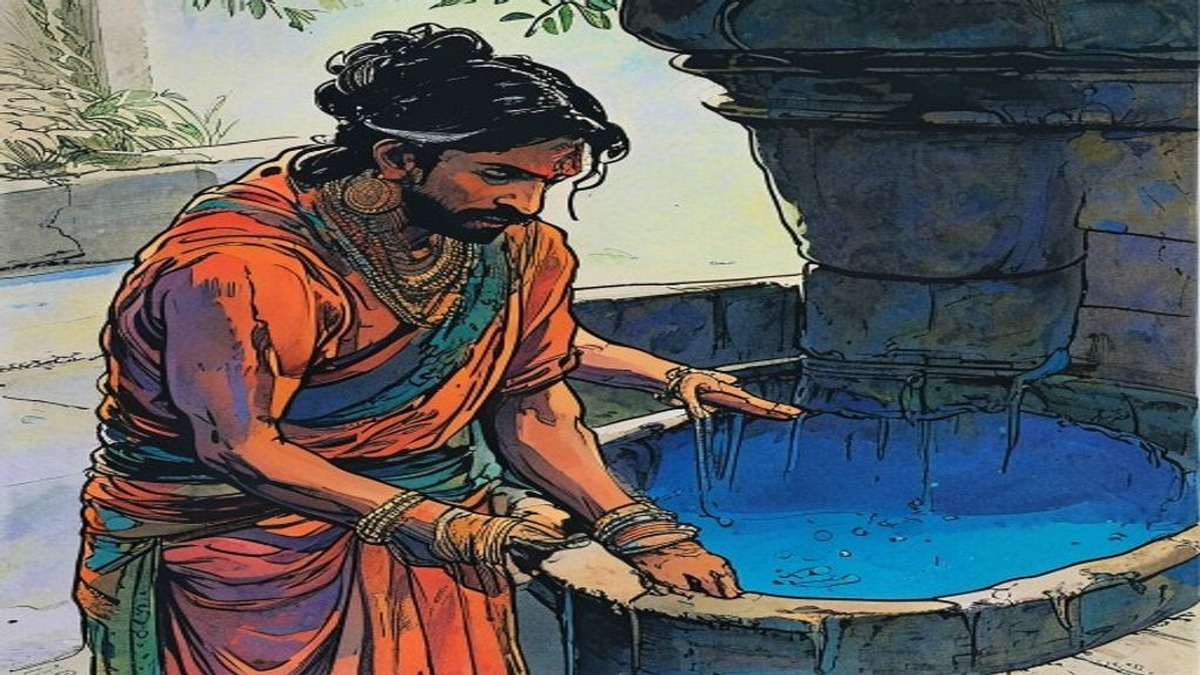
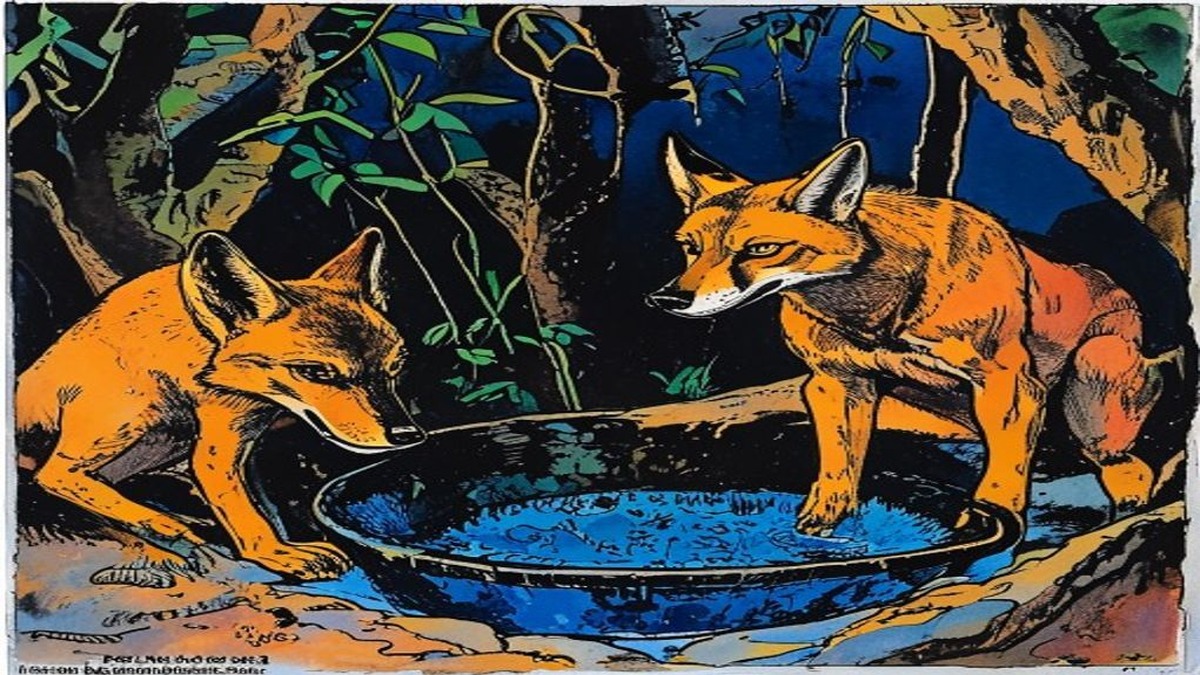
A hungry jackal named Chandaraka was raiding a dyer’s yard at the edge of a town one night when he stumbled and fell into a large vat of indigo dye. He thrashed and scrambled and eventually hauled himself over the rim, emerging completely soaked in vivid blue from nose to tail. He ran into the forest, shook himself furiously, and then stopped when he noticed the animals around him backing away in alarm.
He looked at his reflection in a still pool. He was blue. Not a shade of grey-brown that might be passed off as unusual coloring; not a sickly pallor from illness. He was the pure, brilliant, saturated blue of the deep ocean, a colour no creature in the forest had ever worn. The deer that had been grazing nearby stared. A pair of monkeys in the trees above froze mid-movement. Even the forest seemed to hold its breath.
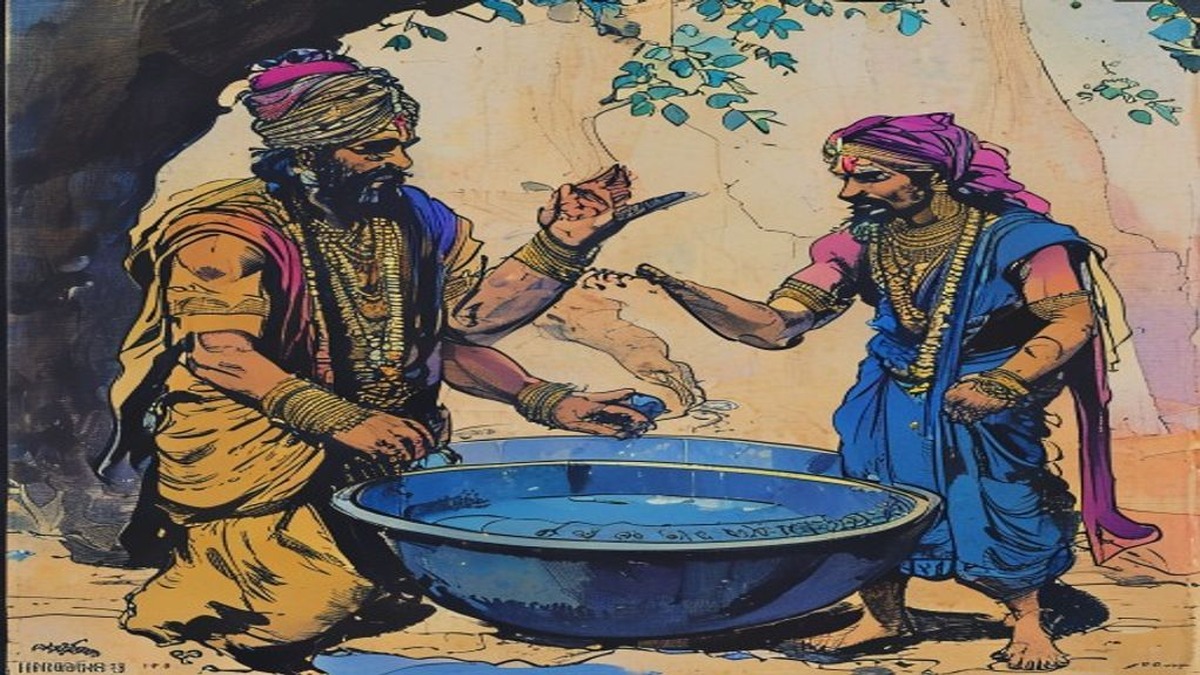
Chandaraka sat beside the pool and considered his options. He could explain the dye, but no animal would believe him and even if they did, being a wet jackal covered in a dyer’s waste did not improve his prospects. Or he could say nothing and let the animals draw their own conclusions. He chose the latter.
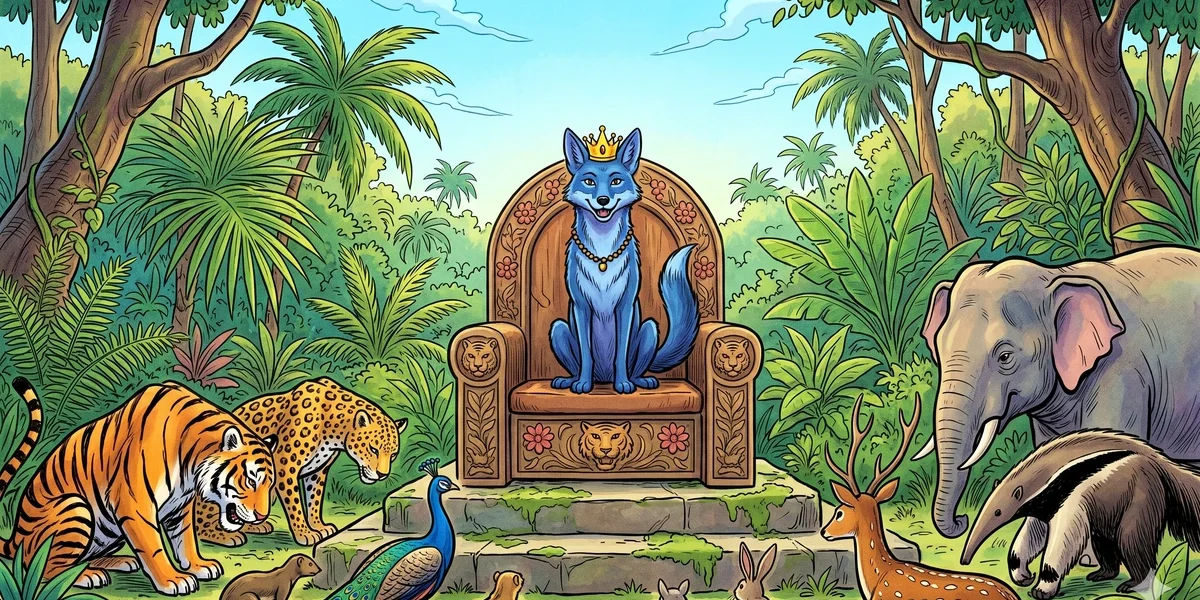
Within a day, word had spread through the forest: a creature of unknown species had appeared, blue as the sky, large as a jackal, with the calm bearing of something that belonged to no familiar category. The animals gathered and asked him what he was. Chandaraka allowed a long silence before speaking. “I am Kukudruma,” he said. “I have been sent by the god Brahma to rule this forest and all its creatures. You will accept my sovereignty or face divine displeasure.”
The Kingdom of the Blue God
The animals, confronted by a phenomenon entirely outside their experience, defaulted to the most available explanatory framework: the supernatural. They knew what lions looked like, what deer looked like, what jackals looked like. They did not know what a divine emissary looked like, but they assumed it would look like nothing they had seen before. Chandaraka was nothing they had seen before. He was therefore accepted as what he claimed to be.
Chandaraka organised his kingdom with the practical intelligence of a jackal who had always wanted a reliable food supply. The lion and tiger were appointed his generals and hunters; they brought him meat daily. The elephant cleared paths at his direction. The deer and monkeys served as attendants. He constructed elaborate ceremonial protocols to limit close access — no animal was permitted within certain distances without formal announcement, which conveniently prevented the kind of close inspection that might raise awkward questions about the smell of dye.
There was one element in his court he handled with especial delicacy: the other jackals. He recognised that jackals, above all others, would know exactly what he was the moment they spent any time near him. He banished all jackals from the kingdom, declaring them unworthy of divine presence. The other animals accepted this. The jackals, bewildered and hurt, withdrew to the forest margins and watched from a distance, unable to articulate precisely what troubled them about the blue sovereign.
The Howl That Ended Everything
Autumn deepened, and one clear moonlit night the jackals of the forest, gathered on a distant ridge, began to howl. The sound carried through the trees — that particular, unmistakable chorus of jackals greeting the cold moon, a sound Chandaraka had heard every night of his life from birth. Something in his chest responded before his mind could intervene. His muzzle lifted. His throat opened. He howled.
The court froze. Every animal in the clearing heard the howl and knew exactly what it was. There was no divine emissary who howled like a jackal in the moonlight. There was no species of unknown origin that produced that specific, wavering, plaintive cry. The lion looked at the tiger. The elephant shifted. The deer took three steps backward.
Chandaraka tried to stop mid-howl but the damage was complete. The lion, who had been chafing under a sovereign who ate what the lion hunted without any credible basis for claiming authority, did not need any further evidence. He roared. The other animals closed in. Chandaraka ran, fast, in the jackal way that no divine sovereign should move, and the illusion collapsed entirely as he fled with his tail low and his ears flat through the undergrowth in the most thoroughly jackal manner possible.
Moral and Sanskrit Wisdom
स्वभावं न हि विस्मर्यते
Svabhaavam na hi vismaryate — “One’s own nature is never truly forgotten.”
— Panchatantra III, Kakolukiyam
The Sanskrit concept of svabhava (one’s innate nature) is central to this tale’s metaphysics. In Vishnu Sharma’s framework, performance can overlay nature but cannot replace it. The jackal can dress in blue, banish his kin, construct elaborate protocols, and maintain the performance across days and weeks — but the instinctive response to the jackal chorus at moonrise is not subject to conscious control. The moon called and the jackal answered, and no amount of political architecture could survive that one authentic moment.
Why This Story Has Lasted 2,300 Years
The Blue Jackal endures because it dramatises a psychological truth that every tradition that has grappled with identity has independently arrived at: the effort required to maintain a false identity is asymptotically exhausting, and it tends to fail not through external exposure but through internal crack. Chandaraka was never detected by a clever investigator; no animal ran a careful inquiry into his origins. He was destroyed by his own nervous system at the worst possible moment.
The tale is unusually sophisticated in its staging of this collapse. Chandaraka’s scheme is genuinely intelligent. He identifies his vulnerability correctly (other jackals would know him) and manages it effectively (banishment). He creates structural barriers to close inspection. He maintains the performance through daily contact with lions and elephants who would normally eat jackals, which requires considerable nerve. The story does not mock his intelligence; it simply demonstrates that intelligence, however considerable, is insufficient defence against one unguarded instant in which the body acts before the mind can stop it.
The blue colour serves a function in the narrative beyond mere visual comedy. Blue is the colour of divine figures in Hindu iconography — Vishnu, Krishna, and Rama are traditionally depicted with blue or dark skin. By falling into the indigo vat, Chandaraka accidentally acquires the visual signature of divinity, which is why the animals accept his claim so readily. Vishnu Sharma is simultaneously telling a story about imposture and gently noting the ease with which powerful iconographic markers can be acquired by accident and then leveraged by design.
Frequently Asked Questions
What is the moral of the Blue Jackal story?
One's true nature cannot be suppressed indefinitely. Chandaraka maintained his imposture through intelligence and careful protocol, but a single instinctive howl at the moon undid everything — the body acted before the mind could stop it.
Why did the animals believe the jackal was divine?
Blue is the colour of divine figures in Hindu iconography — Vishnu, Krishna, and Rama are traditionally depicted with blue or dark skin. By accidentally acquiring this colour, the jackal gained the visual signature of divinity before any claim was made, which primed the animals to accept his authority.
Which Panchatantra book contains this story?
The tale appears in Panchatantra Book III (Kakolukiyam, On Crows and Owls), compiled by Vishnu Sharma around the 3rd century BCE as part of a curriculum in statecraft and practical wisdom.
What is the Sanskrit concept of svabhava?
Svabhava means one's innate nature — the essential quality of a being that persists beneath all external modification. In the Panchatantra's framework, performance can overlay svabhava but cannot replace it; under sufficient pressure the true nature reasserts itself.
Why did Chandaraka banish the other jackals from his kingdom?
Jackals would immediately recognise him by sight, smell, and behaviour as one of their own. He correctly identified them as his greatest threat and removed them from the court — one of several genuinely intelligent security measures that ultimately failed because they could not protect against his own instincts.
You May Also Like
 Panchatantra Stories
Ages 9-12
Panchatantra Stories
Ages 9-12
The Unlucky Weaver
An unlucky weaver discovers that his belief in bad fortune was his true enemy, and only determination can break the cycle.
 Panchatantra Stories
Ages 6-8
Panchatantra Stories
Ages 6-8
The Story of the Donkey and the Washerman
The Story of the Donkey and the Washerman: In a town, there lived a washerman, by the name of Shuddhapata. He had only one donkey. Because oflack of grass and
 Panchatantra Stories
Ages 3-5
Panchatantra Stories
Ages 3-5
The Elephant And The Dog
An elephant's tiny dog friend saves him through a clever trick, showing that true friendship knows no boundaries.