The Story of the Hares and the Elephants
The Story of the Hares and the Elephants: In a certain place, there lived an elephant king andwith him, his retinue. The king’s name was Chatura danta. The

The Story of the Hares and the Elephants
Canonical Attribution and Manuscript Tradition
This tale is among the most celebrated in the Pancatantra and among the most widely retold in world folklore: a rabbit community is being destroyed by elephants who drink from and trample the lake where the rabbits live. A single rabbit ambassador approaches the elephant king and, claiming to be the ambassador of the moon (whose reflection he shows the elephant in the lake), warns the king that the moon is enraged by the elephants’ desecration of his sacred lake and will destroy them unless they withdraw. The elephants, superstitious and awed, withdraw. The tale is preserved in all major Sanskrit recensions of the Pancatantra including the Tantrakhyayika (c. 200 BCE, Kashmir) and the Hitopadesha, and appears in similar form in Arabic, Persian, and eventually European story traditions through the Pancatantra’s many translation pathways. It is the Pancatantra’s definitive demonstration that intelligence and the strategic exploitation of the stronger party’s credulity can succeed where force cannot.
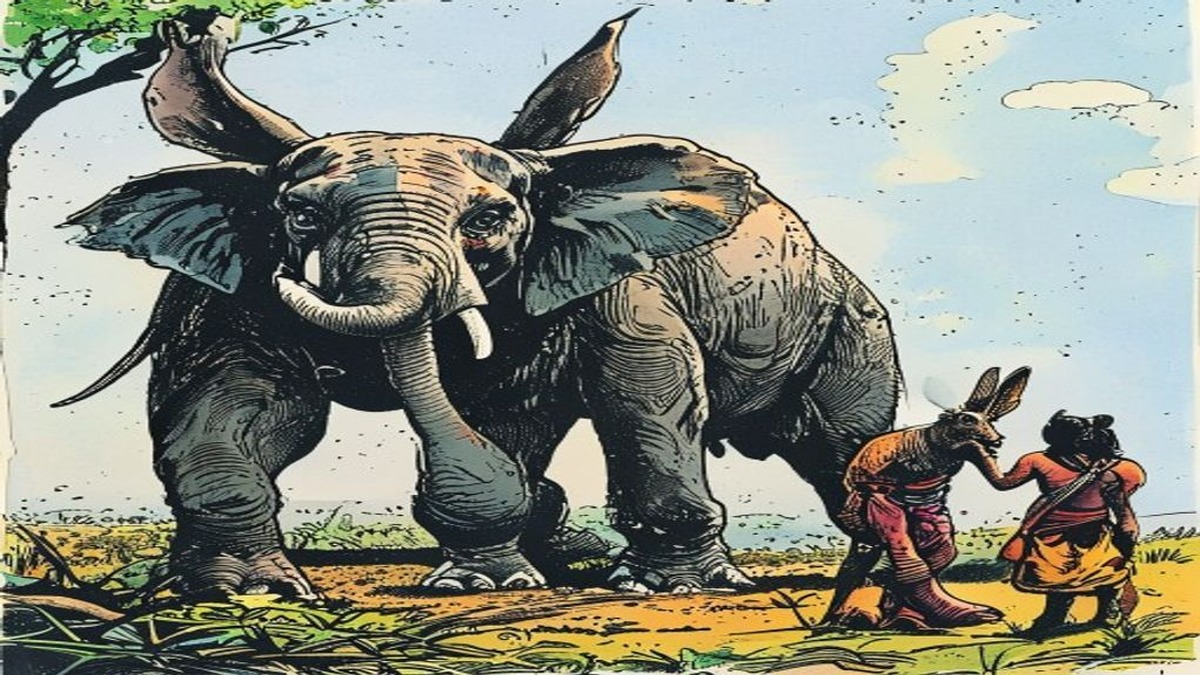
Beat I — The Hares’ Crisis and the Counsel
The hare community lived beside a lake that was also frequented by a herd of elephants. When the elephants came to drink, they trampled the hares and destroyed their dwellings; the damage was catastrophic and repeated, and there was no possibility of directly resisting the elephants. The hares gathered to discuss what could be done. The options available to a weaker party facing an overwhelmingly stronger one are limited: direct confrontation is impossible; flight is degrading and impermanent; some form of indirect strategy is required.
A hare of particular intelligence proposed a solution: he would go to the elephant king as an ambassador, claiming to represent the moon. The moon’s reflection in the lake would serve as the moon itself, whose sacred lake the elephants were desecrating. The strategy required the elephant king to believe the claim and to be sufficiently awed by the moon’s authority to withdraw. The risks were real: if the elephant king was sceptical or contemptuous, the ambassador hare would be killed. But the alternative was the continued destruction of the hare community.
Beat II — The Ambassador’s Approach and the Claim
The hare ambassador approached the elephant king with the specific confidence that the role of divine ambassador required. He did not present himself as a hare speaking on behalf of hares, which would have been immediately contemptible to the elephants; he presented himself as the moon’s earthly representative, speaking on behalf of a celestial power before whom the difference between hare and elephant was irrelevant. The role he claimed placed him above the physical hierarchy in which he was at the bottom.
He told the elephant king that the moon was enraged: the elephants had been drinking from and trampling a lake sacred to the moon. The moon had sent his ambassador to warn the elephant king that unless the elephants withdrew and ceased their desecration, the moon would destroy them. To prove the claim, the ambassador offered to show the elephant king the moon himself, speaking from his lake. He led the elephant king to the water’s edge at night, where the moon’s reflection appeared, trembling with the ripples that the elephant’s trunk disturbed when it touched the water.
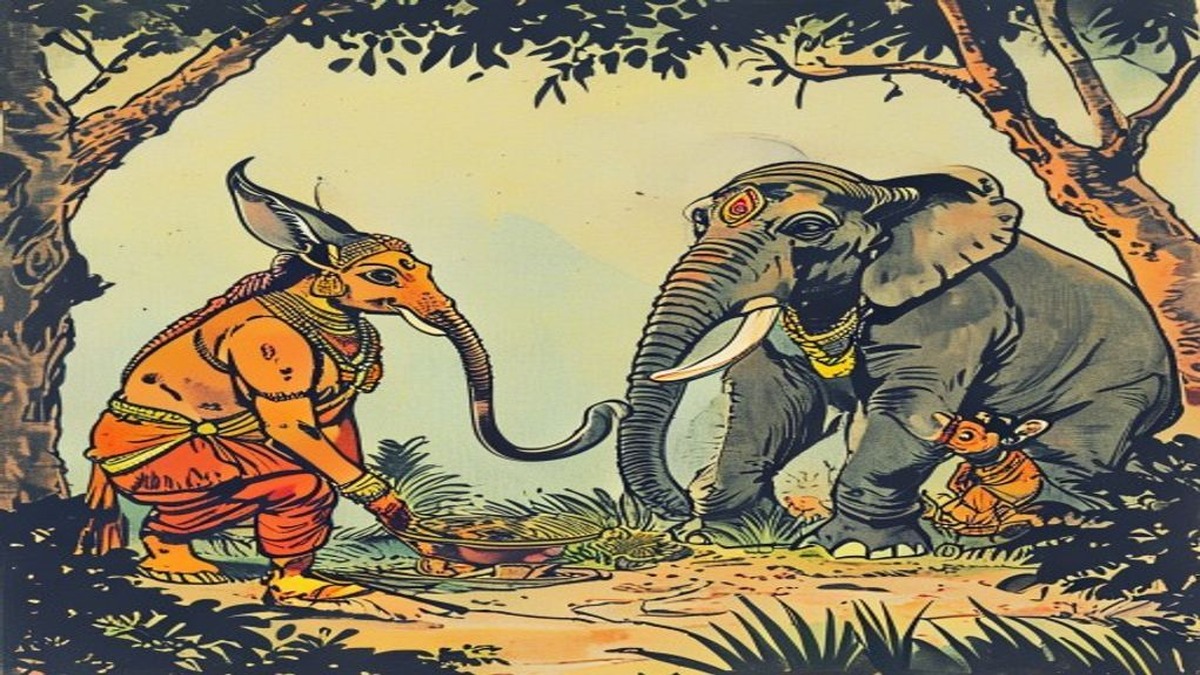
Beat III — The Elephant’s Withdrawal
The elephant king, seeing the moon’s image tremble when he touched the water, accepted the interpretation the ambassador had provided: the moon was indeed present, indeed enraged, and indeed trembling with divine anger at the elephant’s impertinent touch. He withdrew his herd from the lake and pledged not to return. The hare ambassador’s mission was completely successful. The hares’ lake was restored to them without a single act of force.
The Pancatantra’s account of the withdrawal is precise about what made the bluff work. The elephant king was not a fool; he was a being of normal intelligence applying his interpretive framework to an unusual situation. Within the elephant’s framework — which accepted the possibility of divine powers inhabiting sacred places and expressing anger through natural phenomena — the ambassador’s evidence was compelling. The hare had not created the moon’s reflection; he had created the interpretive context in which the moon’s reflection served as evidence of divine anger. The strategy exploited a genuine feature of the elephant’s worldview.
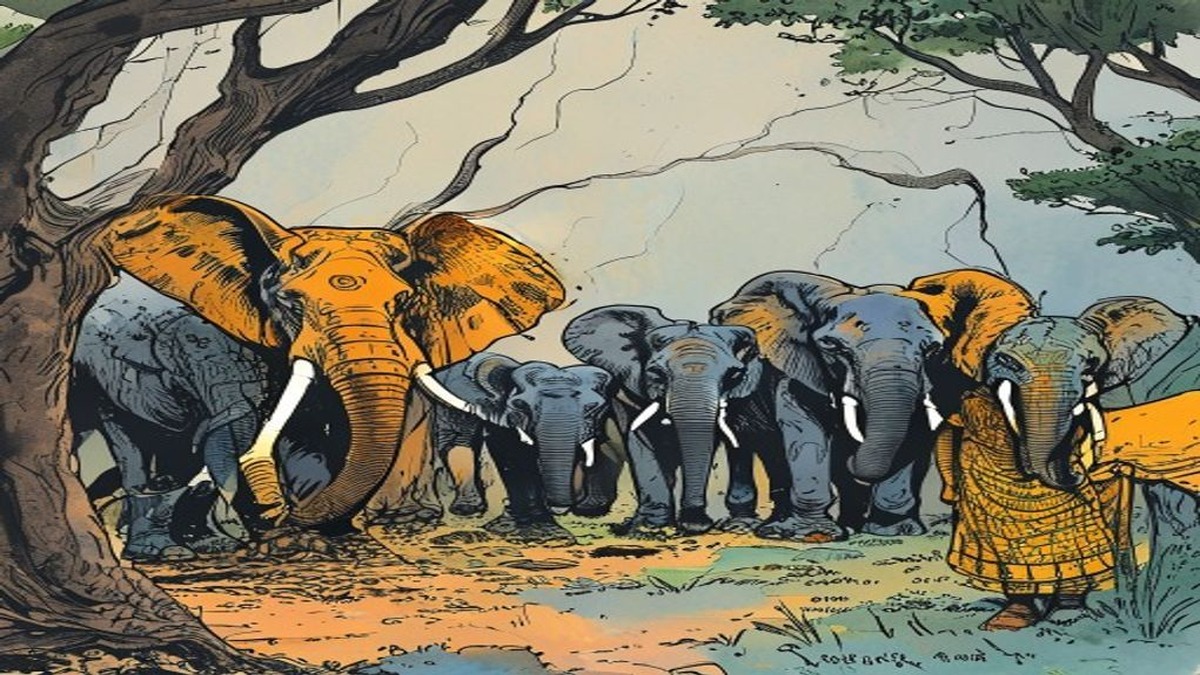
Beat IV — What the Hares and the Elephants Teaches About Asymmetric Strategy
Vishnu Sharma’s argument in this tale is the Pancatantra’s most elegant statement of the asymmetric strategy principle: the weaker party cannot win by fighting on the stronger party’s terms, but can win by redefining the terms of engagement. The hare ambassador did not attempt to match the elephants’ physical power; he introduced a third party — the moon, or rather the moon’s claimed authority — that was more powerful than the elephants and that served the hares’ interests. The introduction of this third authority changed the terms of the conflict from physical to religious, and on religious terms the elephants were the weaker party.
The strategy’s elegance lies in its specificity. The hare ambassador identified the precise vulnerability of the stronger party: the elephant king’s superstitious reverence for celestial powers. The moon’s reflection in the lake was not evidence of divine anger in any objective sense; it was an ordinary natural phenomenon that the ambassador recontextualised. The recontextualisation worked because it was tailored to the specific belief structure of the party it was aimed at. This is the Arthashastra’s principle of sama (persuasion using the target’s own values) applied at its most sophisticated: persuading the elephant king using a framework of divine authority that the elephant king himself accepted.
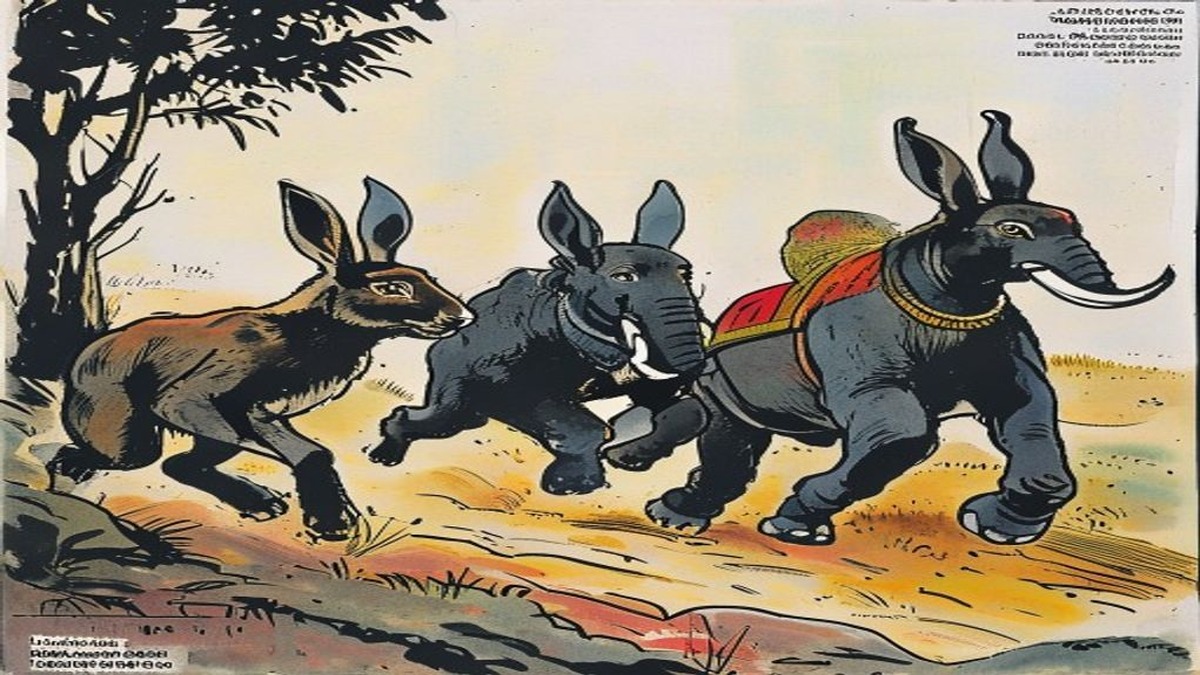
Moral and Sanskrit Wisdom Tradition
“The weaker party’s best weapon is the stronger party’s own beliefs; introduce a power the stronger party fears, and let that power do what force cannot.”
— Moral of The Story of the Hares and the Elephants, Pancatantra Book III (Kakolukiyam)
This moral engages the Sanskrit political tradition’s most sophisticated treatment of sama (persuasion through shared values) as a strategic tool for the weaker party. The Arthashastra prescribes sama as the first of the four upayas (means of achieving political objectives) and describes it as the most powerful when correctly applied: the target persuaded through their own values requires no coercion and sustains the outcome through their own beliefs. The Pancatantra’s hare ambassador applies this principle at its highest level of sophistication: not merely sharing the elephant king’s values but weaponising them, introducing a threat that the elephant king’s own worldview required him to take seriously.
Why This Story Has Lasted 2,300 Years
The Story of the Hares and the Elephants has lasted 2,300 years and spread across cultures — into Arabic, Persian, and European story traditions — because the principle it demonstrates is permanently true and endlessly applicable: the weaker party defeats the stronger not by matching force but by recontextualising the conflict on terms where the stronger party’s advantages are irrelevant and the weaker party’s intelligence is decisive. The hare ambassador’s genius was identifying the precise vulnerability of the overwhelmingly stronger opponent and designing an intervention that exploited that vulnerability with minimal resources. This remains the model for asymmetric strategy at every scale, and the Pancatantra’s telling of it remains unsurpassed in its economy and clarity.
Sanskrit Tradition: Tantrakhyayika (c. 200 BCE, Kashmir); Hitopadesha; Arabic Kalila wa Dimna; widespread world tradition
Key Concept: Asymmetric strategy; sama (persuasion through shared values) weaponised; exploiting the stronger party’s specific vulnerability; intelligence over force
Author: Vishnu Sharma (attributed, c. 3rd century BCE)
Arthashastra Parallel: Sama as first upaya; persuasion through the target’s own values as the most durable form of compliance; no coercion required when the target persuades itself
Frequently Asked Questions
What is the moral of the Story of the Hares and the Elephants in the Panchatantra?
The moral is that the weaker party's best weapon is the stronger party's own beliefs; introduce a power the stronger party fears, and let that power do what force cannot. The hare ambassador exploited the elephant king's superstitious reverence for celestial powers by claiming to be the moon's representative. The moon's reflection, recontextualised as evidence of divine anger, achieved what no amount of force could have achieved: the withdrawal of an overwhelmingly superior opponent.
What happens in the Story of the Hares and the Elephants in the Panchatantra?
Elephants drinking from and trampling a lake are destroying the hare community that lives there. A clever hare approaches the elephant king as the moon's ambassador, warning that the elephants are desecrating a sacred lake and that the moon is enraged. He shows the elephant king the moon's reflection in the lake at night; when the king disturbs the water with his trunk, the reflection trembles — apparent confirmation of divine anger. The elephant king, convinced, withdraws his herd permanently. The hares' lake is restored without any use of force.
How does the hare's bluff work against the elephants in this Panchatantra story?
The bluff works by recontextualising an ordinary natural phenomenon — the moon's reflection in the lake — within a framework of divine authority that the elephant king himself accepted. The hare did not create the evidence; he created the interpretive context in which the evidence became compelling. The elephant king was not a fool: he was a being of normal intelligence applying his worldview to an unusual situation, and within that worldview the ambassador's evidence was genuinely convincing. The strategy exploited the elephant's own beliefs rather than contradicting them.
What does this story teach about strategy for the weaker party facing a stronger opponent?
The Pancatantra's lesson is that the weaker party cannot win by fighting on the stronger party's terms but can win by redefining the terms of engagement. The hare ambassador did not attempt to match the elephants' physical power; he introduced a third authority — the moon's claimed power — more powerful than the elephants and serving the hares' interests. On religious terms, the elephants were the weaker party. The strategy's key was identifying the precise vulnerability of the stronger party and designing an intervention that exploited it with minimal resources.
How does the Hares and Elephants story relate to the Arthashastra's upaya system?
The Arthashastra prescribes four upayas (means of achieving political objectives): sama (persuasion), dana (gifts), bheda (division), and danda (force). Sama is described as most powerful when correctly applied because the target persuaded through their own values sustains the outcome themselves without continued coercion. The hare ambassador applies sama at its highest sophistication: not merely sharing the elephant king's values but weaponising them, introducing a divine threat that the king's own worldview required him to take seriously and withdraw from.
You May Also Like
 Panchatantra Stories
Ages 3-5
Panchatantra Stories
Ages 3-5
The Talking Turtle
A chatty turtle flies high in the sky holding a stick between two clever geese, but his talking tongue will bring him crashing down in this funny Panchatantra fable.
 Panchatantra Stories
Ages 3-5
Panchatantra Stories
Ages 3-5
The Bird with Two Heads
The Bird with Two Heads: Unity demands sacrifice. A two-headed bird's selfish conflict destroys them both A classic Indian folk tale retold for young readers.
 Panchatantra Stories
Ages 6-8
Panchatantra Stories
Ages 6-8
The Tale of Two Fishes and a Frog
The Tale of Two Fishes and a Frog: A Panchatantra Lesson in Wisdom In ancient India, there lived a wise king named Vikarma who loved to hear stories. One day