The Story of the Brahmin and the Three Crooks
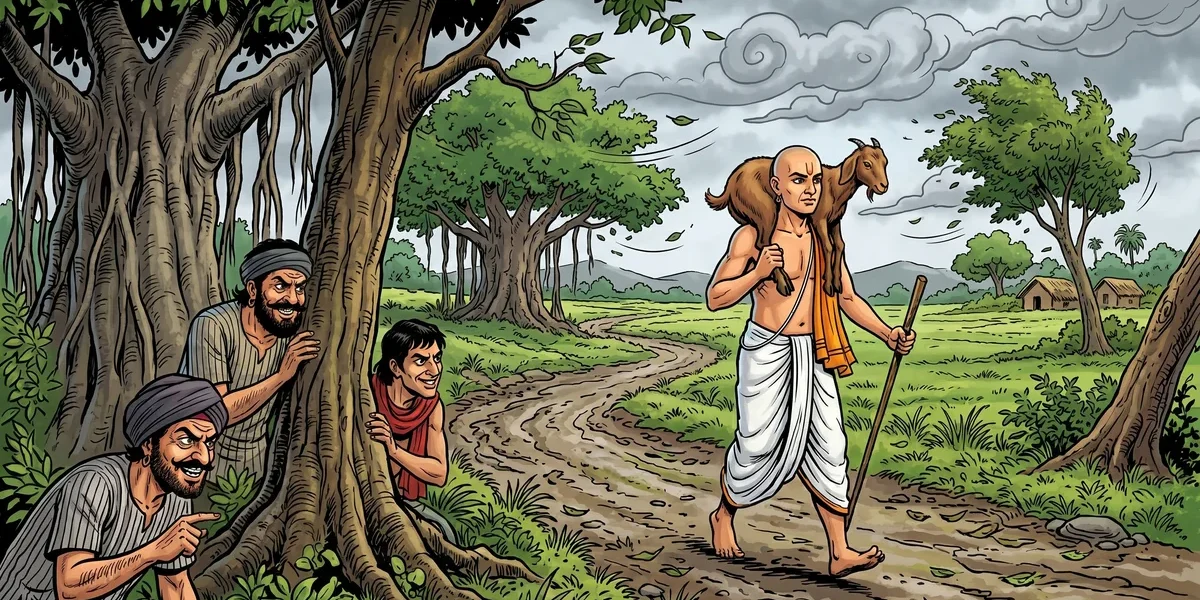
The Story of the Brahmin and the Three Crooks: In a certain town, there lived a Brahmin, b y the nameof Mitra Sharma, who was a fire worshipper. One day, in
The Story of the Brahmin and the Three Crooks
Canonical Attribution and Manuscript Tradition
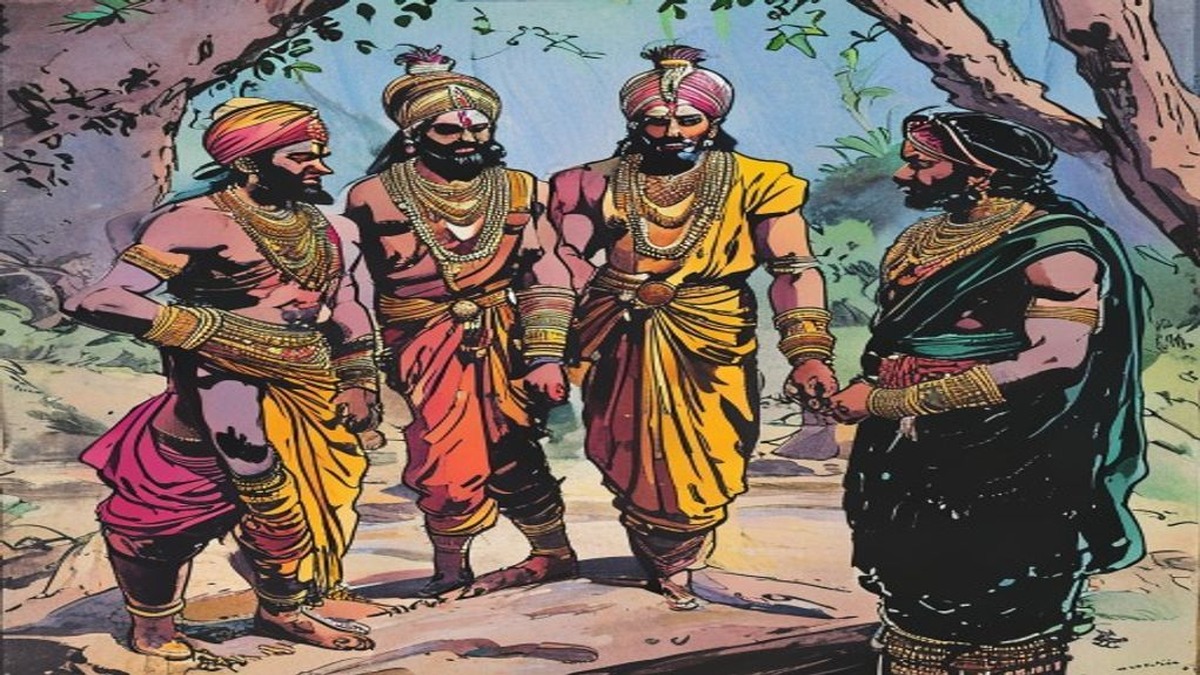
This tale is one of the Pancatantra’s most frequently cited demonstrations of the power of repeated false testimony: three rogues, working in coordination without the brahmin’s knowledge, successively tell the brahmin that his goat (obtained as a sacrificial fee) is in fact a dog. The brahmin, trusting the repeated testimony of apparent strangers, eventually believes them and abandons the goat. The rogues take it. The tale is preserved in the major Sanskrit recensions of the Pancatantra including the Tantrakhyayika (c. 200 BCE, Kashmir) and the Hitopadesha and is one of the most widely referenced examples in the Sanskrit epistemological tradition of what it calls testimony-based knowledge (shabda-pramana) and its vulnerabilities. The Pancatantra uses this tale to make a point about the conditions under which repeated testimony overrides direct perception: not because the testimony is reliable but because the social and psychological mechanisms that govern trust in testimony are exploitable by coordinated actors who understand them.
Beat I — The First False Testimony
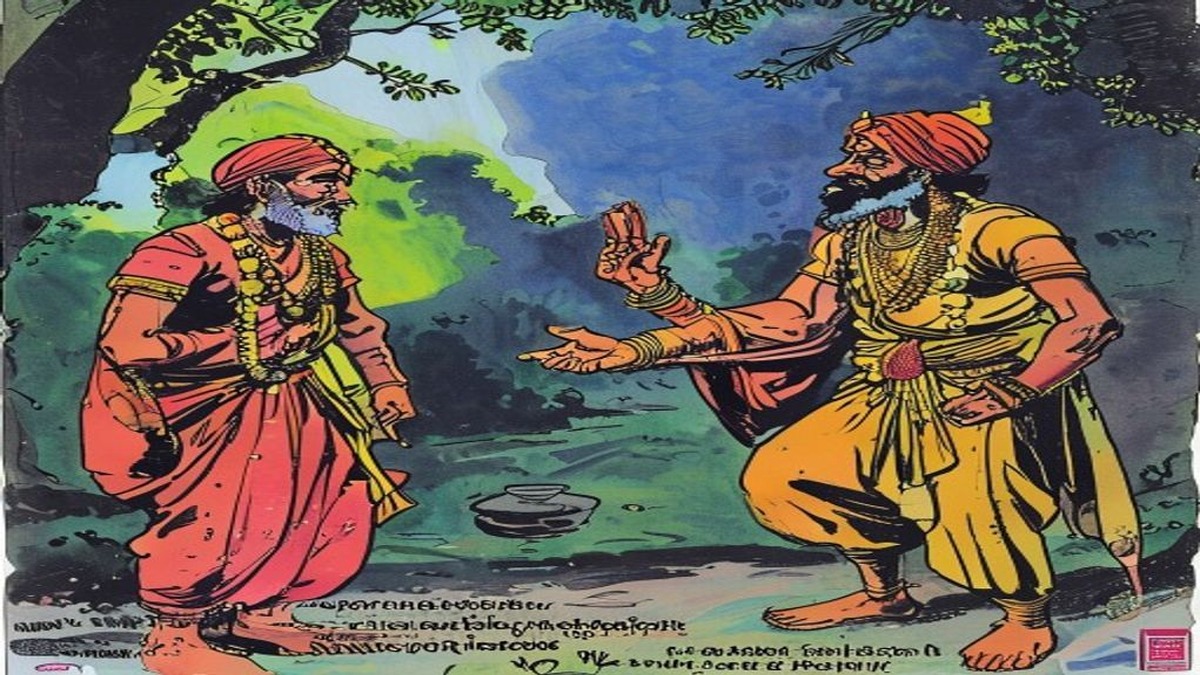
The brahmin had received a goat as a sacrificial fee — a legitimate and valuable payment for his ritual services. He was carrying it home when the first of the three crooks approached him and, with apparent concern, told him that the animal he was carrying was not a goat but a dog. The brahmin was certain it was a goat: he had received it as a goat, he could see it was a goat, and he had no reason to doubt his own perception. He dismissed the rogue’s testimony and continued on his way.
The Pancatantra’s account of the brahmin’s response to the first false testimony is precisely correct: the brahmin trusted his own direct perception over the testimony of an unknown stranger, which is the epistemically appropriate response. The first rogue’s testimony failed, as it was designed to fail. The tale’s mechanism depends on the failure of the first testimony being overcome by the second and third. The rogues understood that a single false testimony would not work; they needed the accumulation of repeated testimony from independent apparent sources.
Beat II — The Second and Third False Testimonies
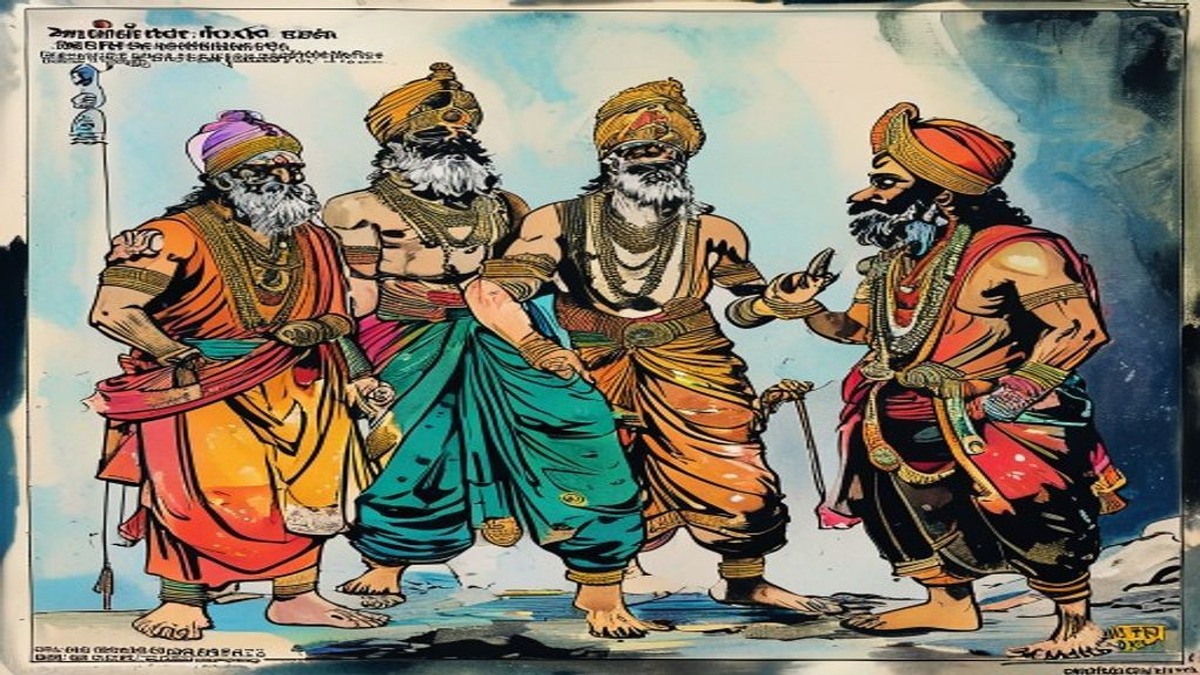
Further along the road, the second crook approached the brahmin with the same concern: that animal is a dog, not a goat. The brahmin’s certainty, though he maintained it, was now somewhat shaken. He had now heard the same surprising claim from two separate people who appeared not to know each other. The coincidence was notable; the second testimony did what the first could not do alone: it introduced the possibility that the brahmin’s own perception might be wrong.
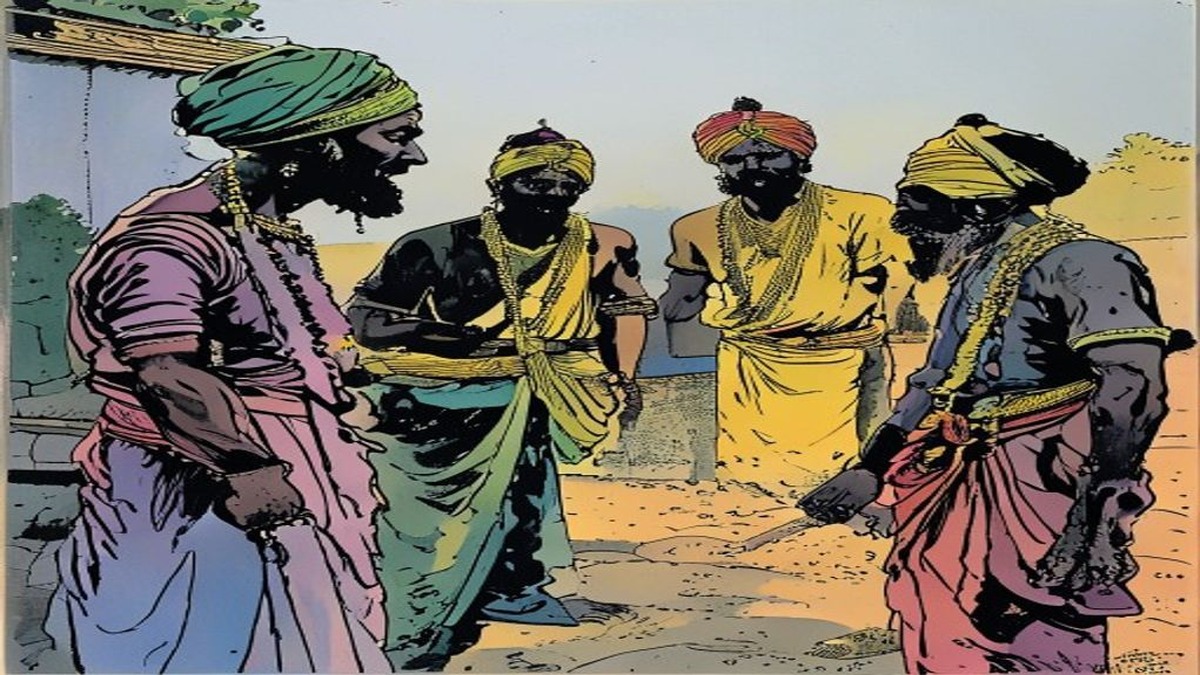
When the third crook delivered the same testimony — are you really carrying a dog? — the brahmin’s certainty collapsed. Three independent sources, none of whom appeared to know the others, had all told him the same thing. In the brahmin’s reasoning, the probability that three independent witnesses were all mistaken was lower than the probability that he himself was mistaken. He put down the goat in disgust and walked away, and the rogues collected their prize. The coordinated false testimony had worked precisely as designed.
Beat III — The Mechanism of the Deception
The Pancatantra’s analysis of the deception is its most important contribution in this tale. The rogues succeeded not because the brahmin was foolish but because they exploited a genuine feature of how testimony-based knowledge works. Human beings appropriately give weight to independent testimony from multiple sources: if three strangers who do not know each other all report the same unexpected observation, this is strong evidence that the observation is accurate. The rogues constructed a fake version of this situation: three apparent strangers delivering independent testimony, when in fact all three were coordinated and all three were lying.
The brahmin’s error was not trusting testimony — that is generally the right policy — but failing to apply the checks that can detect coordinated false testimony: observing whether the witnesses actually knew each other, noting the suspicious coincidence that all three encountered him on the same road, considering why three strangers would all be concerned about his animal. These checks were available to him; the rogues’ success depended on the brahmin not applying them.
Beat IV — What the Brahmin and the Three Crooks Teaches About Testimony and Coordination
Vishnu Sharma’s argument in this tale is epistemological as much as ethical. The vulnerability the rogues exploited is real: the mechanism by which coordinated actors can construct the appearance of independent confirmation to override direct perception is a genuine feature of the social epistemology of testimony. The Pancatantra is not condemning the brahmin for trusting testimony; it is identifying the specific checks that should be applied before testimony overrides direct perception, and noting that the brahmin failed to apply them.
For Vishnu Sharma’s royal pupils the governance application is urgent. Courts and councils are environments where coordinated testimony from multiple apparent sources can be manufactured to produce false conclusions in the ruler’s mind. The minister who understands how coordinated false testimony works will apply the relevant checks: considering whether the witnesses knew each other, whether the timing of the reports was suspicious, whether all the testimony served any particular party’s interest. The Arthashastra’s treatment of intelligence verification — using multiple independent agents to cross-check each other’s reports — rests on awareness of exactly this vulnerability.
Moral and Sanskrit Wisdom Tradition
“Three liars who coordinate can defeat one truth-teller who trusts; the defence against coordinated testimony is not distrust but the specific checks that reveal coordination.”
— Moral of The Story of the Brahmin and the Three Crooks, Pancatantra Book III (Kakolukiyam)
This moral engages the Sanskrit epistemological tradition’s treatment of shabda-pramana (testimony as a source of valid knowledge) and its limits. The Nyaya school identifies testimony as one of the four pramanas (valid sources of knowledge) but conditions its validity on the reliability of the testifier. The Pancatantra’s tale demonstrates the practical problem: reliability is precisely what is being faked. The Arthashastra’s sophisticated treatment of intelligence verification — never relying on a single agent, always cross-checking reports through independent sources genuinely unknown to each other — is the institutional response to exactly this vulnerability.
Why This Story Has Lasted 2,300 Years
The Story of the Brahmin and the Three Crooks endures because the vulnerability it demonstrates — coordinated actors manufacturing the appearance of independent confirmation to override direct perception or prior belief — is permanent and universal. The mechanisms have become more sophisticated: planted stories, coordinated social media narratives, manufactured consensus. But the structure is identical to the Pancatantra’s three crooks. The brahmin’s defence — the specific checks that reveal coordination — remains the same: who benefits from the testimony? Did the witnesses have independent access to the events? Is the timing suspicious? These questions are as relevant now as when Vishnu Sharma first posed them for his royal pupils.
Sanskrit Tradition: Tantrakhyayika (c. 200 BCE, Kashmir); Hitopadesha
Key Concept: Coordinated false testimony; shabda-pramana (testimony as knowledge source) and its vulnerability to coordination; independent confirmation faked by coordinated actors
Author: Vishnu Sharma (attributed, c. 3rd century BCE)
Arthashastra Parallel: Intelligence verification through genuinely independent cross-checking; never relying on testimony from sources that could be coordinated
Frequently Asked Questions
What is the moral of the Story of the Brahmin and the Three Crooks in the Panchatantra?
The moral is that three liars who coordinate can defeat one truth-teller who trusts; the defence against coordinated testimony is not distrust but the specific checks that reveal coordination. The three crooks exploited a genuine feature of testimony-based knowledge: we appropriately give weight to multiple independent sources reporting the same thing. By faking independence, they constructed false confirmation that overrode the brahmin's direct perception. The defence is to check whether the sources are genuinely independent.
What happens in the Story of the Brahmin and the Three Crooks in the Panchatantra?
A brahmin receives a goat as a sacrificial fee and is carrying it home when three crooks, working in coordination, successively tell him that the animal is actually a dog. The brahmin dismisses the first, is shaken by the second, and by the third abandons the goat in disgust. The three rogues collect it. The mechanism: three apparent strangers delivering independent testimony overrides the brahmin's direct perception, though all three were coordinated and none was an independent witness.
How does the deception in the Brahmin and Three Crooks story work?
The rogues exploited the genuine epistemic value of independent confirmation: when multiple strangers who appear not to know each other all report the same unexpected observation, this is strong evidence that the observation is accurate. The rogues faked this situation — three apparent strangers with independent testimony — when all three were coordinated. The brahmin's defence would have been to ask: did these witnesses actually know each other? Did they all encounter me on the same road? Who benefits from my abandoning the goat?
What does the Panchatantra say about testimony as a source of knowledge?
The Pancatantra does not condemn trusting testimony — that is generally the correct policy. It identifies the specific vulnerability: testimony-based knowledge (shabda-pramana) is exploitable by coordinated actors who can manufacture the appearance of independent confirmation. The defence is not to distrust all testimony but to apply the checks that reveal coordination: Are the sources genuinely independent? Is the timing suspicious? Does the testimony serve any particular party's interest? These checks, applied, would have protected the brahmin.
How does this Panchatantra story relate to the Arthashastra's treatment of intelligence?
The Arthashastra prescribes using multiple independent agents to cross-check each other's reports, with the independence being genuine — agents should not know they are being cross-checked and should not know each other. This institutional design is the response to exactly the vulnerability the brahmin-and-crooks tale demonstrates: coordinated sources can manufacture false consensus. The only protection is genuinely independent verification, which the Arthashastra builds into the intelligence system as a structural requirement.
You May Also Like
 Panchatantra Stories
Ages 6-8
Panchatantra Stories
Ages 6-8
The Story of Two Fishes and the Frog
The Story of Two Fishes and the Frog: In a certain pond, there lived two fishes. Theirnames were Shatabudhi and Sahasrabuddhi. They hadmade friends with a frog
 Panchatantra Stories
Ages 9-12
Panchatantra Stories
Ages 9-12
The Story of the Blue Jackal
The Panchatantra's brilliant tale of Caṇḍarava — the "Fierce Howler" jackal — who tumbles into a vat of indigo dye and walks out a king of the jungle. The story is found in Book I of the Panchatantra (Mitrabheda, "The Separation of Friends"), and it is one of Vishnu Sharma's most quietly devastating lessons: disguise is not transformation, and the test of who you are is not how you look on a calm day, but what comes out of you on the night when you forget you are pretending.
 Panchatantra Stories
Ages 9-12
Panchatantra Stories
Ages 9-12
How a Sparrow came to Grief
The Panchatantra's small, sharp tale of Sūcīmukhī — the Needle-Beaked sparrow — and the soaked, shivering monkey to whom she gave one piece of unwanted advice too many. The story is found in Book III of the Panchatantra (Kakolukiyam, "Of Crows and Owls"), and it is one of Vishnu Sharma's quietest, hardest lessons: being right is not the same as being wise. The wise person learns to read the listener — and learns, sometimes, to keep silent.