The Monkey and the Wedge
The Monkey and the Wedge: One, who interferes in other’s work, surely comes to grief.” There was once a merchant who employed many carpenters and masons to
The Monkey and the Wedge
Canonical Attribution and Manuscript Tradition
This tale belongs to Pancatantra Book I, Mitra-bheda, and is among the collection’s most compact and physically vivid demonstrations of the cost of unsanctioned interference. The story is preserved in all major Sanskrit recensions including the Tantrakhyayika (c. 200 BCE, Kashmir) and appears in the Hitopadesha. It entered Arabic literary culture through Kalila wa Dimna (c. 750 CE) and has structural relatives in European fable and cautionary tale traditions. The tale belongs to the widespread type of the creature that interferes with a process it does not understand, removes the single element that was keeping the dangerous forces in equilibrium, and is destroyed by the release of those forces. Its particular contribution within the Pancatantra is the surgical precision with which it identifies the failure mode: it is not simply curiosity that kills the monkey, but the monkey’s combination of curiosity, access, and the absence of any instruction about what it was touching. The wedge was keeping the log split; the monkey sat in the split; the monkey removed the wedge. Each step followed from the previous with a kind of terrible logic.
Beat I — The Construction Site and the Monkey
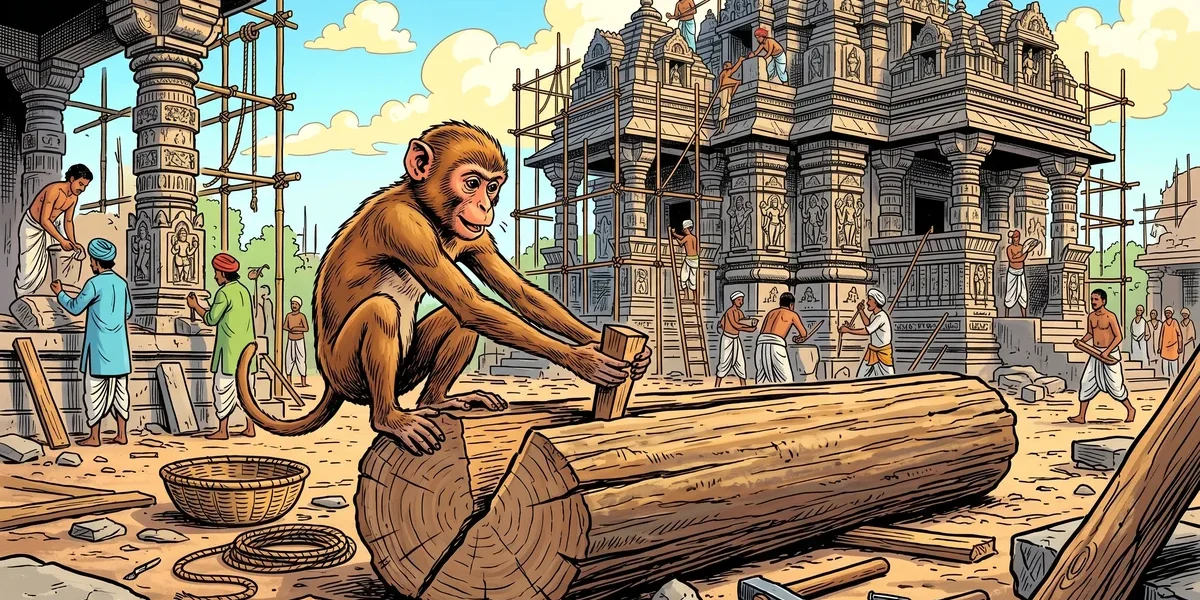
A group of carpenters were splitting a large log at a construction site. They had driven a wedge into the log to keep the split open while they took a break from their work. The wedge held the two halves of the log apart; without it, the weight of the wood would close the split. The carpenters left for their midday meal. A monkey, watching from nearby and always interested in anything left unattended by humans, came down and began to examine the site.
The monkey’s interest fixed on the wedge. It was an unusual object, inserted into a gap in a large piece of wood, clearly placed there by the humans who had just left. The monkey sat down in the split — straddling the log, with one leg on each side of the gap — and began to examine the wedge more closely. The Pancatantra’s account of this positioning is deliberate: the monkey placed itself in precisely the position where the closing of the split would be most dangerous, before understanding what the wedge was doing. Curiosity had led it to the object; the positioning followed from the curiosity without any assessment of what the object was controlling.
Beat II — The Removal and the Consequence
The monkey pulled out the wedge. The two halves of the log, held apart only by the wedge’s presence, immediately closed. The monkey’s legs, which were in the gap when the wedge was removed, were caught between the closing halves. The monkey was trapped, severely injured, and in some recensions of the tale killed outright. The carpenters returned and found it.
The tale’s physical logic is exact and its compression is complete. There is no moral ambiguity, no villain, no malice. The monkey was not attacked; the log did not act against the monkey; the forces the wedge had been holding in equilibrium simply resumed their natural state when the equilibrium-maintaining element was removed. The monkey had removed it. The gap closed because gaps in logs under their own weight close when the force holding them open is removed. This is not a mystery; it is physics. The monkey’s tragedy is that it did not know enough physics to understand what it was about to do, and it did not pause to find out before doing it.
Beat III — The Pancatantra’s Anatomy of Unsanctioned Interference
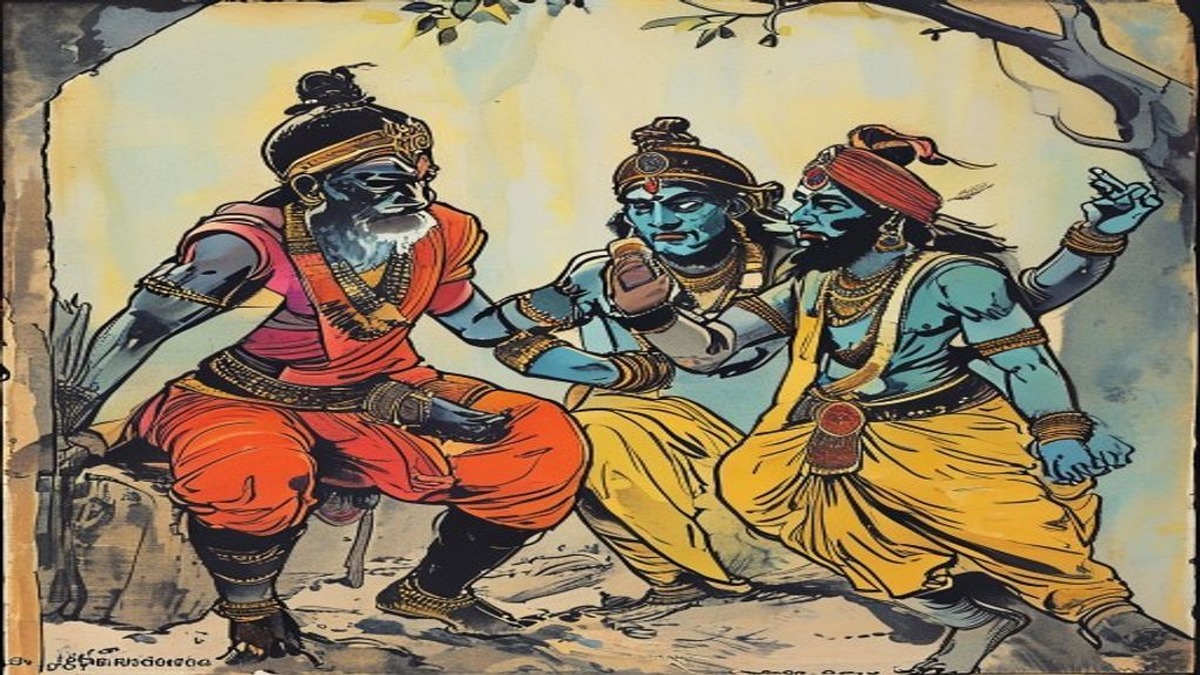
Vishnu Sharma’s lesson operates on two levels. At the immediate level it is a warning about interfering with processes one does not understand: before removing any element from any system, one should understand what that element is doing. The wedge was not merely an interesting object; it was a functional component of a specific mechanical situation. Removing a functional component from a mechanical situation without understanding its function releases whatever forces the component was managing.
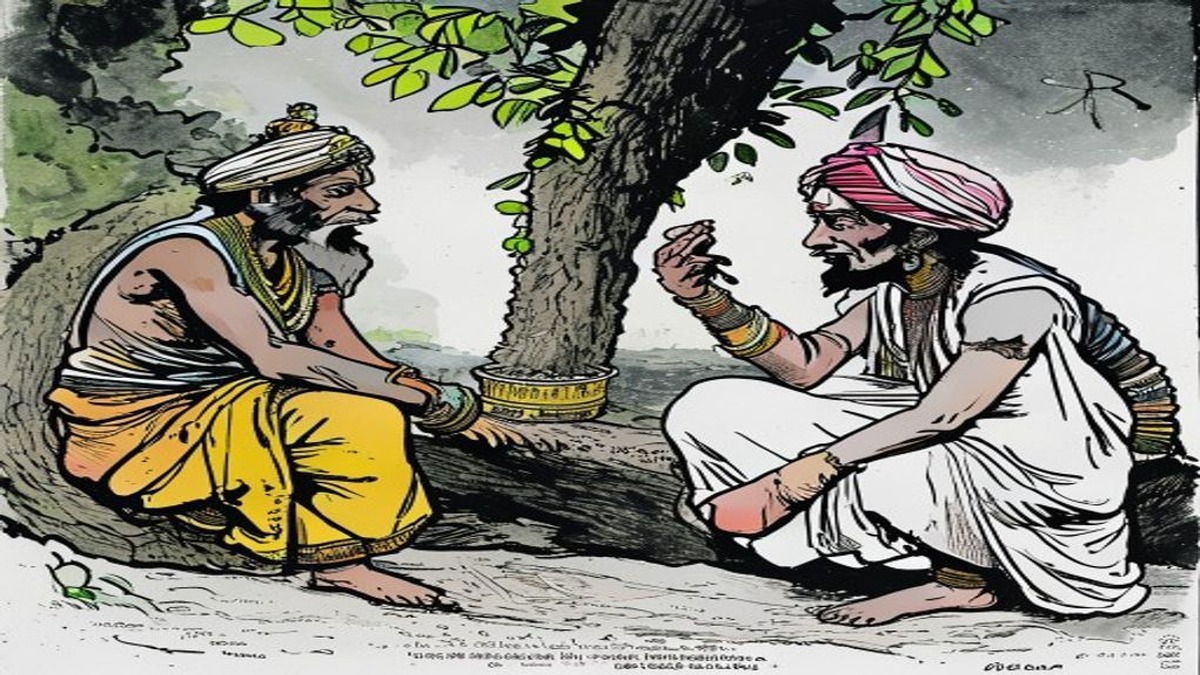
At the political level, which is the level the Pancatantra is always ultimately addressing, the monkey is anyone who intervenes in a political arrangement — a treaty, an alliance, a power-sharing settlement, a diplomatic balance — without understanding what forces that arrangement is holding in equilibrium. Political arrangements, like wedges in logs, often look arbitrary or unnecessary to the uninstructed eye. They exist because specific forces required management at a specific moment, and the arrangement was what managed them. Removing the arrangement releases the forces. If the person removing the arrangement is in the gap — is themselves in the position that the forces will affect when released — the outcome is the monkey’s outcome.
Beat IV — What the Monkey Teaches About Systems and Equilibrium
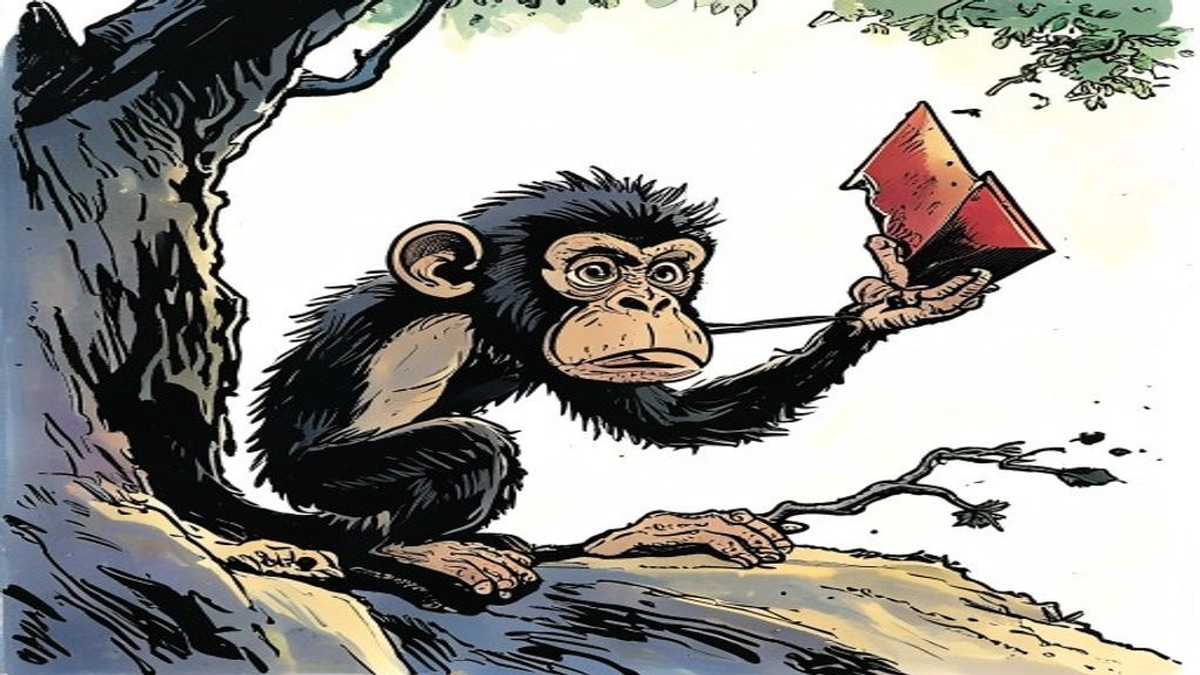
The Pancatantra’s most important political teaching embedded in this tale is about the relationship between observable arrangements and the unobservable forces they manage. A new ruler, minister, or advisor arriving in a situation will observe many arrangements that appear arbitrary: a treaty that seems to give unnecessary advantage to a neighbouring kingdom; an alliance with a party that seems too weak to be worth maintaining; a domestic settlement that looks like mere inertia from a previous era. The monkey’s error is to treat the wedge as merely an interesting object rather than as a functional component whose function must be understood before it is touched.
The Arthashastra of Kautilya addresses this through its extensive analysis of existing agreements (sandhi) and the conditions under which they should be maintained or terminated. Kautilya’s instruction is that terminating an existing agreement requires understanding what the agreement was managing and what will fill that management function after the termination. The monkey does not ask what will fill the wedge’s function after it is removed; it simply removes it. The result is that the function is not filled, the forces resume, and the monkey is in the gap. Vishnu Sharma’s narrative embeds the same instruction in a physical image so clear that it requires no doctrinal elaboration.
Moral and Sanskrit Wisdom Tradition
“Do not remove what you do not understand; the forces it was managing will not pause to consider your intentions.”
— Moral of The Monkey and the Wedge, Pancatantra Book I (Mitra-bheda)
This moral belongs to the Pancatantra’s sustained teaching on the relationship between observable arrangements and unobservable forces. The Arthashastra’s treatment of sandhi (treaty or agreement) makes the same point from the prescriptive side: before terminating any agreement, analyse the forces it was managing and ensure those forces will be managed by an alternative arrangement. Vishnu Sharma makes the point narratively, through the body of a monkey trapped in a closing log. The physical immediacy of the image — the gap closing, the legs caught, the wedge on the ground — is more pedagogically powerful than any doctrine, and its compression is among the reasons the tale has lasted as long as it has.
Why This Story Has Lasted 2,300 Years
The Monkey and the Wedge endures because the cognitive error it illustrates — treating a functional component as merely an interesting object, removing it without understanding its function, and being destroyed by the released forces — is genuinely universal. It applies to mechanical systems, political arrangements, social institutions, and any other structured situation where specific elements are managing specific forces. The tale’s physical vividness makes the abstract point concrete in a way that persists in memory: the image of the closing log and the trapped legs is not forgettable. Vishnu Sharma needed nothing more than this image to make the argument that analysis must precede interference, and that the forces released by uninstructed interference do not pause to consider whether the one who released them meant well.
Sanskrit Tradition: Tantrakhyayika (c. 200 BCE, Kashmir); Hitopadesha; Kalila wa Dimna (Arabic, c. 750 CE)
Key Principle: Understand what any element is managing before removing it; released forces are indifferent to intentions
Author: Vishnu Sharma (attributed, c. 3rd century BCE)
Arthashastra Parallel: Kautilya’s analysis of sandhi (agreements): understand what they manage before terminating them
You May Also Like
 Panchatantra Stories
Ages 9-12
Panchatantra Stories
Ages 9-12
The Monkey and the Crocodile
Read 'The Monkey and the Crocodile' — a classic Panchatantra story about nature and animals. The Monkey and the Crocodile is a beloved Panchatantra tale...
 Panchatantra Stories
Ages 6-8
Panchatantra Stories
Ages 6-8
The Tale of Golden Droppings
The Tale of Golden Droppings: Check thoroughly even what seems to be impossible.” There was a special bird named Sindhuka, who lived in a huge tree on the top
 Panchatantra Stories
Ages 3-5
Panchatantra Stories
Ages 3-5
The Monkey and the Log
A restless monkey pokes at what he does not understand — and pays a painful price that has lasted thousands of years in the Panchatantra.