The King and The Drum – An Indian Folktale
The King and The Drum – An Indian Folktale: Long ago there lived a king somewhere in the central part of India. He was very proud of his looks. He spent hours
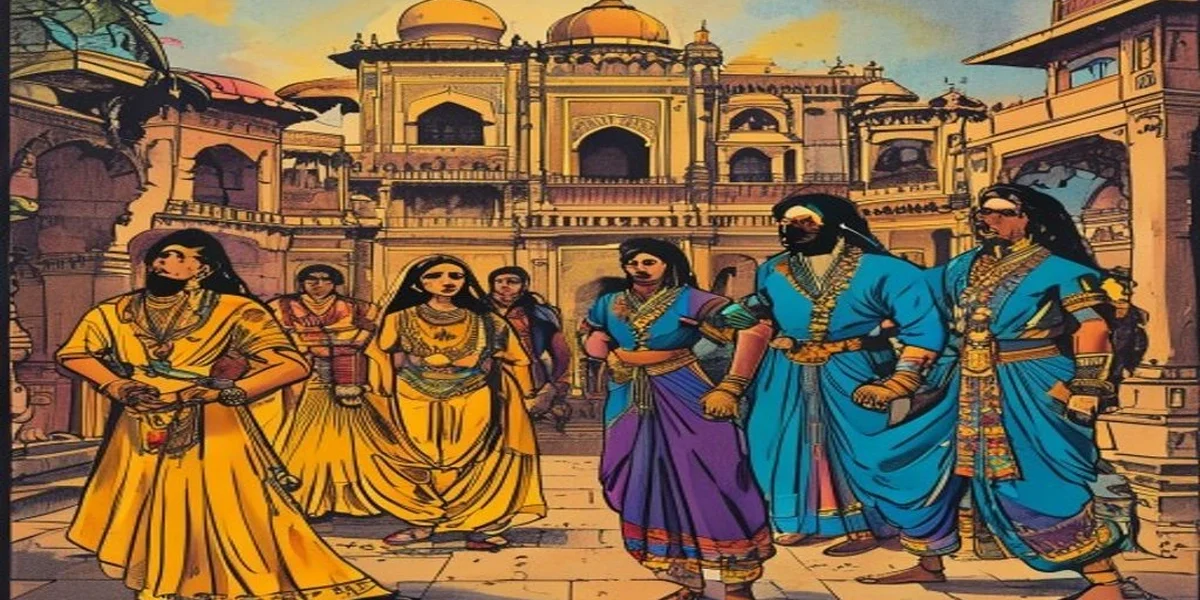
The king had a drum. Not a drum for war, not a drum for celebration — a drum for justice. Any subject of the kingdom, human or otherwise, could beat that drum, and the king was obliged to hear the complaint and render judgment. This institution — the dundubhi or nyaya-drum of justice — is one of Indian political thought’s most powerful symbols of the ideal ruler’s accessibility, and the folk tales built around it are among the tradition’s most vivid statements about what good governance looks like from the perspective of those who need it.
I. The Dundubhi: The Political Technology of the Complaint
The justice drum (dundubhi, nyaya-dundubhi, or dharma-dundubhi) appears across South Asian political literature and folk tradition as a concrete institutional mechanism for ensuring that the ruler remains accessible to the governed. In the ideal Indian polity as described in texts from the Arthashastra through the epics to Mughal administrative documents, the king’s primary obligation — above military success, above treasury management, above diplomatic skill — was the dispensation of justice to his subjects. The justice drum was the physical embodiment of this obligation: a standing promise that the powerful would hear the powerless.
The drum’s placement was deliberate: typically at the palace gate or in the central square, where it could be reached by anyone, at any hour, without requiring access through the layers of court hierarchy that normally separated a subject from the king. This circumvention of hierarchy was the drum’s political genius. Without it, a poor farmer, a widow, a merchant wronged by a noble — anyone without social power — would have to petition through intermediaries who had every incentive to filter, delay, or distort the complaint. The drum bypassed all intermediaries. You beat it; the king came. Or was obligated to come.
The folk tales built around the justice drum consistently test whether this obligation is real or ceremonial — whether the king will actually come when the drum is sounded by an inconvenient petitioner at an inconvenient hour with a complaint that challenges powerful interests. In the most celebrated variants, the drum is sounded not by a human subject but by an animal: a horse who has been mistreated, a cow whose calf was taken, a bird whose nest was destroyed by palace construction. The king who hears an animal’s complaint and renders justice has demonstrated that his commitment to the drum’s promise is total and genuine, not merely for cases where justice is easy or politically expedient.
II. The Inconvenient Petitioner: Testing the King’s Justice
The structural tension in justice drum tales is between the drum’s promise (anyone may petition) and the practical pressures that discourage kings from honouring that promise consistently. A wealthy merchant who has bribed a court official; a noble whose family has served the kingdom for generations; a military commander whose loyalty the king needs — these are the adversaries that justice drum tales typically pit against the petitioner, because they represent the real test of whether the king’s justice extends to cases where rendering it costs something.
The Indian political tradition was under no illusions about the difficulty of this test. The Arthashastra’s account of court procedure acknowledges explicitly that powerful interests will attempt to influence judicial outcomes, and it prescribes elaborate systems — multiple judges, written records, public hearings — to reduce this influence. The justice drum tale works at a more fundamental level: it insists that the king himself, personally, hear the complaint and personally render judgment. No filter, no delegation, no intermediary. The king’s personal involvement is the guarantee of the process’s integrity.
When the drum is sounded at an inconvenient moment — by an animal, by a low-caste petitioner, by a woman, by a child — the king who responds without visible annoyance or delay is the folk tradition’s ideal ruler. He has demonstrated that the drum’s promise applies to all cases, not just convenient ones. The king who is slow to respond, or who attempts to determine first whether the petitioner is “worthy” before hearing the complaint, has already violated the drum’s promise. The institutional commitment cannot be conditional; conditionality destroys the institution.
III. The King’s Obligation: Dharma-Raja and the Weight of the Crown
The justice drum tale is ultimately a story about the specific character of royal dharma — the duties that kingship imposes on the person who wears the crown. Indian political philosophy is unusual in the degree to which it conceptualises royal power not as a privilege but as an obligation. The king who does not provide justice to his subjects is not merely failing at his job; he is violating his dharma, and the consequences — both in this world (the kingdom’s decline) and across lifetimes (the karmic cost of injustice sustained) — are severe.
The concept of dharma-raja (the righteous king) in Indian tradition is not abstract; it is concretely embodied in specific practices, of which the justice drum is among the most vivid. A dharma-raja does not merely make good decisions from the throne; he makes himself accessible to those who need decisions made. He bears the weight of others’ complaints as a specific and non-delegable royal duty. The justice drum tale dramatises this duty in its most testing form — the complaint that is inconvenient, the petitioner who is powerless, the moment when the king would prefer not to be disturbed.
The resolution of the best justice drum tales is not merely judicial — the king renders a verdict — but ethical: the king is seen to take the petitioner seriously, to listen with full attention, to apply the same standards of justice he would apply to any other case. This equality of attention is what the tradition most celebrates. It is not enough for the king to render technically correct judgments; he must demonstrate that the drumbeat of a poor farmer or a mistreated animal carries the same urgency, in his ears, as the drumbeat of a noble or a merchant. Equality before the king, not merely equality before the law, is the folk ideal.
“The king who sleeps through the justice drum has abdicated — not the throne, but its reason.”
— Indian political proverb on the duty of the dharma-raja
Why This Story Lasted
The King and the Drum lasted because accessible justice — the possibility of reaching the powerful from a position of powerlessness — is among the most persistent and most frequently violated of political ideals. In every era, the barriers between those who need justice and those who can provide it multiply: court fees, procedural complexity, social connections required, bribes expected. The justice drum tale is the folk tradition’s standing objection to all these barriers, its insistence that the king — and by extension, the state — owes its subjects not just technically correct judicial processes but genuine, accessible, attentive justice.
The tale also lasted because the image of the drum itself is powerful in ways that survive translation across eras and cultures. A drum that any person can beat, that the king is obligated to hear — this is a folk model of what we now call the right of petition, the right to be heard, the right to have one’s grievance considered by those who hold power. That such a right needed to be embodied in a physical object (the drum), a ritual (the sounding), and a story (the king who came) reflects the folk tradition’s understanding that rights which are not made concrete and narratively vivid tend to remain abstract and therefore vulnerable to erosion. The drum kept the right alive.
What is the dundubhi or justice drum in Indian tradition?
The dundubhi (also nyaya-dundubhi or dharma-dundubhi) is a justice drum placed at the palace gate or central square in the Indian ideal polity, which any subject could beat to demand an audience with the king and redress of grievance. It served as a concrete institutional mechanism bypassing the court hierarchy that normally separated subjects from the ruler, ensuring that even the powerless — poor farmers, widows, or in folk tales even animals — could access royal justice directly. The drum embodied the king’s standing obligation to hear any complaint, at any hour, from any petitioner.
What is dharma-raja in Indian political thought?
Dharma-raja (the righteous king) is the Indian ideal of kingship understood not as privilege but as obligation. The dharma-raja’s primary duty is justice — the active, accessible dispensation of fair judgment to all subjects regardless of their social standing. Indian political philosophy, from the Arthashastra through the epics, conceptualises royal power as legitimised by the king’s fulfilment of this duty: a king who does not provide justice has violated his dharma, with consequences in both this world (the kingdom’s decline) and across lifetimes (karmic cost). The justice drum tale embodies this ideal in its most concrete and testable form.
Why do justice drum tales often feature animal petitioners?
Animal petitioners test the justice drum’s promise at its most extreme: if the king will hear a horse, a cow, or a bird, he will hear anyone. Animals cannot speak for themselves in human courts; they have no social power, no connections, no bribes to offer. A king who responds to an animal’s drumbeat has demonstrated that his commitment to the institution is total and genuine — that the drum’s promise applies to all cases, not just convenient or socially acceptable ones. These versions also carry an implicit ecological ethics: the king who protects animals protects the natural world on which his kingdom depends.
How does the justice drum relate to modern concepts of the right of petition?
The justice drum is a folk model of what modern political systems call the right of petition — the right of any person to bring their grievance before those who hold power. Modern equivalents include ombudsman offices, public hearings, and formal petition mechanisms in democratic systems. The folk tradition’s insight — that this right must be made concrete, ritualised, and narratively vivid to survive erosion — anticipates the observation that rights which remain abstract tend to be circumvented by procedural barriers. The drum keeps the right alive by making it physical, immediate, and non-delegable.
What does the Arthashastra say about preventing interference with royal justice?
Kautilya’s Arthashastra acknowledges explicitly that powerful interests will attempt to influence judicial outcomes and prescribes elaborate systems to reduce this influence: multiple judges hearing the same case, written records that cannot be altered, public hearings that create accountability, and strict penalties for judges who accept bribes or render partial judgments. The justice drum tale works at a more fundamental level than these procedural safeguards: by requiring the king’s personal, public, immediate response to any petitioner, it creates accountability through visibility and makes it difficult for powerful intermediaries to filter or distort complaints before they reach royal judgment.
Frequently Asked Questions
**Q: Why is this story important?**
You May Also Like
 Aesop's Fables
Ages 3-5
Aesop's Fables
Ages 3-5
The Tale of Two Frogs
Two Japanese frogs climb a mountain to see the world — and discover that a pair of eyes set the wrong way can change everything.
 Aesop's Fables
Ages 9-12
Aesop's Fables
Ages 9-12
The Death And Burial Of Poor Sparrow
The Death And Burial Of Poor Sparrow: Once upon a time there lived a cock-sparrow and his wife, who were both growing old. But despite his years the All living
 Aesop's Fables
All Ages
Aesop's Fables
All Ages
The Lamb and the Wolf
The Lamb and the Wolf: In a bustling town in ancient India, A young lamb encountered a hungry wolf at a stream. This tale, beloved across generations, carries