The Cunning Mediator
The Cunning Mediator: Beware of a rascal who pretends to be holy.” Two partridges (quail-like birds) lived in a certain tree in the jungle. While one of them

The Cunning Mediator
Canonical Attribution and Manuscript Tradition
This tale is preserved in the major Sanskrit recensions of the Pancatantra including the Tantrakhyayika (c. 200 BCE, Kashmir) and the Hitopadesha. A cunning third party, perceiving an opportunity in the relationship between two others, deliberately manufactures misunderstanding between them — carrying false messages, misrepresenting each party’s statements to the other, and positioning itself as the mediator who alone can resolve the conflict it has created. The tale inverts the brahmin-and-cobra warning about misplaced conciliation: where that tale showed the danger of extending trust to an irreconcilable enemy, this tale shows the danger of the mediator who creates the enmity they then offer to resolve. It is preserved as one of the Pancatantra’s most politically important warnings about the class of operator who profits from conflict rather than from its resolution.

Beat I — The Opportunity and the Scheme
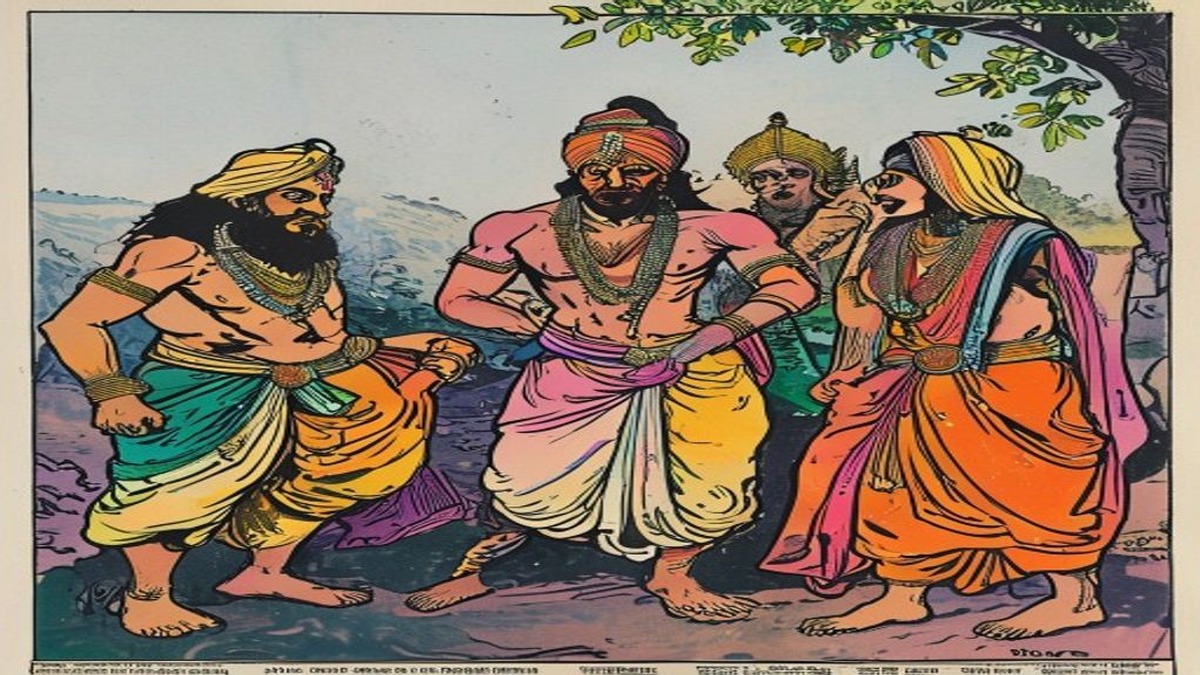
The cunning mediator observed two parties — friends, allies, or at minimum parties with a functioning relationship — and perceived an opportunity. The opportunity was not in any existing conflict between them but in the potential for conflict: if each could be made to believe that the other harboured negative feelings or deceptive intentions, the resulting mutual suspicion would create a crisis that neither could resolve without external assistance. The cunning mediator would then be positioned as the only available resolution mechanism.
The scheme required carrying false information in both directions. To the first party, the mediator reported that the second party had said or done something offensive, disloyal, or threatening. To the second party, the mediator reported the same about the first. Neither report was accurate; both were constructed to produce the maximum mutual suspicion. The mediator’s skill was in calibrating the reports to be plausible within each party’s existing knowledge of the other — false, but false in ways that the recipient could not immediately disprove.
Beat II — The Manufactured Conflict
The false reports had their intended effect. Each party, receiving what appeared to be credible information about the other’s hostile intentions, responded with the defensive posture that the information seemed to warrant. The first party withdrew trust; the second party, perceiving the withdrawal without understanding its cause, interpreted it as confirmation of hostile intent; the withdrawal on both sides accelerated into genuine mutual suspicion and eventually open conflict.
The Pancatantra’s analysis of this dynamic is precise. The conflict that the cunning mediator manufactured was real by the time it was fully developed: the mutual suspicion had generated genuine defensive actions on both sides, each of which provided the other with actual evidence of hostile intent. The mediator had created a self-sustaining conflict from false information. Once the genuine conflict was established, the original false information became irrelevant: the parties had generated enough real grievances against each other to sustain the conflict without the mediator’s continued assistance.
Beat III — The Mediator’s Positioning and Its Exposure
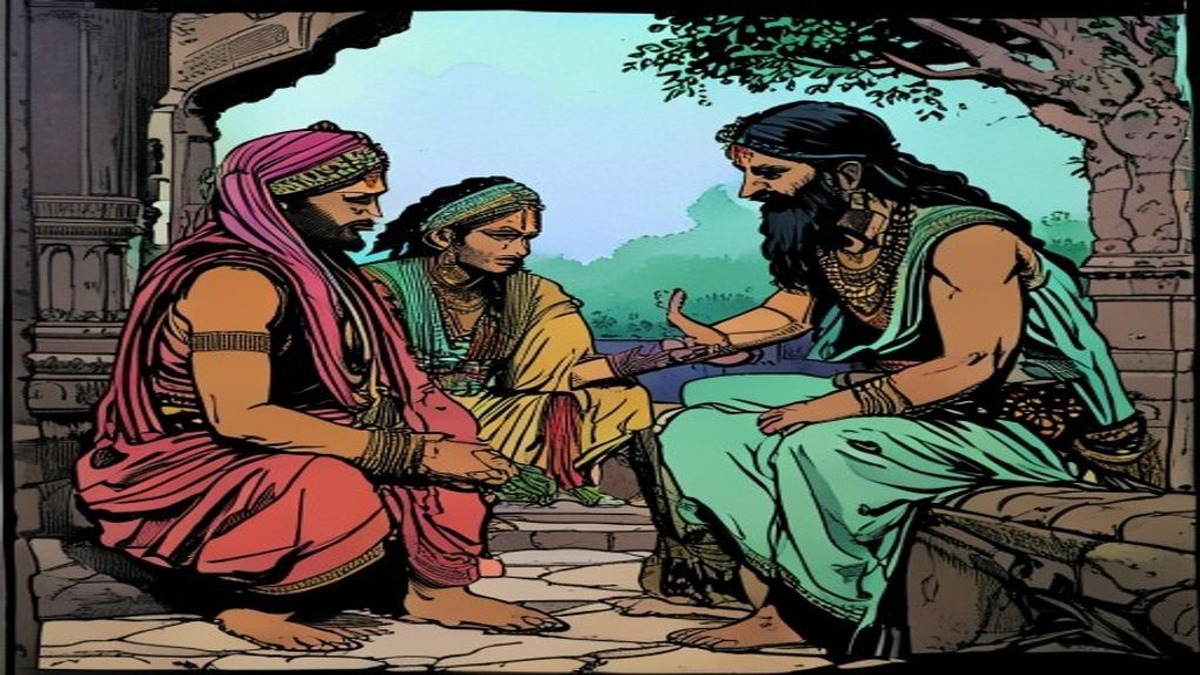
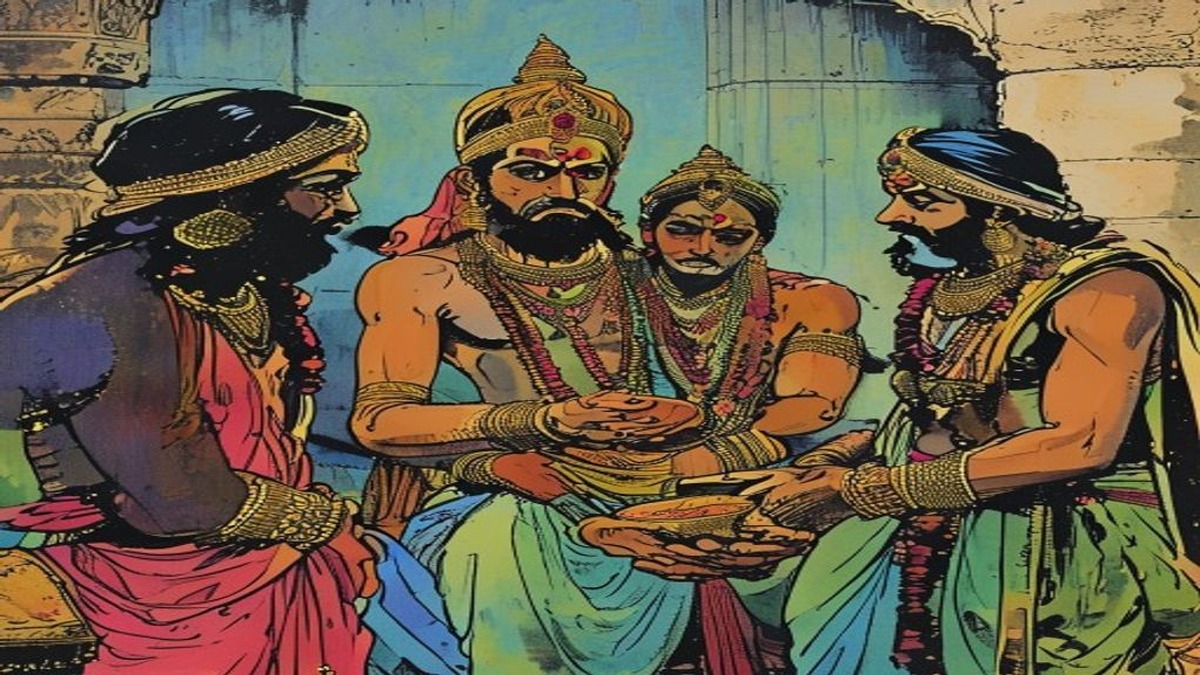
The cunning mediator now approached both parties as the disinterested party with relationships on both sides, uniquely positioned to facilitate resolution. Each party, exhausted by the conflict and uncertain of its full causes, was inclined to accept mediation. The mediator stood to benefit from the resolution process regardless of its outcome: fees, favour, access, information, or simply the influence that comes from being indispensable to both parties in their moment of need.
In the Pancatantra’s version, the mediator’s scheme is exposed — through the parties comparing their accounts, through a third observer who witnessed the false messages, or through the internal inconsistencies of the reports the mediator had carried. The exposure reveals not only the specific deception but its structure: the mediator had manufactured the conflict in order to position themselves as its resolution. The parties, understanding this, understand simultaneously the source of their conflict and the character of the one who created it.
Beat IV — What the Cunning Mediator Teaches About Conflict Manufacture
Vishnu Sharma’s argument in this tale addresses one of the most politically consequential classes of operator: the conflict entrepreneur, who profits from conflict and therefore has strong incentives to create it. The Pancatantra’s analysis of this operator is structural rather than merely moral: the conflict entrepreneur is dangerous not because they are evil but because they are rationally pursuing their interests in an environment where conflict creates opportunities. The defence against the conflict entrepreneur is not moral condemnation but the structural check: before accepting any report that creates or intensifies conflict with another party, the parties should compare accounts directly.
For Vishnu Sharma’s royal pupils the political application is among the most important in the Pancatantra. Courts are environments full of parties who benefit from conflict between others: ministers who gain influence when the king’s allies are set against each other; officials who gain access when established relationships are disrupted; external powers who benefit from internal dissension. The Arthashastra’s treatment of samstha (court intrigue) and the methods for detecting manufactured conflict — direct communication between parties, independent verification of reported statements, examination of who benefits from the reported conflict — are the institutional responses to exactly this danger.
Moral and Sanskrit Wisdom Tradition
“When a conflict arises unexpectedly between allies, the first question is not who is right but who benefits from the conflict’s existence — for that one may have manufactured it.”
— Moral of The Cunning Mediator, Pancatantra Book III (Kakolukiyam)
This moral engages the Sanskrit political tradition’s treatment of bheda (division) as a policy instrument and its dangers when applied by hostile third parties. The Arthashastra prescribes bheda — creating division among the enemy’s allies — as a legitimate political tool when used by the ruler against adversaries. But it also extensively treats the danger of bheda being used against the ruler’s own alliances: agents of external powers, disloyal ministers, and court intriguers all use the same technique. The defence is the examination of who benefits: the conflict entrepreneur is always identifiable by the interests they have in the conflict’s existence and continuation.
Why This Story Has Lasted 2,300 Years
The Cunning Mediator endures because the conflict entrepreneur — the party who profits from others’ disputes and therefore has incentives to create them — is a permanent feature of political life at every scale. The lawyer who prolongs litigation, the adviser who intensifies the client’s conflict with others to make their own services indispensable, the political operator who manufactures divisions between potential allies of the opposing side: all are practitioners of the same scheme the Pancatantra’s cunning mediator demonstrates. The tale’s prescription is permanently valid: when conflict arises unexpectedly between parties with a history of cooperation, ask before all else who benefits from the conflict’s existence. The answer is frequently the conflict’s author.
Sanskrit Tradition: Tantrakhyayika (c. 200 BCE, Kashmir); Hitopadesha
Key Concept: Conflict entrepreneur; bheda (division) as instrument; manufactured conflict creating mediator indispensability; examination of who benefits as primary diagnostic
Author: Vishnu Sharma (attributed, c. 3rd century BCE)
Arthashastra Parallel: Bheda as policy instrument; samstha (court intrigue); detection of manufactured conflict through direct communication and interest examination
Frequently Asked Questions
What is the moral of the Cunning Mediator in the Panchatantra?
The moral is that when conflict arises unexpectedly between allies, the first question is not who is right but who benefits from the conflict's existence — for that one may have manufactured it. The cunning mediator deliberately created misunderstanding between two parties through false messages, then positioned itself as the resolution mechanism. The defence is always to examine who profits from the conflict before accepting its premises.
What happens in the Story of the Cunning Mediator in the Panchatantra?
A cunning third party manufactures conflict between two allied parties by carrying false messages to each about the other's hostile intentions. Neither party can immediately disprove the reports, and the resulting mutual suspicion generates genuine defensive actions that produce real grievances. The mediator positions itself as uniquely able to resolve the conflict it created. The scheme is eventually exposed when the parties compare accounts and discover the inconsistencies that reveal the manufactured nature of their conflict.
What is a conflict entrepreneur and how does the Panchatantra describe this role?
A conflict entrepreneur is a party who profits from others' disputes and therefore has rational incentives to create them. The Pancatantra describes this operator structurally rather than merely morally: they are dangerous not because they are evil but because they are rationally pursuing interests in an environment where conflict creates opportunities. The conflict entrepreneur positions themselves as the indispensable mediator for the conflict they manufacture, gaining fees, favour, access, influence, or information from both parties in their moment of need.
How is the cunning mediator's scheme exposed in this Panchatantra story?
The scheme is exposed when the two parties compare their accounts directly — discovering that the reports each received about the other were inconsistent with what the other actually said or did, and that the inconsistencies all served the mediator's positioning. Direct communication between the parties, which the cunning mediator had been systematically preventing or discouraging, is both the means of exposure and the defence against future manufactured conflicts. The Arthashastra's prescription for the same problem is the same: maintain direct communication channels that conflict entrepreneurs cannot monopolise.
How does this Panchatantra story relate to the Arthashastra's treatment of bheda (division)?
The Arthashastra prescribes bheda (creating division among the enemy's allies) as a legitimate political tool when used by the ruler against adversaries. But it also extensively treats the danger of bheda being used against the ruler's own alliances: agents of external powers, disloyal ministers, and court intriguers all use the same technique. The Arthashastra's defences — direct communication between allies, independent verification of reported statements, examination of who benefits from reported conflicts — are the institutional responses to exactly what the cunning mediator demonstrates.
You May Also Like
 Panchatantra Stories
All Ages
Panchatantra Stories
All Ages
The Story of the Lion and the Hare
The Story of the Lion and the Hare: In the jungle, there lived a lion by the name of Bhasuraka. He was very powerful and used to kill the other animals
 Panchatantra Stories
Ages 3-5
Panchatantra Stories
Ages 3-5
Union Is Strength
Union Is Strength: Long ago, there lived a flock of pigeons in a dense forest. In the flock, there was an old pigeon who was very wise. All the pigeons
 Panchatantra Stories
Ages 6-8
Panchatantra Stories
Ages 6-8
The Story of the Donkey and the Washerman
The Story of the Donkey and the Washerman: In a town, there lived a washerman, by the name of Shuddhapata. He had only one donkey. Because oflack of grass and