Infidelity – A Short Story
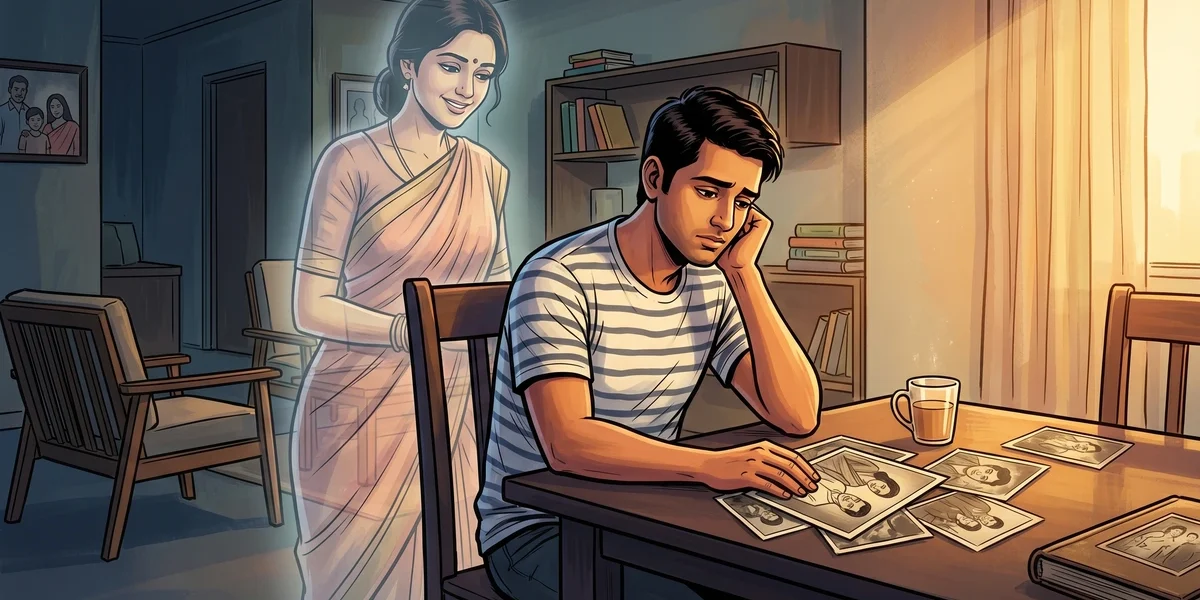
Infidelity – A Short Story: I looked through the partly opened door. I found her sliding through our old pictures. Her fingers paused on each one. Her light
Infidelity: The Breach of Trust and the Long Shadow It Casts
The short story about infidelity — whether marital, familial, or between friends — is among the oldest forms in the world narrative tradition because betrayal of trust is among the oldest and most universally experienced human catastrophes. The folk tradition, and the Aesopic tradition that grows from it, has always been interested in this particular failure not because it is dramatic (though it is) but because it is instructive: it reveals with great precision what commitments actually cost, what trust actually requires, and what is lost when the covenant of a close relationship is broken from within rather than attacked from without.
The word “infidelity” comes from the Latin infidelitas—unfaithfulness, disloyalty—and its root fides (faith, trust) is the same root that gives us “fidelity,” “confidence,” “fiduciary,” and “bona fide.” The betrayal of fides is not merely a personal failure but a structural one: it undermines the specific form of trust that makes intimate life possible, the trust that allows one person to be genuinely known by another, to be vulnerable without armour, to share what cannot be shared with strangers. The governing concept is pistis katargoumenē—trust destroyed—and the story’s challenge is to examine what it means to destroy something so fundamental without either sentimentalising the destroyed or absolving the destroyer.
“The betrayal was not just the act. It was the discovery that the entire time they had been building something together, one of them had been building something else elsewhere.”
Beat I — The Relationship and What It Contained
Before the betrayal can be understood, the story must establish what was there to betray. The short story form does this with compression rather than elaboration: a few precise details that establish the quality of the intimacy, the specific form of trust that existed, the particular vulnerabilities that were shared and that now, retrospectively, look like exposures. The quality of the betrayal is proportionate to the quality of what was built; a small trust broken is sad; a deep trust broken is catastrophic. The short story about infidelity understands this, which is why its first work is always to establish the depth of what existed.
Beat II — The Discovery and Its Rewriting of the Past
The most devastating aspect of infidelity — the feature that makes it distinct from most other forms of harm — is its retroactive effect on the past. When the betrayal is discovered, it does not merely change the present; it rewrites everything that came before. Every moment of apparent closeness is now suspect; every expression of love must be re-evaluated; every decision that was made on the basis of the relationship’s reality must now be reconsidered in light of the revelation that the reality was different from what was believed. The discovery is not just a loss of the future but a loss of the past — which is often the more devastating loss.
Beat III — The Responses and Their Complexity
The folk tradition and the short story tradition both resist simplistic response — the innocent party who is purely wronged, the guilty party who is purely villain. Real infidelity is usually more complex: there are reasons (not excuses) for the breach; there are things the relationship failed to provide or communicate; there are moments when the course could have been different that both people now replay. The short story’s work in this space is to hold the complexity without using it to dissolve the moral clarity: the betrayal was real and consequential regardless of the complicated human context that produced it, and the story can acknowledge both simultaneously.
Concept: Pistis katargoumenē (trust destroyed) — from the Greek-Aesopic philosophical framework
Story type: The betrayal narrative — one of the oldest and most widely distributed in world fiction
Themes: The breach of fides, the retroactive rewriting of the past, complexity without absolution, what intimacy requires and what its violation costs
Beat IV — What the Breach Reveals About Trust
The story of infidelity is ultimately a story about what trust is — not an abstract virtue but a specific structural feature of intimate relationship, the architecture that makes genuine knowing of another person possible. To trust someone with vulnerability is to give them something that cannot be protected against their misuse. The short story about infidelity holds this structural feature in its sharpest light: when the trust is broken, the vulnerability remains but the protection is gone. What is revealed, in the breach, is both what the relationship actually contained and what it actually cost — costs that were invisible while the trust was intact.
Why This Story Lasted
Stories about infidelity have lasted because the experience of betrayal by someone who was trusted with intimacy is among the most universal and the most private of human experiences. The person who has been betrayed typically cannot describe the full nature of what was lost to anyone who has not experienced it; the short story form makes an approximation available, a compressed model of the experience precise enough to be recognisable. And like all the best short fiction, the story of infidelity does more than describe — it examines: looking at the failure closely enough to understand something about the nature of what failed, which is the beginning of the possibility of trust again, elsewhere.
Frequently Asked Questions
Why does discovering infidelity rewrite the past?
The past as experienced contained the assumption that the relationship was what it appeared to be. The discovery retroactively changes the context of all past experience: moments that felt like genuine intimacy must now be re-evaluated as possibly performed; decisions made on the basis of the relationship’s reality were made on false premises; the person one thought one knew was, in at least this dimension, other than they appeared. The past is not changed in fact, but its meaning is changed entirely.
Is infidelity always a binary moral failure?
The folk and literary tradition tends to resist binary treatment. Human relationships are complex, the pressures that produce betrayal are real, and the relationship context that the betrayal occurred within had its own history and failures. Moral clarity about the betrayal (it was a breach of trust; it caused harm; it was a choice) can coexist with psychological complexity about how it came to happen. The short story form is particularly good at holding both.
What does the Aesopic tradition say about broken trust?
The Aesopic tradition is direct about the consequences of breaking trust: the creature that is trusted and betrays trust loses the conditions for future trust entirely — the shepherd’s boy who cried wolf, the wolf in sheep’s clothing, the guest who violates hospitality. Trust, once broken, requires extraordinary effort to rebuild, and many of the fables imply that some breaks are simply irreparable. The short story about infidelity works within this framework while giving it human complexity.
Can a relationship survive infidelity?
This is a question the story poses rather than answers — it depends on the nature of the relationship, the nature of the breach, the responses of both parties, and the degree to which genuine understanding of what happened can be reached. The folk tradition offers both models: relationships that end in the recognition that the breach was incompatible with continuation, and relationships that survive through the extraordinarily difficult work of rebuilding trust on new terms. The story’s job is not to prescribe but to illuminate.
What is the function of the short story form for this subject?
The short story’s compression is particularly suited to the experience of infidelity’s discovery: the sudden, complete collapse of a previous understanding into a new and terrible clarity has the same structural quality as the short story’s revelation — everything that came before is retrospectively reorganised by a single fact. The form mirrors the experience, which is one reason the short story has been the preferred literary vehicle for this subject from Maupassant to Munro.
Frequently Asked Questions
**Q: Why is this story important?**
You May Also Like
 Aesop's Fables
Ages 3-5
Aesop's Fables
Ages 3-5
The Kettle Who Gave Birth – Nasreddin Hodja
A clever trickster plays a funny joke on his greedy neighbor to get a beautiful kettle. A hilarious Turkish folk tale.
 Aesop's Fables
Ages 3-5
Aesop's Fables
Ages 3-5
The Magic Shoes And Staff
The Magic Shoes And Staff: Far, far away in a town of India called Chinchini, where in days long gone by the ancient gods in whom the people believed are said
 Aesop's Fables
Ages 3-5
Aesop's Fables
Ages 3-5
Deliverance – The Story of Ahalya
Deliverance – The Story of Ahalya: The story of Ahalya is often told from two perspectives: Ahalya’s own and Lord Rama’s in the Ramayana. This version presents