Finding A Connect Through Stories Meet Lavanya Prasad Of Talescope
Finding A Connect Through Stories Meet Lavanya Prasad Of Talescope: Once in a while you come across a storyteller for whom stories are a means to find a
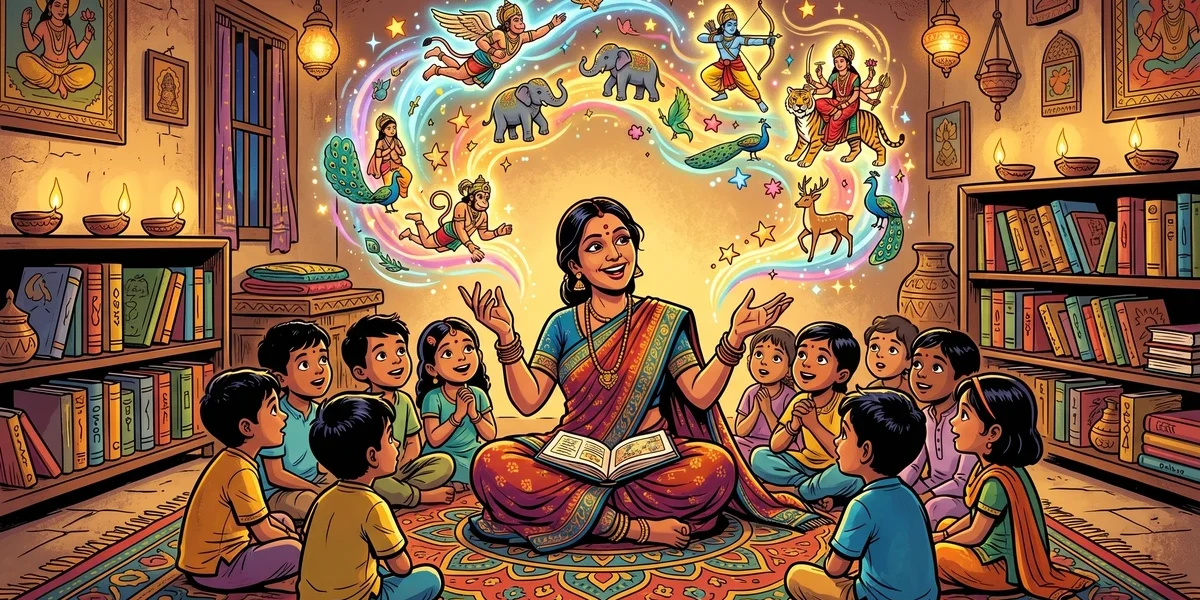
Finding a Connect Through Stories: Meet Lavanya Prasad of Talescope
Every storytelling platform begins with a conviction, and the conviction at the heart of Talescope is specific: that stories are not merely entertainment but a primary technology of human connection, and that in an era when children and families are increasingly scattered across screens and schedules, the deliberate act of sharing a story together is both countercultural and necessary. Lavanya Prasad, founder of Talescope, came to this conviction through the particular — a child, a story, a moment of connection that would not have happened any other way — and built an organisation around the insight that this kind of particular connection can be intentionally created.
The name “Talescope” suggests an instrument for seeing stories more clearly, more closely, from farther away — a telescope turned toward narrative rather than toward stars. This is apt. What a good storytelling practice does for those who engage in it is exactly what a telescope does for stargazers: it makes visible what was always there but too distant or diffuse to be apprehended with ordinary attention. The governing concept is kathā-bandhan—the bond of story—the idea that sharing a narrative creates a connection that persists beyond the telling, a relationship between teller, listener, and the world the story inhabits.
“The story doesn’t end when you finish telling it,” Lavanya says. “It ends when the person who heard it stops thinking about it. Which is sometimes never.”
Beat I — The Problem Talescope Addresses
The problem Talescope addresses is not a shortage of stories. There are more stories available to Indian children today than at any previous point in history — in every medium, on every platform, from every tradition. The problem is the quality of the encounter with story: whether it happens actively or passively, whether it is shared or solitary, whether it generates the conversation that transforms a story from a text into an experience. A child who watches a story alone on a screen has encountered a story. A child who hears a story told by a family member, and asks questions, and argues about the ending, and carries a character around in their imagination for weeks — that child has had a different, richer, more transforming encounter with the same material.
Beat II — The Art of the Storytelling Session
What Talescope works to cultivate is the storytelling session as a craft — not spontaneous, not accidental, but a practice that can be learned, refined, and reliably reproduced. This involves choices about which story to tell (matching the story to the child, the moment, the emotional need); how to tell it (pace, voice, the use of pauses, the inclusion of the listener through questions); and what to do with the conversation that follows (following the child’s interest rather than redirecting toward the “correct” interpretation). These are the skills of professional storytellers, but they are also skills that parents, grandparents, teachers, and librarians can develop with guidance and practice.
Beat III — Connection Across Distance
One of Talescope’s specific areas of focus is the use of storytelling to maintain connection across geographical distance — between grandparents and grandchildren who do not live in the same city, between parents who travel for work and children at home, between siblings in different countries. The story is a shared object that can be held by two people simultaneously even when they are far apart: one person tells it, the other receives it, and the story becomes the space they both inhabit regardless of the physical distance between them. This is not new — it is precisely how story functioned in oral traditions across millennia — but Talescope applies this ancient insight to contemporary conditions of family dispersal.
Organisation: Talescope — dedicated to cultivating storytelling as a practice of human connection
Founder: Lavanya Prasad
Themes: Kathā-bandhan (the bond of story), the quality of the story encounter, storytelling across distance, the craft of the storytelling session
Beat IV — Why This Work Matters Now
The work of organisations like Talescope matters particularly now because the conditions for organic storytelling have weakened. Extended families that once gathered and told stories have been dispersed by urbanisation and migration. The long evenings with no other entertainment that once made story-listening the natural activity have been replaced by the infinite alternatives of the connected screen. The grandparent who sat with the grandchild and wove the same stories that had been woven for them is now, in many families, available only on a video call. Talescope is working with these conditions rather than against them, finding ways to preserve the essential quality of the storytelling encounter within the changed circumstances of contemporary Indian family life.
Why This Story Matters
Stories about people who dedicate themselves to the craft and practice of storytelling are worth telling because they describe a form of care for the future: the conviction that how children are introduced to story will shape how they think, feel, and connect for the rest of their lives. Lavanya Prasad’s work at Talescope is a contribution to the larger effort — pursued by librarians, teachers, parents, and professional storytellers across the country — to ensure that the living encounter with story does not become a casualty of the convenience of passive screen consumption. That encounter, once lost, is not easily recovered. Those who work to preserve it are doing something genuinely important.
Frequently Asked Questions
What is Talescope?
Talescope is an Indian storytelling platform founded by Lavanya Prasad, dedicated to cultivating storytelling as a deliberate practice of human connection. It works with families, schools, and communities to develop the skills and habits of intentional story-sharing, particularly between children and the adults in their lives.
Why is intentional storytelling different from simply reading a book to a child?
Reading aloud is valuable, but intentional storytelling goes further: it involves choosing the story for the specific child and moment, adapting the telling in real time to the listener’s responses, inviting the listener into the story through questions and interaction, and sustaining the conversation the story generates. It transforms the encounter from reception to participation.
How does storytelling help maintain family connections across distance?
A shared story gives separated family members a common imaginative space — the characters, the world, the questions the story raises — that persists between the moments of telling. A grandparent who tells a grandchild a story over a video call has given the grandchild something to think about, dream about, and return to between calls. The story is a thread of connection that the distance cannot break.
What kinds of stories does Talescope work with?
Talescope works with the full range of story traditions available to Indian children — folk tales, mythological stories, contemporary fiction, family histories, and improvised stories created collaboratively between teller and listener. The emphasis is on the quality of the telling and the connection it creates rather than on any particular body of content.
How can parents develop their storytelling skills?
The most important beginning is to tell stories — imperfect ones, short ones, half-remembered ones — rather than waiting until the skill feels polished. Children respond to authenticity and presence more than to technical skill. Specific practices that help include: learning a small repertoire of stories by heart so they can be told without a book; paying attention to the child’s responses and following their interest; using pauses deliberately to create suspense and invite imagination; and asking open questions after the story rather than testing comprehension.
Frequently Asked Questions
**Q: Why is this story important?**
You May Also Like
 Aesop's Fables
Ages 6-8
Aesop's Fables
Ages 6-8
Cinderella For Our Era
Cinderella For Our Era: Once upon a time, there were two sisters who lived with their mother. All three of them were cranky and selfish and cruel. It didn’t
 Aesop's Fables
Ages 3-5
Aesop's Fables
Ages 3-5
Meet Arthi Anand of “Arts Tales with Arthi Anand”
Meet Arthi Anand of “Arts Tales with Arthi Anand”: Every once in a while, I come across a storyteller where one can feel the love for storytelling radiating
 Aesop's Fables
Ages 9-12
Aesop's Fables
Ages 9-12
The Shepherd Boy and the Wolf
The Shepherd Boy and the Wolf: In a valley where green meadows rolled like gentle waves beneath endless sky, there lived a young shepherd boy named Thomas.