Tokgabi And His Pranks
Tokgabi And His Pranks: Tokgabi is the most mischievous sprite in all Korean fairy-land. He does not like the sunshine or outdoors, and no one ever saw him on
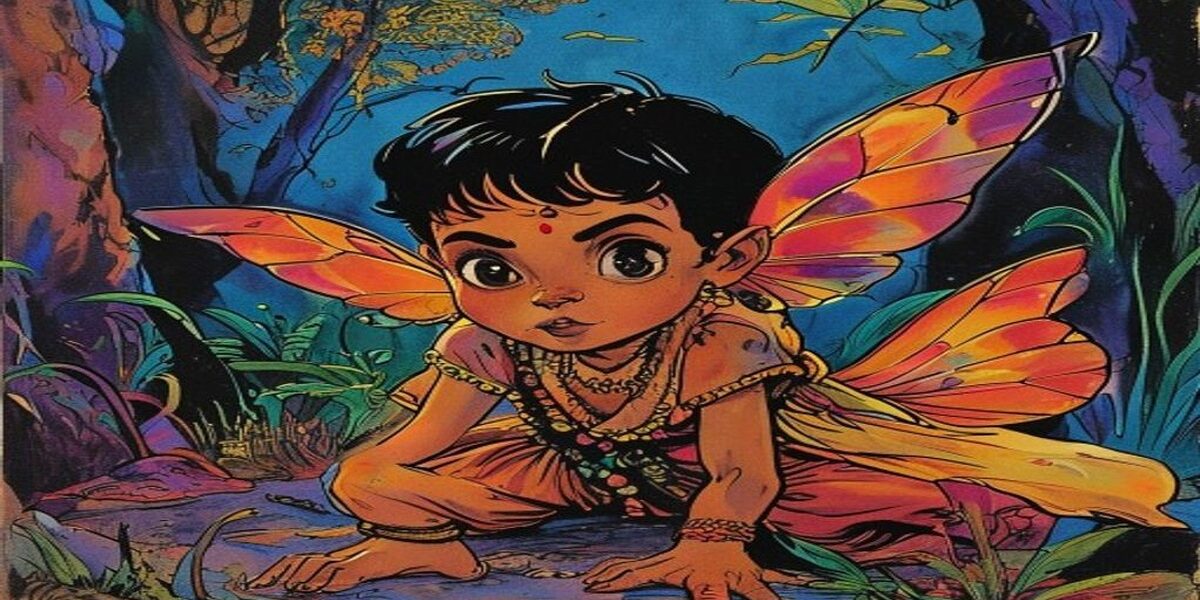
Origin & Tradition
The dokkaebi (도깨비) — known in some regional traditions as tokgabi — is one of the most distinctively Korean supernatural figures: a being of mischievous rather than malevolent character, associated with the accumulated spiritual energy of old discarded objects, and possessed of a genius for the comic exposure of human pretension. Unlike the demons and monsters of many folk traditions, the dokkaebi is rarely a threat to human life; he is primarily a threat to human dignity, specifically the dignity of those whose self-presentation exceeds their actual merit. His pranks are not random but targeted — the greedy man’s greed is pranked in a way that makes the greed look exactly as absurd as it is. The dokkaebi stories belong to the Korean aesthetic tradition of haehak (해학) — the comic wit that is simultaneously irreverent and morally pointed, making its observations through laughter rather than solemn instruction. Tales of tokgabi and his pranks were preserved throughout Korean popular culture, particularly in rural communities where encounters with his disruptive comic energy were considered evidence of a village’s still-living spiritual ecology.
Beat I — The Dokkaebi’s Arrival
Tokgabi arrived at the village during the transitional period between autumn harvest and first winter frost — a time that Korean folk tradition associated with the movement of supernatural beings between their customary haunts and the human settlements they periodically chose to enliven. He was recognizable to those with eyes for such things: the slightly too-bright quality of whatever light was near him, the way animals near him became either very still or very agitated with no apparent middle option.
The village he chose had become somewhat too settled — not troubled, but calcified in a way that happens when the same people have occupied the same positions for long enough that those positions have been fully identified with the holders’ sense of themselves. The wealthiest man had been wealthiest long enough to confuse his wealth with his virtue, taking communal deference as tribute to his personal quality rather than his economic position. The village’s most learned man had been most learned long enough that his learning had converted from a living practice of inquiry into a credential he displayed rather than used. The most beautiful woman had been regarded as most beautiful long enough that she had organized her personality around this regard in ways that made her increasingly difficult to be near.
Tokgabi observed all of this with the quality of attention that dokkaebi bring to human communities: accurate, amused, and unimpressed by the social fictions through which people who have confused their positions with their persons manage their self-presentation. He began to plan.
Beat II — The Pranks and Their Precision
The prank for the wealthy man was elegant in its diagnostic precision. Tokgabi arranged for the man’s household accounts to become temporarily, thoroughly confused — not lost, not stolen, simply impossible to read in their current form. The wealthy man, who had been relying on his household accounts to demonstrate to the village his superior administrative capacity, found himself unable to produce the orderly financial record that was his primary evidence of personal virtue. In his flustered attempts to reconstruct the accounts before the assembled community, he revealed the degree to which his financial sophistication depended on his accountant rather than on his own understanding. The accountant, previously invisible within the household’s social presentation, became visible in a way that redistributed the community’s assessment of where the virtue actually resided.
For the learned man, tokgabi arranged a different comedy: at the moment when the scholar was delivering a carefully prepared discourse to junior students required by convention to sit in respectful attention, tokgabi caused the scholar’s notes to become temporarily illegible. The scholar had memorized his conclusions but not the reasoning leading to them, which meant that without the notes he could deliver confident pronouncements but could not respond to the one student who asked a genuine question about the reasoning behind them. The scholar’s response — honest enough to acknowledge he did not immediately have the answer — revealed a capacity for intellectual honesty that his credentialed-performance mode had been successfully concealing, including from himself.
For the beautiful woman, the prank was most subtle: on the day when she had organized a gathering where she expected to be the center of visual attention, tokgabi arranged for the arrival, by coincidence, of a traveling musician whose playing was so extraordinary that the gathered company forgot to look at anything else. The woman discovered, in the hour when nobody was looking at her, that she had nothing in particular to say or do — information she found more distressing and more useful than any quantity of admiring glances would have been.
Beat III — Haehak as Moral Technology
Korean aesthetic tradition distinguishes carefully between several forms of comic expression. Haehak (해학) occupies a specific position among them: unlike comedy that relies on superiority and contempt, or pure absurdism without moral dimension, haehak is the comedy that arises from the gap between human pretension and human reality — specifically the comedy that reveals this gap with the precision of genuine observation rather than caricature. Haehak does not distort its subjects; it observes them so accurately that their actual nature becomes visible in a way that ordinary social courtesy systematically prevents.
The dokkaebi is haehak’s supernatural embodiment because he has no stake in the social arrangements that human courtesy sustains. Unlike the tiger of the Korean unmannerly-tiger tradition — whose indifference to courtesy expresses itself through direct confrontational statement — the dokkaebi works through play, through arranging situations in which humans reveal themselves by how they respond to unexpected conditions. The pranked man reveals himself not in the prank but in the response: the wealthy man reveals himself in his flustered response to losing control of his accounts; the learned man reveals himself in his honest response to a genuine question; the beautiful woman reveals herself in the uncomfortable silence of not being looked at.
The moral technology of haehak is thus indirect but precise. It does not tell people what they are; it arranges for them to show themselves — which is considerably more effective and considerably less avoidable. A man told that his wealth is not his virtue can deny and deflect. A man who has shown his community that his financial sophistication belongs to his accountant has demonstrated something that no subsequent explanation fully undoes. Korean folk tradition valued this indirect mode of moral instruction over direct moralizing because in village life, direct criticism of the powerful was often dangerous and criticism of anyone could be destructively damaging to the social fabric. The dokkaebi provided what the social structure could not easily produce: accurate observation of the gap between position and person, delivered through comedy that gave the observed no legitimate target for retaliation.
Beat IV — The Moral and Its Endurance
The aftermath of tokgabi’s visitation was the characteristic aftermath of dokkaebi pranks: modest, durable, and impossible to attribute directly to the pranks in any way that would allow the adjusted persons to object. The wealthy man became slightly less certain that his financial position was evidence of personal virtue — a small shift, barely perceptible, but sufficient to make him a fractionally more tolerable person to be economically dependent on. The learned man, having experienced the relief of saying “I don’t immediately know” without the sky falling, incorporated this honesty into his subsequent teaching, slowly converting his instruction from credentialed performance into genuine inquiry. The beautiful woman, having discovered the discomfort of having nothing in particular to contribute, developed over the following year a musical competence that gave her a genuine basis for being in a room beyond her visual appearance.
Tokgabi moved on without staying to observe these outcomes — dokkaebi do not stay for the denouement, which they find slower and less interesting than the prank itself. The village retained in its oral tradition the memory of his visitation as an event whose outcomes had improved the community’s social ecology without any single person being able to say precisely how or why.
The moral transmitted was specifically Korean: that the comic observation of human pretension is a legitimate and necessary service to community life, that the laughter haehak produces is not mere entertainment but a form of social correction that direct moral instruction cannot replicate, and that the dokkaebi who pranks the calcified village is, in the deepest sense, performing an act of maintenance — keeping the social ecology from becoming so rigid it can no longer accommodate the reality of the people within it.
“The dokkaebi does not lie. He simply arranges things so that you cannot lie either — at least not for the length of the prank.”
— Korean folk saying associated with dokkaebi traditions
Why This Story Lasted
Dokkaebi prank tales persisted because they gave communities permission to laugh at their own social arrangements, at the people who most benefited from those arrangements, and at the gap between social position and personal merit that all communities know to exist and most can rarely afford to name directly. The dokkaebi’s supernatural status exempted him from the social accountability that would have made human criticism dangerous; his comic mode exempted the community from the obligation of taking sides that direct accusation would have created. What remained after the laughter was the accurate observation — which had nowhere to go except into the community’s gradually shifting understanding of itself.
The Dokkaebi (도깨비) in Korean Folk Culture
The dokkaebi is one of the most distinctively Korean supernatural beings — a figure with no precise parallel in Chinese or Japanese folk traditions despite the shared cultural milieu. Associated with the accumulated spiritual energy of discarded objects (old brushes, abandoned household implements, broken farming tools), the dokkaebi is characterized by mischievous rather than malevolent energy, a love of games and contests, and a particular affinity for alcohol and wrestling. He appears throughout Korean folk narrative in roles ranging from benevolent wealth-bringer (for those who treat him well) to comic exposer of human pretension (for those who do not). His characteristic club (도깨비방망이, dokkaebi bangmangi) can produce whatever is asked of it — which the tales consistently use as a test of the asking person’s character rather than as a source of uncomplicated abundance.
Frequently Asked Questions
What is the central moral of “Tokgabi and His Pranks”?
The tale teaches that haehak — comic observation of the gap between human pretension and human reality — is a legitimate and necessary service to community life. The dokkaebi’s pranks are precisely calibrated: each one arranges for the pranked person to reveal themselves in exactly the way their particular pretension deserves, producing a social correction that direct moral instruction cannot replicate and that the pranked person cannot easily avoid or explain away.
What happens in the story?
Tokgabi arrives in a village where the social ecology has calcified — a wealthy man who confuses wealth with virtue, a learned man who displays learning as credential rather than using it, a beautiful woman who has organized her personality around her beauty. The dokkaebi devises precisely targeted pranks for each: the wealthy man’s accounts become temporarily illegible (revealing that his financial sophistication belongs to his accountant); the learned man loses his notes during a discourse (revealing his capacity for genuine honesty); the beautiful woman discovers the discomfort of a room where nobody is looking at her. Each prank produces a small, durable adjustment in self-understanding.
What is haehak and how does it differ from other forms of Korean comedy?
Haehak (해학) is the Korean comic tradition that arises from the gap between human pretension and human reality — comedy that observes its subjects with such accuracy that their actual nature becomes visible in ways ordinary social courtesy prevents. Unlike comedy of superiority and contempt, haehak neither distorts nor caricatures but observes precisely enough that the observed cannot maintain their usual self-presentation. The dokkaebi is haehak’s supernatural embodiment: a being who arranges situations rather than delivering verdicts, producing comedy through accurate observation rather than exaggeration.
Are the dokkaebi’s pranks malicious?
The dokkaebi’s pranks are mischievous rather than malicious — they aim at embarrassment, not harm, and their targets consistently emerge with more honest self-knowledge than they brought into them. In the Korean folk tradition, the dokkaebi is distinguished from genuinely dangerous supernatural beings precisely by this quality: his energy is disruptive but not destructive, and the disruption consistently serves a corrective function within the community’s social ecology.
How does the dokkaebi’s approach to moral correction differ from other supernatural correctors in Korean folklore?
Where the King of the Underworld corrects injustice through formal judicial process, and the tiger exposes social hypocrisy through direct confrontational statement, the dokkaebi operates through the comic arrangement of situations that allow humans to reveal themselves. This indirect approach is specifically suited to the limitations of village social life: direct criticism of the powerful is dangerous, formal processes are inaccessible for minor social failings, and solemn moral instruction is easily deflected. Comedy that makes a failing look exactly as ridiculous as it is — with the subject’s own participation — is far harder to escape.
You May Also Like
 Korean Folk Tales
Ages 9-12
Korean Folk Tales
Ages 9-12
The Man Who Lost His Legs
The Man Who Lost His Legs: There was a merchant in Chong-ju who used to go to Quelpart to buy seaweed. One time when he drew upon the shore he saw a man
 Korean Folk Tales
All Ages
Korean Folk Tales
All Ages
Topknots And Crockery Hats
Topknots And Crockery Hats: Long, long ago in China, even centuries before the great Confucius was born, there lived a wise and learned man named Kija. The
 Korean Folk Tales
Ages 6-8
Korean Folk Tales
Ages 6-8
The Old Man Who Became A Fish
The Old Man Who Became A Fish: Some years ago a noted official became the magistrate of Ko-song County. On a certain day a guest called on him to pay his