The Constable
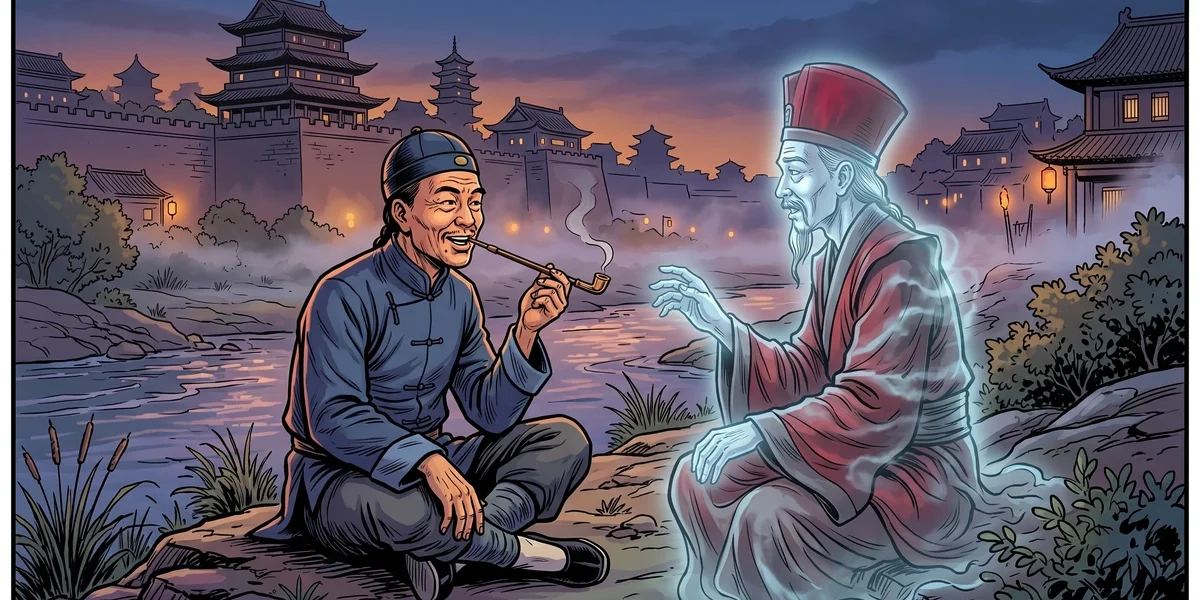
The Constable: In a city in the neighborhood of Kaiutschou there once lived a constable by the name of Dung. One day when he returned from a hunt after thieves
Origin and Tradition
The Constable belongs to the rich Chinese tradition of narratives centred on the bu kuai (捕快 — constable or runner, literally “catching-fast”), the lowest level of the imperial law enforcement hierarchy — the men who served under the county magistrate, investigated crimes, made arrests, and administered the practical machinery of justice at the grassroots level of Chinese society. This tradition of constable stories, which flourished in the vernacular fiction of the Ming and Qing periods, occupies a specific and morally complex position in the Chinese folk literary imagination: the bu kuai figure is simultaneously an agent of legitimate state authority and a creature of the grey zone between official law and practical social reality, a man who must navigate between the magistrate above and the criminal underworld below.
The broader Chinese tradition of legal-detective fiction — most magnificently represented by the Di Gong’an (狄公案 — Cases of Judge Dee) and the extraordinarily popular Bao Gong (包公 — Judge Bao) cycle of stories — celebrated judicial wisdom at the level of the magistrate. The constable story addresses a different register: the ground-level experience of law enforcement conducted by men of limited official status but extensive practical knowledge of the criminal underworld, the local geography of crime, and the social dynamics of communities where legal authority and social reality did not always align. The constable occupies a frontier position in the Chinese social order, and the stories that centre on him explore what that frontier demands.
The Bu Kuai in Imperial Chinese Society: Status, Power, and the Moral Frontier
The bu kuai occupied an ambiguous and frequently uncomfortable position in the hierarchy of imperial Chinese society. On one hand, they were agents of the state, carrying the authority of the magistrate and the court, entitled to make arrests and compel testimony. On the other hand, their social status was low — runners and constables ranked below scholars, farmers, artisans, and merchants in the Confucian social hierarchy, and their occupation was associated with violence, moral compromise, and the corruption that inevitably attended contact with both criminal elements and the extortionate practices that often characterised Qing-period law enforcement in practice.
This status ambiguity is the source of the constable story’s moral richness. The bu kuai hero must navigate a world where his official authority does not correspond to his social standing, where the legitimate use of force and the illegitimate extraction of bribes shade into each other in the daily practice of his work, and where his personal moral character — his willingness to serve justice rather than merely legal procedure — is the only reliable guide through a terrain of competing obligations and interests. Stories of constables who perform their function with genuine integrity, solving difficult cases and resisting corruption despite structural pressures toward both, celebrate a form of moral courage that is not grand or heroic but practical, persistent, and socially undervalued.
The Narrative: Investigation, Deduction, and Practical Wisdom
The constable story typically begins with a crime — a theft, a murder, a disappearance, a fraud — that the official channels of justice have failed to resolve. The magistrate may be corrupt, or the case may be too difficult, or the victims may be too poor or too marginal to command the official attention that would prompt a proper investigation. The constable hero takes up the case either under instruction or on his own initiative, driven by a combination of professional obligation and genuine moral commitment to seeing the specific injustice of this specific situation rectified.
What distinguishes the constable hero from the formally educated magistrate is his knowledge base: where the magistrate brings classical learning, legal codes, and judicial procedure, the bu kuai brings intimate practical knowledge of the local underworld, the specific geography and social dynamics of his district, the behavioural patterns of different categories of criminal, and the network of informants and contacts that is the real investigative infrastructure of Chinese law enforcement. The great constable stories celebrate this practical, experiential intelligence — the knowledge that can only be gained by years of exposure to the reality behind the official surface of Chinese social life — as a genuine and morally serious form of wisdom.
“The magistrate reads the law; the constable reads the street. When law and street agree, justice is easy — when they do not, wisdom is what separates the good constable from the corrupt one.”
— Chinese folk saying in the bu kuai tradition
Supernatural Dimensions: The Ghost-Constable and Spirit-Assisted Justice
Chinese constable narratives frequently incorporate supernatural elements, reflecting the blending of the legal detective tradition with the broader Chinese folk religious belief in ghost justice — the conviction that the spirits of the wrongfully dead are active agents in the achievement of justice for their deaths. In this tradition, the constable who takes up a case of unsolved murder may receive assistance from the victim’s ghost: a dream that points to the perpetrator, a series of uncanny coincidences that steer the investigation, or a direct ghostly visitation that reveals the hidden truth. This supernatural assistance is understood not as replacing the constable’s practical investigative work but as supplementing it — heaven’s justice and human justice collaborating to achieve what neither could accomplish alone.
This blending of natural and supernatural investigation reflects the Chinese folk understanding of justice as a cosmic as well as a social category. Crime — particularly murder — disrupts both the human social order and the cosmic moral order simultaneously, and the resolution of criminal cases is understood as a restoration of both. The ghost of the murdered person cannot proceed to reincarnation until the wrong done to them is acknowledged and punished; the constable who achieves this resolution serves not only the living community but the cosmic moral order that extends beyond death.
Why This Story Endured
The constable story endured because it addressed, with the specificity of the detective genre, some of the most persistent tensions in Chinese social life: between official authority and practical reality, between the letter of the law and the spirit of justice, between the formally certified and the practically wise, between the socially valued and the morally valuable. The bu kuai hero occupies all of these tensions simultaneously, and the stories that centre on him explore them with a realism and moral seriousness that the more elevated judicial fiction of the magistrate-detective tradition could not always achieve.
The constable story also endured because justice — the desire for wrongs to be seen, acknowledged, and rectified — is among the most persistent of human needs, and the figure of the detective-constable who doggedly pursues that justice against institutional indifference, practical difficulty, and the obstruction of the powerful provides a model of moral persistence that readers in every era have found both satisfying and inspiring. The genre’s Chinese form, with its specific social texture, its supernatural dimensions, and its grassroots moral realism, remains one of the great narrative traditions of popular justice fiction in world literature.
You May Also Like
 Chinese Folk Tales
All Ages
Chinese Folk Tales
All Ages
The Wonderful Man
The Wonderful Man: There is a certain Prefectural city in the south of China, which has earned a reputation distinguishing it from all such towns throughout
 Chinese Folk Tales
All Ages
Chinese Folk Tales
All Ages
The Flower-Elves
A retired scholar's sincere spiritual cultivation attracted flower-elves from celestial realms, proving inner development creates transcendent connection.
 Chinese Folk Tales
Ages 9-12
Chinese Folk Tales
Ages 9-12
The Queen Of Heaven
The Queen Of Heaven: who is also known as the Holy Mother, was in mortal life a maiden of Fukien, named Lin. She was pure, reverential and pious in her ways